
Finding the perfect skincare routine often feels like a game of trial and error. You buy a highly recommended moisturizer or a luxury foundation, only to wake up three days later with a cluster of painful whiteheads or stubborn blackheads. If you have acne-prone skin, you’ve likely heard the term "comedogenic," but navigating the complex chemical names on the back of a bottle is another challenge entirely.
Is Your Routine Acne-Safe?
Do not guess. Instantly check your products for pore-clogging ingredients with our AI-powered tool.
Check Ingredients NowOne ingredient that frequently appears in cosmetic formulations—and causes significant concern for dermatologists—is Acetylated Lanolin Alcohol. While it is technically "safe" from a toxicological standpoint, its impact on your pores is a different story. In this guide, we will break down the science of this ingredient, why it’s used, and whether it belongs in your vanity.
What Exactly is Acetylated Lanolin Alcohol?
To understand this ingredient, we first have to look at its source: Lanolin. Lanolin is a natural wax secreted by the sebaceous glands of wool-bearing animals, primarily sheep. It is an incredible emollient, prized for its ability to mimic human skin lipids and prevent transepidermal water loss (TEWL).
Acetylated Lanolin Alcohol is a chemically modified version of this wax. Through a process called acetylation, the lanolin is treated with acetic anhydride. This chemical reaction removes the "tackiness" or greasiness of natural lanolin, resulting in a thin, smooth liquid that spreads easily and feels luxurious on the skin.
Why Manufacturers Use It
In the world of cosmetic chemistry, texture is king. Acetylated lanolin alcohol is used because it:
- Acts as an effective emollient, softening the skin.
- Provides a "slip" to products like lipsticks and foundations.
- Helps stabilize emulsions, keeping oils and water mixed.
- Offers water-repellent properties, making makeup long-wearing.
The Comedogenicity Factor: Why Acne-Prone Skin Should Beware
While the cosmetic industry loves the texture this ingredient provides, the dermatological community views it with caution. On the Comedogenicity Scale—which ranks ingredients from 0 (will not clog pores) to 5 (highly likely to clog pores)—Acetylated Lanolin Alcohol consistently scores a 4 or 5.
The Science of Pore Clogging
When an ingredient is highly comedogenic, it means it has the potential to cause "follicular occlusion." Because acetylated lanolin alcohol is specifically designed to be more penetrative and less greasy than raw lanolin, it can easily slide into the hair follicle (the pore).
Once inside, it mixes with your natural sebum (oil) and dead skin cells. In individuals with acne-prone skin, the skin already struggles to shed cells properly (a process called retention hyperkeratosis). The addition of a heavy, occlusive emollient like acetylated lanolin alcohol acts as a "glue," creating a plug or microcomedone. This plug eventually matures into a blackhead, whitehead, or inflammatory acne lesion.
Is it "Safe"? Understanding the Distinction
When we talk about "safety" in skincare, there are two different definitions:
- Toxicological Safety: Acetylated lanolin alcohol is considered safe by the Cosmetic Ingredient Review (CIR) Expert Panel. It is non-toxic, generally non-irritating, and safe for use in concentrations found in consumer goods. If you have dry, non-acne-prone skin, this ingredient can actually be quite beneficial for repairing a damaged skin barrier.
- Acne Safety: For those with a genetic predisposition to acne, this ingredient is not safe for your complexion goals. It is a known trigger for "acne cosmetica"—a form of acne caused by the topical application of comedogenic cosmetics.
How to Spot It and What to Do
If you are currently battling breakouts and can't find the culprit, it’s time to become a "label detective."
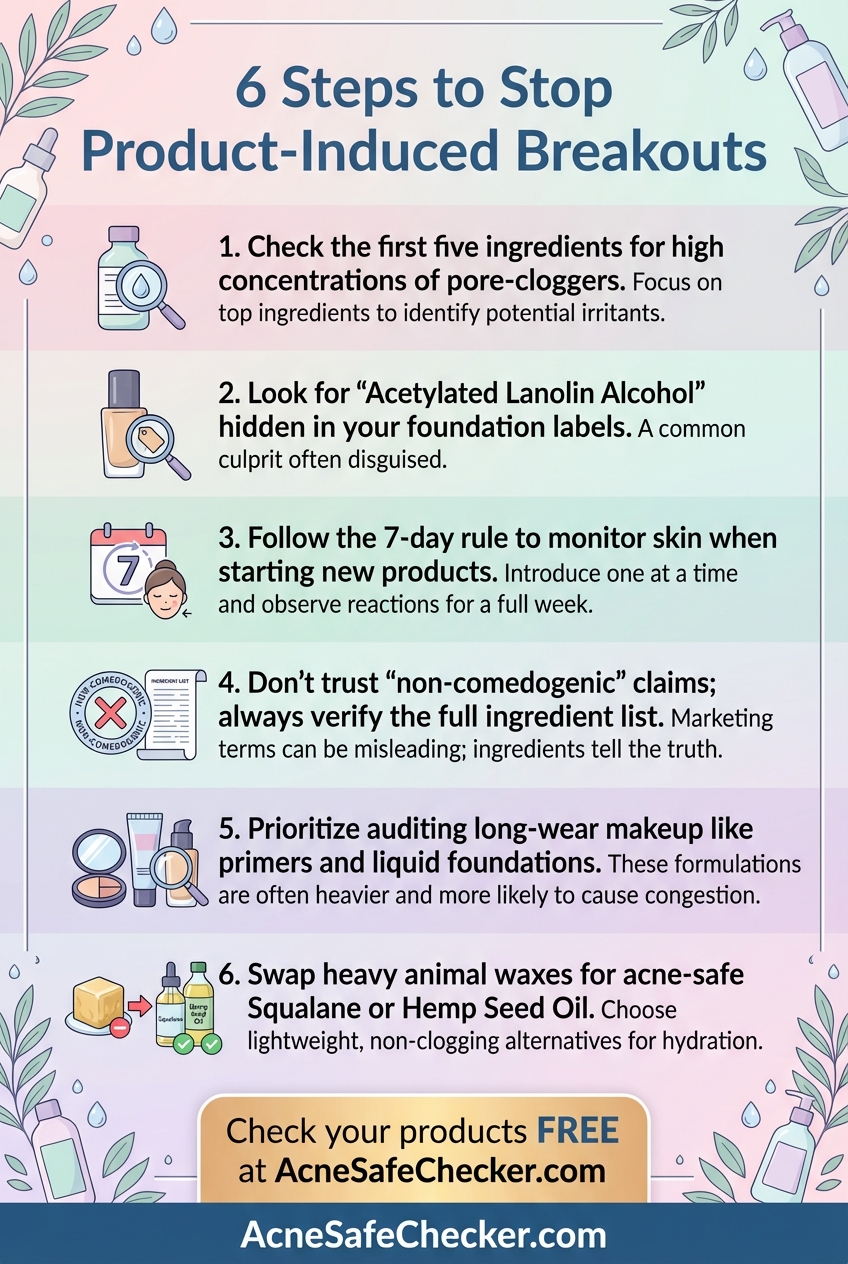
Step 1: Check the INCI List
Look for these specific names on your product packaging:
- Acetylated Lanolin Alcohol
- Lanolin Alcohol (often used in conjunction)
- Acetylated Lanolin
Step 2: Location Matters
Ingredients are listed in descending order of concentration. If acetylated lanolin alcohol is in the first five ingredients, it is present in a high percentage and is very likely to cause issues. If it is the very last ingredient in a rinse-off product (like a cleanser), the risk is lower, but still present for highly sensitive individuals.
Step 3: Look for Alternatives
If you need the moisturizing benefits of an emollient without the risk of clogging your pores, look for products containing:
- Squalane: A lightweight, non-comedogenic oil that mimics skin sebum without the heavy occlusion.
- Hemp Seed Oil: High in linoleic acid, which is often deficient in acne-prone skin.
- Glycerin and Hyaluronic Acid: Humectants that hydrate without using heavy waxes.
Practical Advice for the Acne-Prone Consumer
- The 7-Day Rule: If you introduce a new product containing lanolin derivatives, monitor your skin for at least a week. Comedones caused by ingredients often take a few days to surface.
- Don't Trust "Non-Comedogenic" Labels Blindly: Unfortunately, the term "non-comedogenic" is not strictly regulated by the FDA. A brand can claim a product won't clog pores even if it contains acetylated lanolin alcohol. Always verify the ingredient list yourself.
- Prioritize Your Base: Since foundations and primers sit on your skin for 8–12 hours a day, these are the most critical products to audit. Ensure your base makeup is free from high-ranking comedogens.
Conclusion
Acetylated lanolin alcohol is a prime example of why "safe" doesn't always mean "right for you." While it is a functional and non-toxic emollient that provides a beautiful finish to many products, its high comedogenicity rating makes it a significant risk factor for anyone prone to breakouts.
As a dermatologist, my advice is simple: If you are struggling with persistent congestion or adult acne, eliminate products containing acetylated lanolin alcohol from your routine. Your pores will thank you, and you'll be one step closer to the clear, healthy skin you deserve.