
For years, the word "oil" was considered a four-letter word in the world of dermatology, especially for those battling breakouts. The conventional wisdom suggested that putting oil on oily skin was like adding fuel to a fire. However, as our understanding of lipid chemistry has evolved, we have discovered that not all oils are created equal.
Is Your Routine Acne-Safe?
Do not guess. Instantly check your products for pore-clogging ingredients with our AI-powered tool.
Check Ingredients NowAmong the most celebrated botanical extracts is Argan oil, often referred to as "Liquid Gold." But if you struggle with acne or congestion, your first question isn't about its glow-inducing properties—it’s: Does argan oil clog pores?
As a dermatologist, I see patients daily who are terrified of oils. Today, we are going to look at the scientific rating of argan oil and determine if it deserves a place in your skincare routine.
Understanding the Comedogenic Scale
To answer whether an ingredient will clog your pores, dermatologists refer to the Comedogenic Scale. This scale ranks ingredients from 0 to 5 based on their likelihood of causing comedones (clogged pores):
- 0: Will not clog pores
- 1: Very low chance of clogging pores
- 2: Moderately low chance
- 3: Moderate chance
- 4: Fairly high chance
- 5: High chance of clogging pores
The Argan Oil Rating
Argan oil has a comedogenic rating of 0.
This means that in clinical observations, pure argan oil does not clog pores. Unlike coconut oil (which ranks a 4) or cocoa butter (which ranks a 3), argan oil is considered non-comedogenic and is generally safe for all skin types, including those prone to acne.
The Science: Why Argan Oil Won’t Cause Breakouts
To understand why argan oil is so skin-friendly, we have to look at its molecular makeup. The reason many oils cause breakouts is due to their ratio of fatty acids—specifically Oleic Acid and Linoleic Acid.
The Linoleic Acid Connection
Research has shown that individuals with acne-prone skin often have lower levels of linoleic acid in their skin's natural sebum. When sebum is deficient in linoleic acid, it becomes thick, sticky, and more likely to plug pores.
Argan oil is rich in linoleic acid. When applied topically, it helps balance the sebum composition, making it more fluid and less likely to cause the blockages that lead to whiteheads and blackheads.
Antioxidants and Vitamin E
Argan oil is packed with high concentrations of Vitamin E (tocopherol) and saponins. These antioxidants help soothe inflammation—a key driver of acne—and support the skin's barrier repair. By strengthening the skin barrier, argan oil helps prevent the entry of acne-causing bacteria.
Beyond Non-Comedogenic: Benefits for Acne-Prone Skin
It’s not just that argan oil doesn't clog pores; it may actually help improve the condition of acne-prone skin in several ways:
- Sebum Regulation: Paradoxically, applying the right oil can signal to your sebaceous glands to slow down oil production. This helps reduce the overall "greasiness" of the skin.
- Anti-Inflammatory Properties: The presence of plant sterols and squalene helps reduce the redness and swelling associated with active breakouts.
- Scar Healing: Thanks to its high Vitamin E content, argan oil aids in the regeneration of skin cells, which can help fade post-inflammatory hyperpigmentation (acne scars).
Practical Advice: How to Use Argan Oil Safely
Even though the rating is 0, how you use the oil matters. Follow these dermatologist-recommended steps to ensure success:
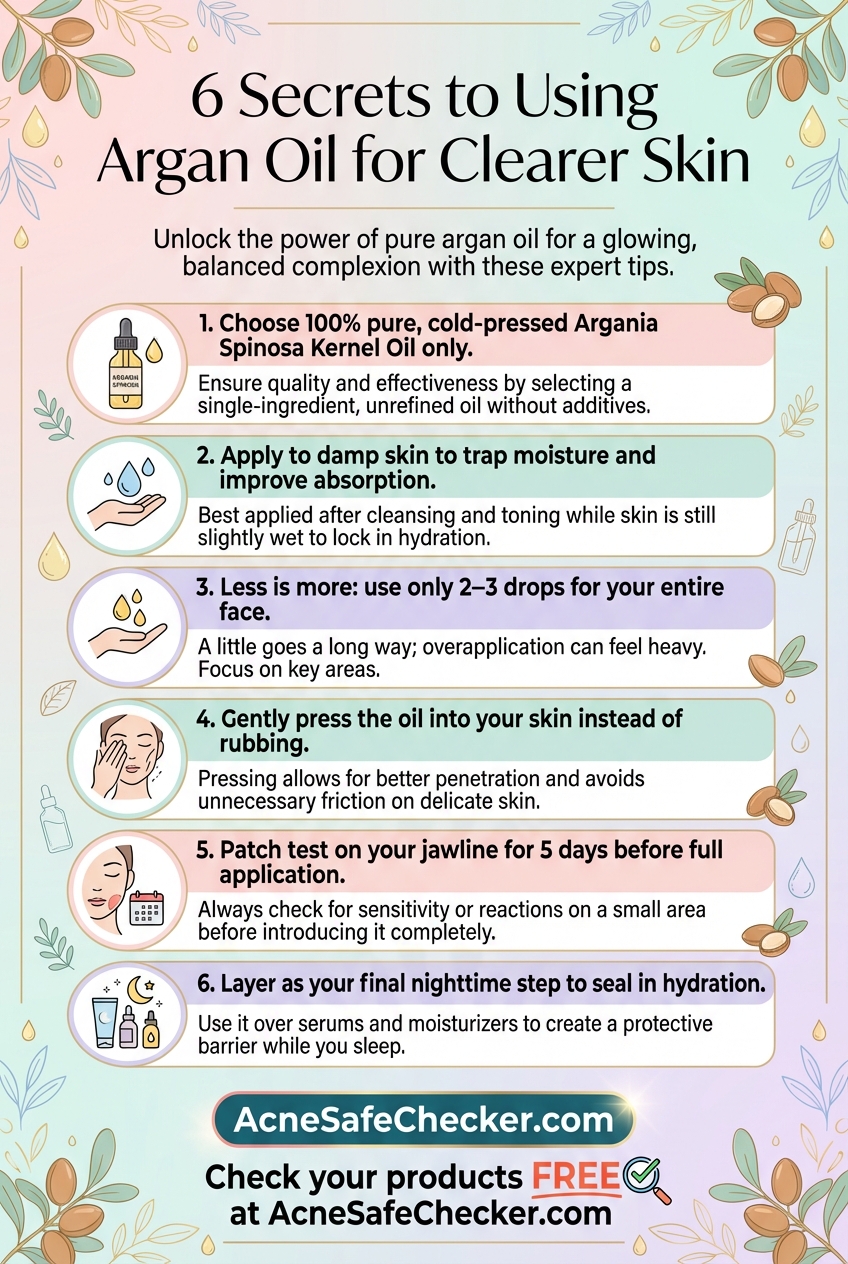
1. Choose 100% Pure, Organic, Cold-Pressed Oil
Not all argan oil is created equal. Many commercial products marketed as "argan oil" are actually silicone-based serums with a tiny drop of argan oil added. Always check the ingredient list. It should say Argania Spinosa Kernel Oil and nothing else. Avoid products with added fragrances or synthetic fillers, as these can trigger breakouts even if the argan oil itself doesn't.
2. The "Damp Skin" Method
For best absorption, apply argan oil to slightly damp skin. This helps the oil trap moisture and allows it to spread more easily, meaning you need less product.
3. Less is More
You only need 2–3 drops for your entire face. Rub the drops between your palms to warm the oil, then gently press it into your skin rather than rubbing aggressively.
4. Patch Test First
While a rating of 0 is a general rule, everyone’s skin is unique. Apply a small amount to the side of your jawline for 3–5 days to ensure you don't have a specific sensitivity to the botanical components of the oil.
When to Be Cautious
While argan oil is non-comedogenic, it may feel heavy for those with extremely oily skin in humid climates. If you find it feels too "rich" for daytime use, try incorporating it into your nighttime routine as the final step over your moisturizer. This creates an occlusive layer that seals in hydration without suffocating the pores.
Conclusion
In the debate over whether argan oil clogs pores, the science is clear: With a comedogenic rating of 0, argan oil is one of the safest and most beneficial oils for those worried about breakouts. By balancing your skin's natural oils and providing a potent dose of antioxidants, it offers a pathway to a healthy glow without the risk of congestion.
If you have been avoiding oils out of fear, argan oil is the perfect place to start. Start slow, choose high-quality cold-pressed oil, and let your skin reap the rewards of this ancient skincare secret.