
The Double-Edged Sword of Fermented Skincare
Is Your Routine Acne-Safe?
Do not guess. Instantly check your products for pore-clogging ingredients with our AI-powered tool.
Check Ingredients NowIn the ever-evolving world of K-beauty and dermatological innovation, few ingredients have reached the cult status of Galactomyces Ferment Filtrate. Renowned for its ability to brighten the complexion, shrink the appearance of pores, and provide a youthful glow, it is the star of many luxury essences. However, for a specific group of skincare enthusiasts, this “miracle” ingredient comes with a warning label: the risk of triggering fungal acne.
If you have ever introduced a fermented essence into your routine only to wake up with clusters of small, itchy, uniform bumps, you might be dealing with more than just a standard breakout. As a dermatologist, I frequently see patients confused by why a highly-rated product is wreaking havoc on their skin. To understand if galactomyces is the culprit, we must dive into the biology of our skin’s microbiome.
What is Galactomyces Ferment Filtrate?
Galactomyces is a genus of fungi in the family Dipodascaceae. The "ferment filtrate" used in skincare is the byproduct of the fermentation process—usually derived from fermenting sake. It is incredibly nutrient-dense, containing amino acids, vitamins, minerals, and organic acids.
For many, these nutrients work wonders to strengthen the skin barrier and improve texture. However, the very nature of this ingredient—being a byproduct of yeast—is what creates a potential conflict for those prone to fungal acne.
Understanding Fungal Acne (Malassezia Folliculitis)
First, it is important to clarify that "fungal acne" is a misnomer. It isn't actually acne. Its clinical name is Malassezia folliculitis.
Unlike traditional acne (Acne Vulgaris), which is caused by the P. acnes bacteria and trapped sebum, fungal acne is caused by an overgrowth of a yeast called Malassezia. This yeast is part of everyone’s natural skin flora, but when it overproliferates within the hair follicle, it triggers an inflammatory response. The result is small, red, itchy bumps that often appear on the forehead, chest, and back.
The Scientific Connection: Does Galactomyces Feed the Fire?
The short answer is: Yes, galactomyces can exacerbate fungal acne.
While galactomyces itself isn't the fungus that causes the infection, it can act as a catalyst. Research suggests that certain fermented ingredients can provide a "food source" for Malassezia.
Why Fermentation is a Trigger
During the fermentation process, complex substances are broken down into smaller, bioavailable molecules. For people with a healthy skin microbiome, these molecules are beneficial. However, for those predisposed to Malassezia overgrowth, these fermented byproducts—specifically certain fatty acids and esters—can encourage the Malassezia yeast to multiply rapidly.
Furthermore, many fermented filtrates are rich in lipids and amino acids that create a moisture-rich environment where fungi thrive. If you have an active case of fungal acne, applying a galactomyces-heavy product is often akin to pouring fuel on a fire.
How to Identify a Galactomyces Sensitivity
How do you know if your breakout is caused by galactomyces or if it's just standard hormonal acne? Look for these three clinical signs:
- Uniformity: The bumps are almost identical in size and shape, lacking the “blackheads” or “whiteheads” typical of bacterial acne.
- Itching: Fungal acne is notoriously itchy, especially when you sweat or the environment is humid.
- Location: It often appears in clusters on the forehead, hairline, or upper back.
If you notice these symptoms shortly after starting a product containing Galactomyces Ferment Filtrate, it is highly likely that your skin’s microbiome is reacting to the ferment.
Practical Steps: What Should You Do?
If you suspect galactomyces is causing issues, follow these steps to reset your skin:
1. The "Elimination Diet" for Your Face
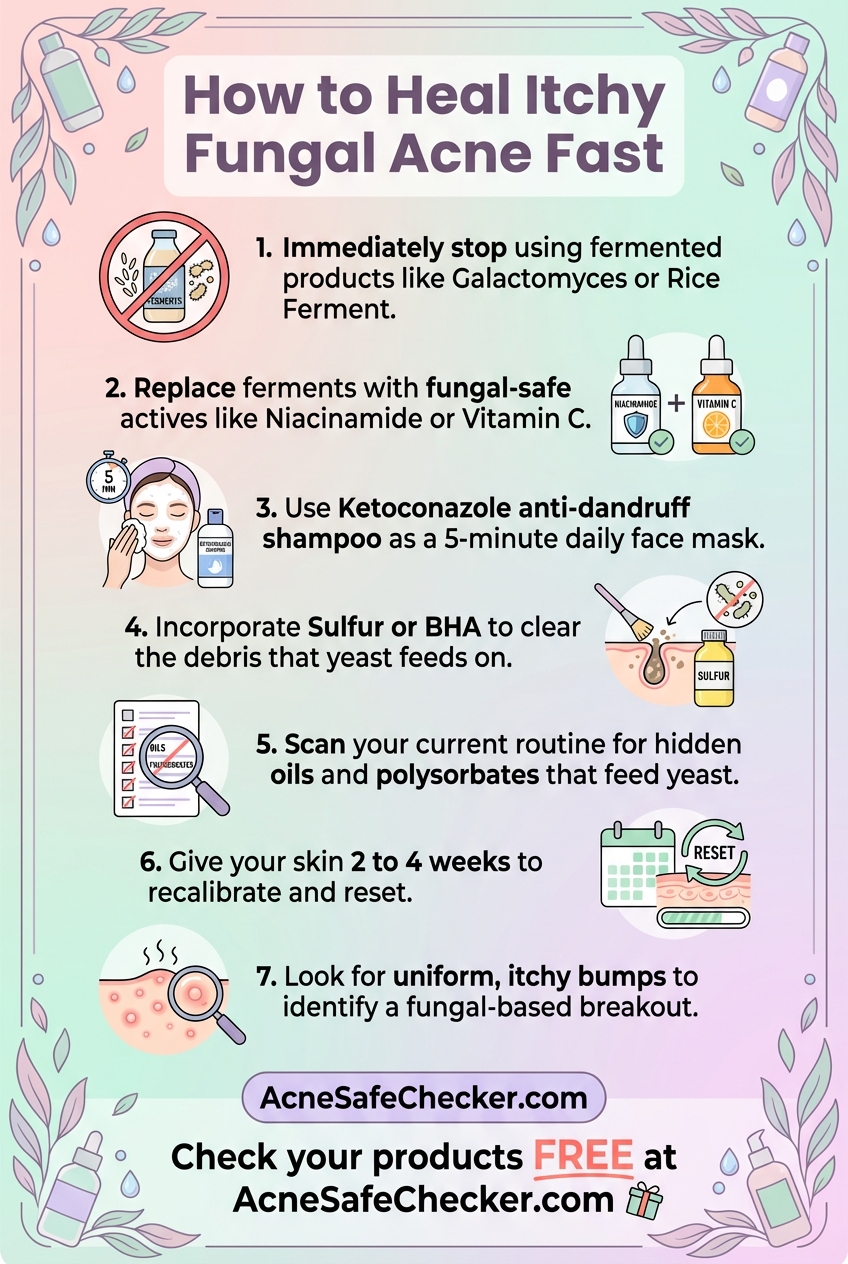
Immediately stop using any products containing fermented ingredients. This includes not just galactomyces, but also bifida ferment lysate, rice ferment, and saccharomyces. Give your skin 2 to 4 weeks to recalibrate.
2. Check Your Other Ingredients
Malassezia also feeds on most oils (fatty acids) and polysorbates. Use a "fungal acne-safe" checker website to scan your current routine for other triggers that might be working in tandem with the galactomyces.
3. Incorporate Anti-Fungal Actives
To clear the overgrowth, look for ingredients that inhibit yeast. Over-the-counter options include:
- Ketoconazole: Often found in anti-dandruff shampoos (can be used as a 5-minute face mask).
- Sulfur: A time-tested anti-fungal and anti-bacterial agent.
- Salicylic Acid (BHA): Helps keep the follicles clear of the debris that yeast feeds on.
4. Choose Safe Alternatives
If you love the brightening effects of galactomyces but can't handle the yeast, look for non-fermented alternatives like Niacinamide, Azelaic Acid, or Vitamin C derivatives (SAP). These provide similar glow-boosting benefits without the risk of feeding a fungal infection.
The Verdict
Galactomyces is a powerhouse ingredient that can transform the skin for the better, but it is not universal. If you are prone to fungal acne or have an oily skin type in a humid climate, galactomyces may be a hidden trigger for stubborn, itchy breakouts.
Skincare is deeply personal. If your skin doesn't respond well to the "holy grail" products everyone else is using, listen to it. By understanding the relationship between ferments and your skin's microbiome, you can make informed choices that lead to a truly clear, healthy complexion.