
Vanicream has long been hailed as the "holy grail" for individuals with sensitive, reactive, or eczema-prone skin. Dermatologists frequently recommend it because it avoids the "common chemical irritants" found in most commercial skincare—namely fragrances, dyes, parabens, and formaldehyde releasers.
Is Your Routine Acne-Safe?
Do not guess. Instantly check your products for pore-clogging ingredients with our AI-powered tool.
Check Ingredients NowHowever, a common question arises in the acne community: Does Vanicream cause breakouts? While the brand is formulated to be as inert as possible, the answer isn’t a simple yes or no. It depends heavily on which specific product you are using and your unique skin chemistry.
Understanding "Non-Comedogenic" vs. Acne-Safe
Most Vanicream products are labeled as non-comedogenic, meaning they have been tested and shown not to block pores in standard laboratory settings. However, “non-comedogenic” is not a regulated term by the FDA. What works for 90% of people might still cause issues for someone with highly reactive or acne-prone skin.
When we look at whether a product causes breakouts, we look at two factors: comedogenicity (pore-clogging) and occlusion (trapping substances against the skin).
The Ingredients Under the Microscope
To understand if Vanicream is triggering your acne, we have to look at the ingredients in their two most popular formulas.
1. Vanicream Moisturizing Cream (The "Blue Tub")
The classic moisturizing cream is thick and heavy. Its primary ingredient is white petrolatum.
- The Science: There is a common myth that petrolatum (Vaseline) clogs pores. Scientifically, petrolatum molecules are too large to enter the pore. Instead, they sit on top of the skin to prevent transepidermal water loss.
- The Risk: While petrolatum itself isn't comedogenic, it is highly occlusive. If you have oily skin or you haven't cleansed thoroughly, the cream can trap sweat, sebum, and bacteria underneath the barrier, which may lead to "sweat acne" or inflammatory breakouts.
2. Vanicream Daily Facial Moisturizer
This formula is lighter and specifically designed for the face, featuring hyaluronic acid and ceramides.
- The Science: This version is much thinner and absorbs quickly. However, it contains Ceteareth-20 and Cetearyl Alcohol.
- The Risk: Individually, these fatty alcohols are generally safe. However, the combination of Ceteareth-20 and Cetearyl Alcohol is known in dermatological circles to have a higher comedogenic rating than when used separately. For some users with very acne-prone skin, this specific blend can trigger microcomedones (the precursors to whiteheads).
Why You Might Be Breaking Out from Vanicream
If you’ve started using Vanicream and noticed an increase in bumps, it could be due to one of the following reasons:
Improper Cleansing
Because Vanicream (especially the cream in the tub) is designed to stay on the skin, it requires a thorough cleanse to remove. If you are not using a proper cleanser at night, the residue of the cream can build up, leading to congestion.
Sensitivity to Fatty Alcohols
While Vanicream is free of common allergens, some people are sensitive to fatty alcohols like Cetyl Alcohol or Stearyl Alcohol. While these are moisturizing for most, for a small percentage of the population, they can cause a follicular reaction that looks like acne.
The "Occlusive Effect"
If you live in a humid climate or have very oily skin, using a heavy occlusive like the standard Vanicream Cream can prevent your skin from "breathing." This heat and moisture trap can exacerbate Malassezia folliculitis (commonly known as fungal acne).
How to Use Vanicream Without Clogging Pores
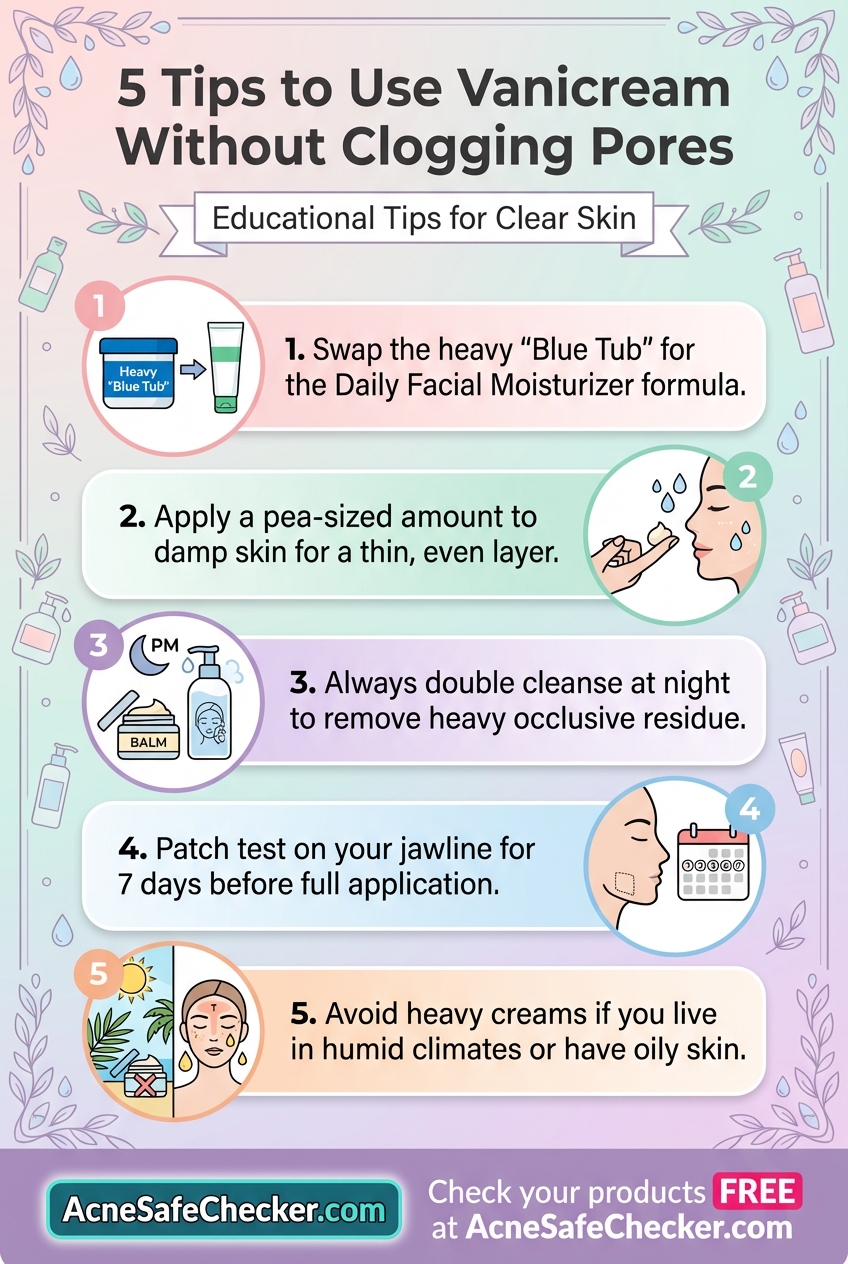
If you want the soothing benefits of Vanicream without the risk of breakouts, follow these professional tips:
- Choose the Lighter Formula: If you have acne-prone skin, skip the thick cream in the tub and opt for the Vanicream Daily Facial Moisturizer or the Vanicream Lite Lotion. These have a lower concentration of occlusives.
- Apply to Damp Skin: Use a very small amount and apply it to damp skin. This allows the product to spread thinly and evenly, reducing the risk of heavy buildup.
- The Patch Test: Before applying it to your entire face, apply the product to a small area near your jawline for 5–7 days. If no new breakouts occur, it is likely safe for your specific skin type.
- Double Cleanse: If you use the heavier Vanicream products, ensure you are using a gentle but effective cleanser at night to fully remove the occlusive barrier.
The Dermatologist's Verdict
Does Vanicream cause breakouts? For the vast majority of people, no. It is one of the safest brands on the market for maintaining the skin barrier without irritation.
However, if you have Grade 3 or 4 inflammatory acne or highly oily skin, the heavy occlusive nature of the classic cream may be too much for your pores. In these cases, sticking to the "Daily Facial" version or the "Lite Lotion" is a much safer bet. Always remember: skincare is deeply personal. What heals one person's skin barrier may congest another's. Listen to your skin, and if you see a consistent pattern of new breakouts, it may be time to look for a formula with fewer fatty alcohols or a lower petrolatum content.