
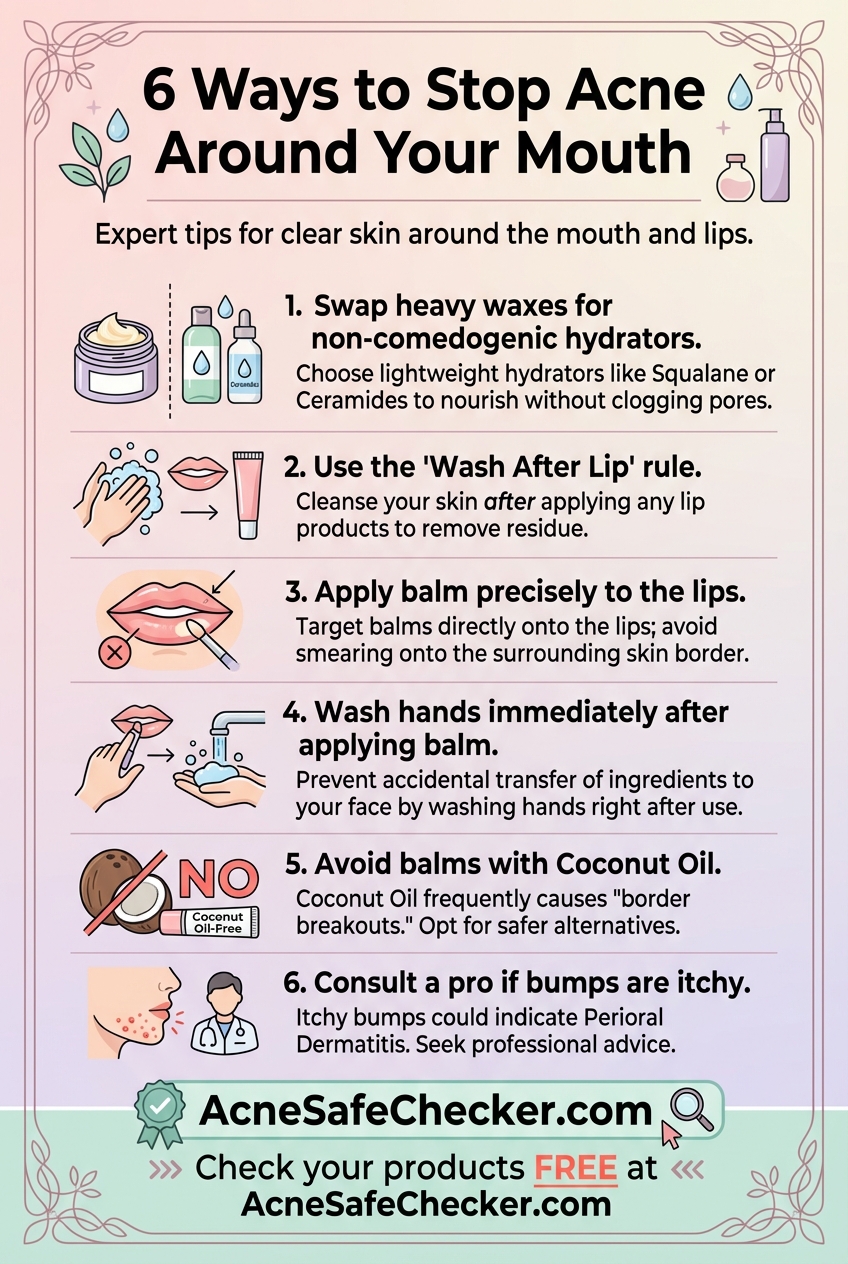
If you have ever dealt with persistent whiteheads or painful cystic bumps right on the edge of your lip line, you know how frustrating and stubborn perioral acne can be. You’ve likely swapped your pillowcases, cleaned your makeup brushes, and refined your double-cleansing routine, yet the breakouts persist. One of the most overlooked triggers for acne in this specific area isn't your moisturizer or your foundation—it is your lip balm.
Is Your Routine Acne-Safe?
Do not guess. Instantly check your products for pore-clogging ingredients with our AI-powered tool.
Check Ingredients NowAs a dermatologist, I frequently see patients who suffer from "lip balm migration." This occurs when the heavy waxes and oils intended for the mucous membranes of the lips travel onto the surrounding skin, leading to clogged pores and localized breakouts. In this guide, we will explore the science of comedogenicity in lip care and how to choose products that keep your lips hydrated without sabotaging your complexion.
Why Lip Balm Causes Acne Around the Mouth
The skin on your lips is unique; it lacks the sebaceous (oil) glands found on the rest of your face. Because of this, the lips require external occlusives to retain moisture. However, the skin immediately surrounding the lips—the vermilion border—is densely packed with oil glands.
When you apply a heavy, occlusive lip balm, the product doesn't stay perfectly localized. Through talking, eating, and sleeping, the product migrates a few millimeters past the lip line. If that balm contains highly comedogenic (pore-clogging) ingredients, it creates a physical plug in the follicle. This plug traps sebum and bacteria, leading to the formation of comedones or inflammatory acne.
Identifying the Culprits: Comedogenic Ingredients to Avoid
Many traditional lip balms rely on heavy oils and waxes that are notorious for clogging pores. If you are prone to breakouts around the mouth, check your ingredient labels for these common offenders:
1. Coconut Oil (Cocos Nucifera Oil)
While beloved in the natural beauty community, coconut oil is highly comedogenic. It sits on top of the skin and is a frequent cause of "border breakouts."
2. Cocoa Butter and Shea Butter
These are wonderful for extremely dry skin on the body, but they are often too rich for the acne-prone perioral area. Shea butter is lower on the scale than cocoa butter, but it can still be problematic for sensitive individuals.
3. Isopropyl Myristate and Palmitate
These synthetic esters are used to give lip balms a smooth, silky feel. Unfortunately, they are well-documented pore-cloggers that can trigger rapid breakouts.
4. Heavy Waxes and Lanolin
While lanolin is an excellent emollient, it is derived from sheep's wool and can be mildly comedogenic for some. Similarly, high concentrations of paraffin or thick petrolatum can trap sweat and bacteria against the skin if applied too thickly.
The Scientific Difference: Non-Comedogenic Lip Care
A non-comedogenic lip balm is formulated specifically to minimize the risk of pore blockages. These products prioritize ingredients that have a molecular structure unlikely to wedge inside the follicle.
When looking for a safe alternative, look for these "acne-safe" hydrators:
- Squalane: A lightweight, non-comedogenic oil that mimics the skin's natural sebum without clogging pores.
- Hyaluronic Acid: A humectant that draws moisture into the lips without the need for heavy greasiness.
- Ceramides: These help repair the skin barrier of the lips and the surrounding area safely.
- Jojoba Oil: Often better tolerated than other oils because its chemical structure is very similar to human sebum.
Practical Steps to Prevent Perioral Breakouts
Choosing the right product is half the battle. The other half is how you manage your routine. Follow these steps to keep your skin clear:
1. The "Wash After Lip" Rule
If you use a heavy lip mask at night, make sure you wash your face after applying your lip products or ensure you are cleansing the border of your mouth thoroughly in the morning. This removes any product that migrated during sleep.
2. Apply with Precision
Avoid swiping your lip balm far past the natural pink of your lips. If you use a finger to apply, wash your hands immediately afterward so you don’t accidentally transfer the balm to your cheeks or chin.
3. Check for Perioral Dermatitis
Not every bump around the mouth is acne. If you see small, red, itchy bumps that don't quite look like whiteheads, you might be dealing with Perioral Dermatitis. This condition is often aggravated by heavy petrolatum and flavored lip balms (like cinnamon or peppermint). If your "acne" isn't responding to traditional treatments, consult a professional.
Dermatologist-Recommended Ingredients for Clear Skin
When shopping, look for labels that explicitly state "non-comedogenic" or "oil-free." Ideally, seek out medical-grade or dermo-cosmetic brands that focus on sensitive skin. Balms containing Mineral Oil are generally safer than those containing Coconut Oil, as cosmetic-grade mineral oil is non-comedogenic, despite common myths to the contrary.
Conclusion
Acne around the mouth doesn't have to be a permanent fixture of your life. By transitionining to a non-comedogenic lip balm, you eliminate a major source of follicular occlusion. Remember: your lips need moisture, but the skin around them needs to breathe. By choosing your ingredients wisely and practicing mindful application, you can achieve both soft lips and a clear, breakout-free smile.