
For anyone who has ever navigated the treacherous waters of adult acne, the ingredient list on a new moisturizer can feel like a minefield. You likely already know to look for labels like "non-comedogenic" or "oil-free," but as the skincare industry leans further into "clean beauty," natural derivatives are appearing more frequently. One such ingredient that often causes confusion is sulfated jojoba oil.
Is Your Routine Acne-Safe?
Do not guess. Instantly check your products for pore-clogging ingredients with our AI-powered tool.
Check Ingredients NowWhile standard jojoba oil is often praised as a holy grail for skin health, its sulfated cousin tells a very different story. As a dermatologist, I frequently see patients who are frustrated because their "natural" skincare routine is actually triggering their breakouts. Today, we are going to dive deep into the scientific rating of sulfated jojoba oil and why it might be the hidden culprit behind your persistent congestion.
What Exactly is Sulfated Jojoba Oil?
To understand the rating, we first have to understand the chemistry. Pure jojoba oil is technically a liquid wax ester, remarkably similar to the human sebum our skin naturally produces. This similarity is why pure jojoba is usually well-tolerated.
However, sulfated jojoba oil is a chemically modified version. Through a process called sulfation, the oil is reacted with sulfuric acid. This process transforms the oil into an anionic surfactant or emulsifier. This means it becomes water-soluble, making it a popular choice for manufacturers who want the "label appeal" of jojoba oil in water-based cleansers, shampoos, or lightweight lotions without the greasy residue of a pure oil.
The Comedogenic Rating: Sulfated vs. Pure
The comedogenic scale is a tool used by dermatologists and estheticians to determine the likelihood that a specific ingredient will cause comedones (clogged pores). The scale ranges from 0 to 5:
- 0: Will not clog pores
- 1-2: Low probability of clogging pores
- 3: Moderate probability
- 4-5: High probability of clogging pores
The Stark Contrast
Pure, cold-pressed jojoba oil typically sits at a 2 on the scale. For most people, this is safe and even beneficial.
Sulfated jojoba oil, however, typically receives a rating of 3 to 4.
This jump is significant. In the world of acne-prone skin, an ingredient with a rating of 3 or 4 is considered a "red flag." While it might not cause an immediate breakout for everyone, for those with a predisposition to acne, it significantly increases the risk of follicular hyperkeratosis—the process where skin cells stick together and trap oil within the pore.
Why Does Sulfation Increase the Risk?
You might wonder why a simple chemical tweak changes a skin-friendly oil into a pore-clogger. The answer lies in the interaction between the ingredient and the skin barrier.
- Increased Penetration and Irritation: Sulfated oils are surfactants. Surfactants, by nature, are designed to break down oils and can sometimes disrupt the lipid barrier of the skin. When the skin barrier is irritated, it triggers an inflammatory response. In acne-prone individuals, inflammation is the precursor to a breakout.
- Molecular Alteration: The sulfation process changes the molecular structure of the wax esters. While pure jojoba mimics sebum in a way that can actually "trick" the skin into producing less oil, the sulfated version loses much of this bio-mimicry. Instead, it becomes a substance that can more easily become trapped within the sebaceous follicle.
- Detergent Properties: Because it acts as a detergent, it can strip the skin of its necessary moisture while simultaneously depositing a film that leads to congestion.
How to Identify it on Your Labels
When scanning your skincare or makeup products, the ingredient may not always be listed as "Sulfated Jojoba Oil." Keep an eye out for these INCI (International Nomenclature of Cosmetic Ingredients) names:
- Jojoba Oil, Sulfated
- Sulfated Simmondsia Chinensis Seed Oil
- Sodium Jojoba Sulfate
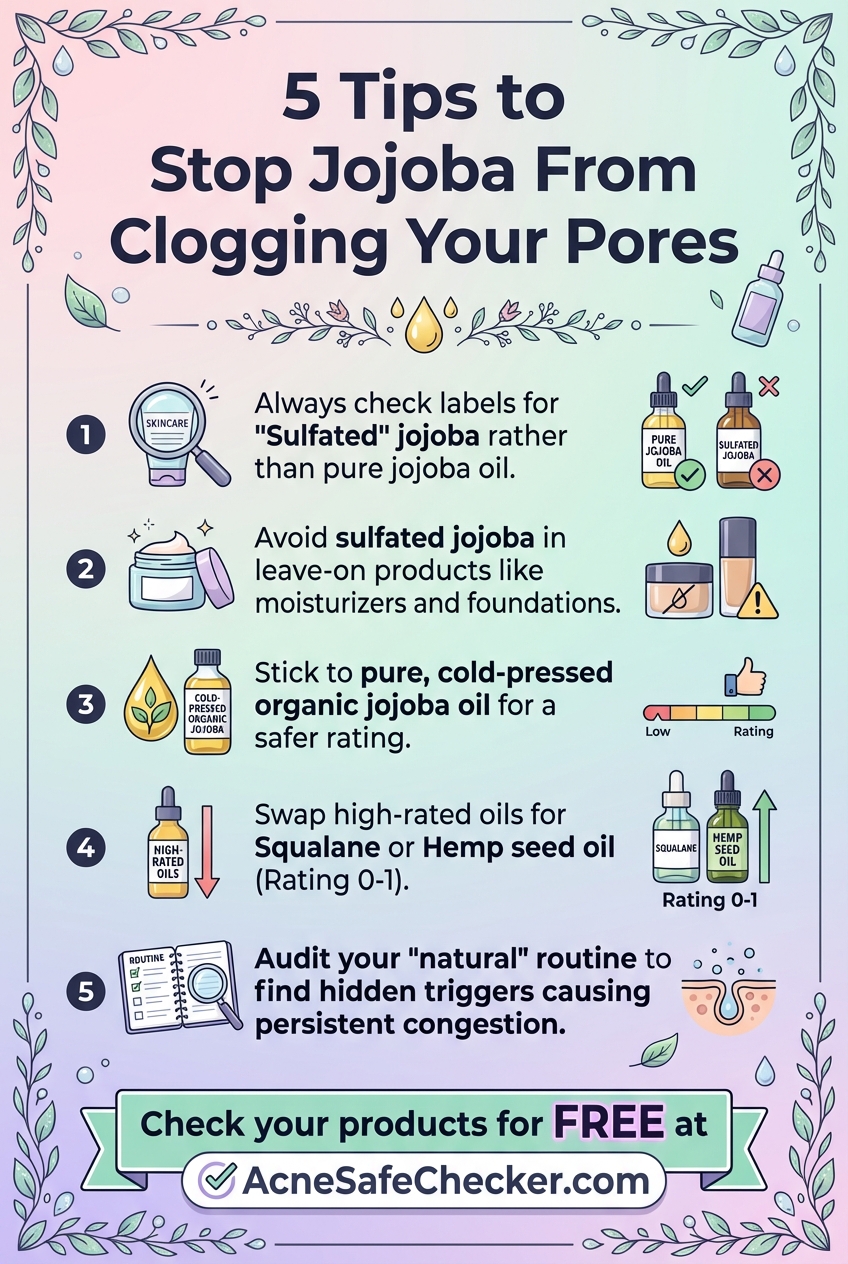
It is most commonly found in "wash-off" products like foaming cleansers or hair care, but it occasionally sneaks into "leave-on" products like primer or liquid foundation, where the risk of clogging is much higher.
Practical Advice for Acne-Prone Skin
If you are currently struggling with whiteheads, blackheads, or cystic acne, here are the steps I recommend regarding sulfated ingredients:
1. Audit Your Routine
Check your current products. If you find sulfated jojoba oil in a product you leave on your skin all day (like a moisturizer or foundation), consider swapping it out for a truly non-comedogenic alternative.
2. Prioritize Pure Alternatives
If you love the benefits of jojoba, stick to the pure, organic, cold-pressed version. Alternatively, look for oils with a 0-1 rating, such as Squalane oil (derived from olives or sugarcane) or Hemp seed oil. These provide hydration without the risk of follicular occlusion.
3. The "Wash-Off" Exception
If sulfated jojoba oil is in your cleanser, it may not be as damaging since it is rinsed away. However, if your skin feels tight, itchy, or remains congested despite a thorough routine, even a wash-off product containing this ingredient could be the culprit.
Conclusion
In the search for clear skin, knowledge is your most powerful tool. While "jojoba" is a word associated with health and nature, the sulfated jojoba oil rating of 3-4 serves as a reminder that chemical processing can change how an ingredient interacts with your pores.
If you have acne-prone skin, your goal is to minimize inflammation and keep the follicular pathway clear. By avoiding high-rated comedogenic ingredients like sulfated jojoba oil, you are giving your skin the best possible environment to remain clear, calm, and healthy. Always remember: when in doubt, less is often more when it comes to the complexity of your ingredient list.