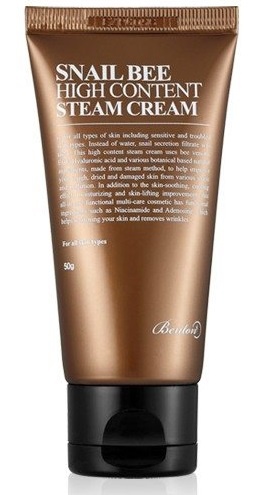
Benton Snail Bee High Content Steam Cream
The Benton Snail Bee High Content Steam Cream is a cult-favorite K-beauty moisturizer formulated to provide deep hydration and skin-repairing benefits. Utilizing a unique high-temperature steam injection process, this cream features a rich, velvety texture that blends seamlessly into the skin. Its star ingredient, Snail Secretion Filtrate, works alongside Bee Venom to soothe irritation and promote a more even skin tone. While the formula is packed with beneficial humectants like Glycerin and Butylene Glycol, it is characterized by its heavy emollient base. This cream is designed to lock in moisture and protect the skin barrier, making it a popular choice for those looking to combat dryness and environmental stressors. However, the inclusion of several concentrated fatty acids and botanical extracts means that while it feels luxurious and nourishing, it may not be the ideal match for every skin profile, particularly those prone to congestion.
Our Analysis
Our analysis of the Benton Snail Bee High Content Steam Cream reveals a High comedogenic risk level. The most concerning ingredient is Algae Extract, which holds a 5/5 rating due to iodides that can irritate the pore lining and trigger inflammation. Furthermore, the formula contains a combination of fatty acids—Lauric, Myristic, Palmitic, and Stearic acid. Specifically, Lauric Acid (4/5) and Myristic Acid (3/5) are known to be problematic for oily skin types, as their molecular structure can easily lead to pore blockages and micro-comedones. This product prioritizes barrier protection over pore-safety.
Skin Type Recommendations
This cream is best for very dry, mature, or non-acne-prone skin types needing intense moisture. It is not recommended for oily, combination, or acne-prone skin, as the high concentration of Algae Extract and fatty acids poses a significant risk for breakouts and clogged pores. Sensitive skin should patch test first.
Flagged Ingredients
Rich in iodides which irritate the pore lining, triggering inflammation and micro-comedones.
Can be irritating and clogging in isolation due to molecular structure.
Saturated fatty acid that can be problematic for oily skin.
Saturated fatty acid; provides barrier but can be occlusive.
Found in many butters; thickening agent with low-moderate risk.
Want Deeper Analysis?
Run our MACR (Multi-Axis Comedogenic Risk) analysis to get a comprehensive 5-axis risk assessment. This AI-powered analysis evaluates ingredients for Plugging Risk, Barrier Damage, Fungal Acne Risk, Oxidation Risk, and real-world User Reports — giving you personalized scores for your skin type.