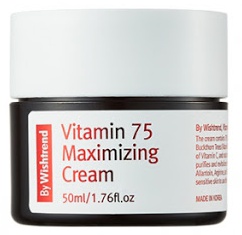
By Wishtrend Vitamin 75 Maximizing Cream
The By Wishtrend Vitamin 75 Maximizing Cream is a vitamin-rich moisturizer designed to boost the efficacy of your skincare routine, particularly when used in tandem with Vitamin C serums. Formulated with an impressive 75% Hippophae Rhamnoides (Vitamin Tree) Water, this cream delivers a concentrated dose of antioxidants and natural vitamins to brighten and nourish the complexion. In addition to Vitamin Tree water, it contains Helianthus Annuus (Sunflower) Seed Oil and Glycerin to lock in moisture and improve skin texture. While the texture is designed to be absorbed without a sticky finish, the formula is quite rich in botanical oils and fatty acids. It aims to provide deep hydration and skin-barrier support, making it a popular choice for those looking to combat dullness and uneven skin tone. However, for those with specific skin concerns like persistent acne, a closer look at the emollient base is necessary to ensure it aligns with your skin's needs and won't lead to unwanted congestion.
Our Analysis
Our analysis flags the By Wishtrend Vitamin 75 Maximizing Cream with a high comedogenic risk level. While it contains skin-brightening Vitamin Tree water, the formula relies on several heavy pore-clogging emollients. Specifically, palm oil and palm kernel oil both carry a high rating of 4/5 due to their high saturated fat content, which can create a heavy, suffocating film over the pores. Additionally, ingredients like beeswax and macadamia oil provide deep nourishment but can be problematic for those with oily or acne-prone skin. Users prone to breakouts should exercise caution with this formula.
Skin Type Recommendations
This cream is best suited for dry or very dry skin types that need intensive nourishment and barrier protection. However, it is not recommended for oily, combination, or acne-prone skin. The high concentration of comedogenic oils like palm oil makes it likely to cause breakouts and congestion in acne-prone users.
Flagged Ingredients
High saturated fat (Palmitic Acid) content creates a heavy, clogging film.
Similar to Coconut Oil; high in Lauric Acid and clogging.
Fatty alcohol emollient with low-moderate comedogenicity on its own. However, when combined with Ceteareth-20, the synergistic effect can significantly increase pore-clogging potential (combined rating of 4).
Fractionated coconut oil; removed most clogging long-chain acids but can still affect some.
High in Palmitoleic acid; very nourishing but slightly heavy.
Forms a breathable barrier; rarely clogs pores directly but can trap other comedogenic ingredients underneath it.
Want Deeper Analysis?
Run our MACR (Multi-Axis Comedogenic Risk) analysis to get a comprehensive 5-axis risk assessment. This AI-powered analysis evaluates ingredients for Plugging Risk, Barrier Damage, Fungal Acne Risk, Oxidation Risk, and real-world User Reports — giving you personalized scores for your skin type.