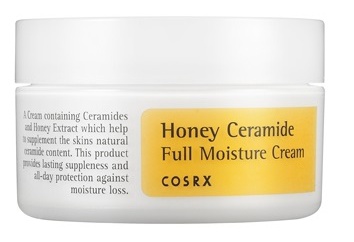
COSRX Honey Ceramide Cream
The COSRX Honey Ceramide Cream is a deeply nourishing moisturizer designed to strengthen the skin barrier and provide intense hydration. Formulated with a high concentration of Honey Extract as its primary ingredient, this cream leverages natural antibacterial and humectant properties to soothe the skin. The addition of Helianthus Annuus (Sunflower) Seed Oil and Glycerin helps to replenish moisture levels, making it a popular choice for those dealing with dehydration or a compromised skin barrier. The texture is rich and buttery, providing a protective occlusive layer that prevents transepidermal water loss. While it excels at providing a 'comforting' feel to dry skin, the formula contains a complex blend of oils and waxes. It is specifically engineered to deliver long-lasting moisture, but its heavy emollient base means it may behave differently depending on your skin's tendency toward congestion. Understanding the balance between its barrier-repairing ceramides and its oil profile is key for anyone incorporating this into a targeted skincare routine.
Our Analysis
Our analysis classifies the COSRX Honey Ceramide Cream as having a HIGH comedogenic risk. The formula contains both Palm Oil and Palm Kernel Oil, which are rated 4/5 on the comedogenic scale due to their high saturated fat and Lauric Acid content, known for creating a pore-clogging film. Additionally, the presence of Beeswax can trap these heavy ingredients against the skin. While Honey Extract is beneficial, the combination of these high-risk oils makes this product likely to trigger breakouts or closed comedones in individuals with acne-prone skin types.
Skin Type Recommendations
This cream is best suited for individuals with very dry or mature skin that requires heavy occlusives to retain moisture. However, it is not recommended for oily, combination, or acne-prone skin. Those with sensitive skin should proceed with caution due to the potential for congestion caused by the palm-derived ingredients.
Flagged Ingredients
High saturated fat (Palmitic Acid) content creates a heavy, clogging film.
Similar to Coconut Oil; high in Lauric Acid and clogging.
Fractionated coconut oil; removed most clogging long-chain acids but can still affect some.
Forms a breathable barrier; rarely clogs pores directly but can trap other comedogenic ingredients underneath it.
Fatty alcohol emollient with low-moderate comedogenicity on its own. However, when combined with Ceteareth-20, the synergistic effect can significantly increase pore-clogging potential (combined rating of 4).
Want Deeper Analysis?
Run our MACR (Multi-Axis Comedogenic Risk) analysis to get a comprehensive 5-axis risk assessment. This AI-powered analysis evaluates ingredients for Plugging Risk, Barrier Damage, Fungal Acne Risk, Oxidation Risk, and real-world User Reports — giving you personalized scores for your skin type.