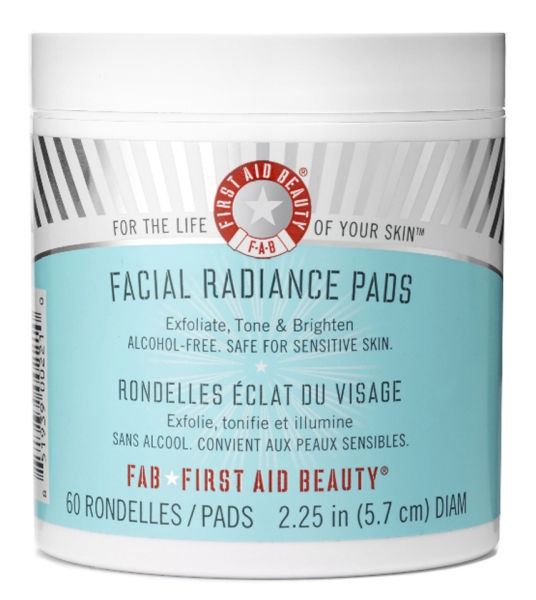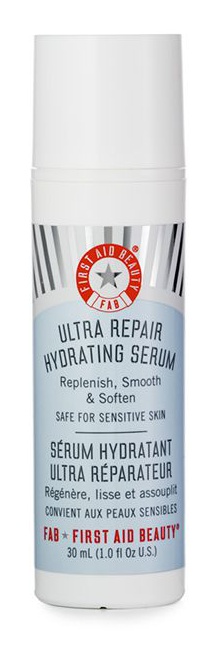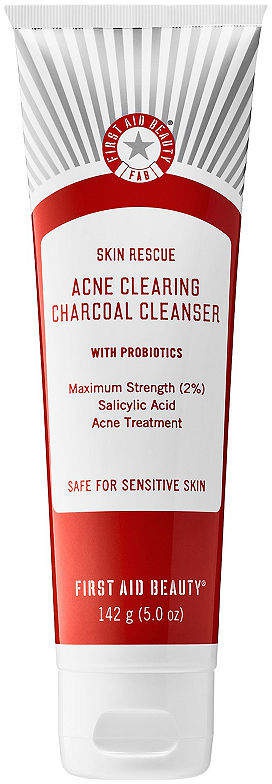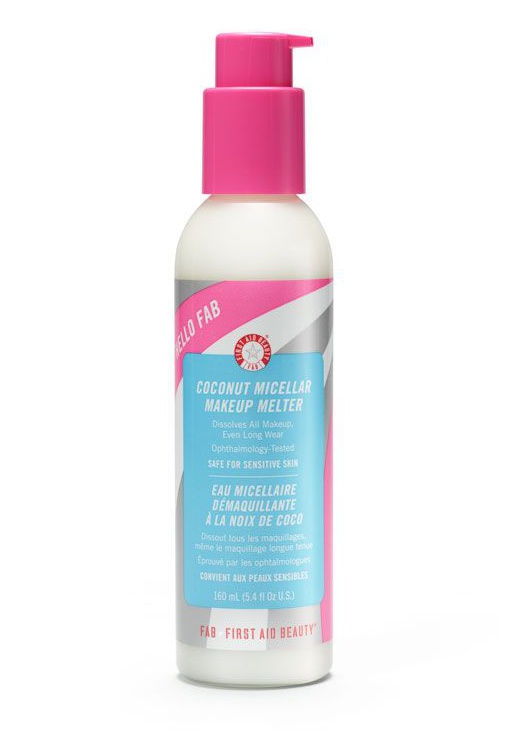
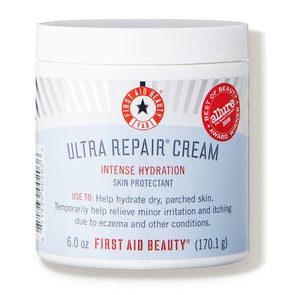
First Aid Beauty Ultra Repair Cream
First Aid Beauty Ultra Repair Cream is a widely popular, cult-favorite moisturizer designed to provide immediate relief and intense hydration for dry, distressed skin. Known for its signature whipped, creamy texture, it absorbs remarkably fast without leaving a heavy or greasy film behind. The formula centers around skin-soothing Glycerin and C12-15 Alkyl Benzoate to provide an emollient feel that softens the skin's surface. While it is marketed as a safe haven for sensitive skin and those suffering from eczema, its ingredient list contains several fatty acids and esters that warrant a closer look for those with congestion-prone skin. It aims to repair the skin barrier and provide long-lasting comfort, making it a go-to for many during harsh winter months or after professional treatments. However, its rich profile of Stearic Acid and other thickening agents means that while it feels luxurious, it may not be the perfect match for every complexion, especially those battling persistent acne.
Our Analysis
Our analysis assigns a MODERATE comedogenic risk to the First Aid Beauty Ultra Repair Cream. The formula contains Glyceryl Stearate SE (3/5), a self-emulsifying wax that can be problematic for those prone to breakouts. Additionally, Stearic Acid and Caprylic/Capric Triglyceride (fractionated coconut oil) are present, both carrying a low-to-moderate risk of clogging pores. We also flagged Cetearyl Alcohol; while generally safe, its presence alongside other fatty acids can sometimes increase the likelihood of congestion. If your skin is highly reactive to esters or stearates, this product might lead to closed comedones.
Skin Type Recommendations
This cream is best suited for individuals with very dry, dehydrated, or sensitive skin types who prioritize barrier repair over acne prevention. It is not recommended for oily or acne-prone skin due to its moderate comedogenic risk. Those with combination skin should use it sparingly or only on dry patches.
Flagged Ingredients
Self-emulsifying version contains stearates that can clog pores.
Found in many butters; thickening agent with low-moderate risk.
Fractionated coconut oil; removed most clogging long-chain acids but can still affect some.
Fatty alcohol emollient with low-moderate comedogenicity on its own. However, when combined with Ceteareth-20, the synergistic effect can significantly increase pore-clogging potential (combined rating of 4).
Want Deeper Analysis?
Run our MACR (Multi-Axis Comedogenic Risk) analysis to get a comprehensive 5-axis risk assessment. This AI-powered analysis evaluates ingredients for Plugging Risk, Barrier Damage, Fungal Acne Risk, Oxidation Risk, and real-world User Reports — giving you personalized scores for your skin type.