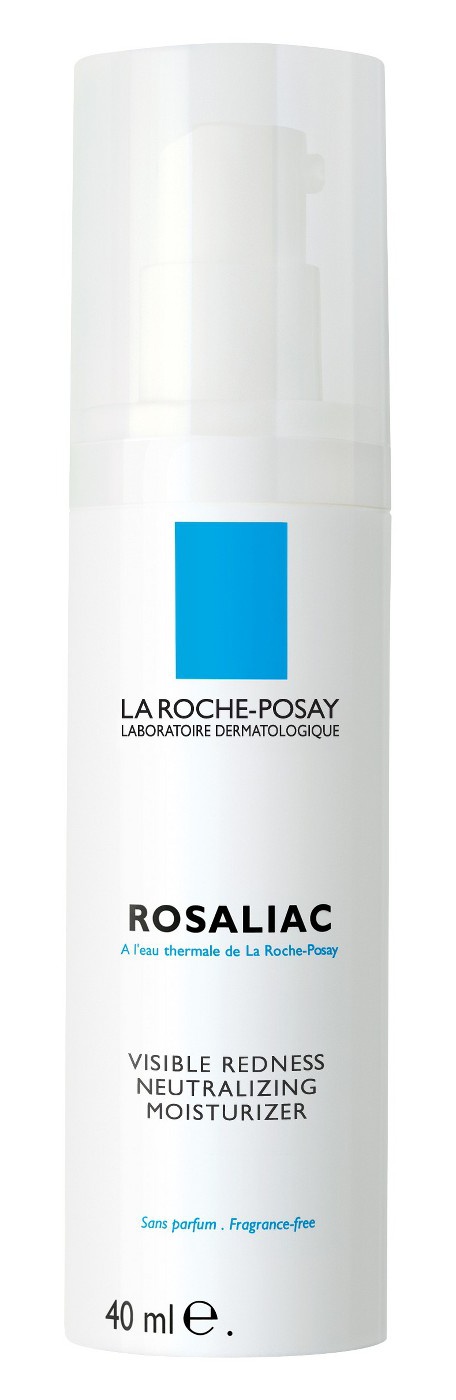
La Roche-Posay Rosaliac Anti-Redness Moisturizer
La Roche-Posay Rosaliac Anti-Redness Moisturizer is a targeted daily treatment designed to soothe skin prone to visible redness and sensitivity. As a staple from the renowned French pharmacy brand, this moisturizer aims to reinforce the skin's natural barrier while providing immediate comfort. The formula leads with hydrating Glycerin and Isononyl Isononanoate to provide a soft, emollient feel without a heavy or greasy residue. The inclusion of Cyclohexasiloxane ensures a smooth, spreadable texture that blurs imperfections, while Alcohol Denat helps the product penetrate quickly for a weightless finish. Designed for those struggling with flushing or reactive skin, it works to neutralize redness through hydration and protective lipids. While it feels light on the skin, it contains a specific blend of fatty acids intended to lock in moisture and prevent environmental irritants from triggering sensitivity. For users seeking a calming moisturizer that integrates seamlessly under makeup or sunscreen, this product offers a balanced approach to redness relief and barrier support.
Our Analysis
Our analysis of the La Roche-Posay Rosaliac Anti-Redness Moisturizer indicates a moderate comedogenic risk. The primary concern for acne-prone users is Myristic Acid, which has a rating of 3/5 and can be particularly triggering for oily skin types. Additionally, the formula contains Cetyl Alcohol, Stearic Acid, and Palmitic Acid, all of which carry a 2/5 rating. These fatty acids are excellent for barrier repair but can be occlusive. While these ingredients help soothe redness, they may lead to congestion or breakouts in individuals who are highly susceptible to pore-clogging.
Skin Type Recommendations
This product is best suited for dry, normal, or combination skin types dealing with persistent redness or rosacea. Due to the moderate comedogenic rating and the presence of myristic acid, it is not recommended for those with very oily or active acne-prone skin, as it may contribute to breakouts.
Flagged Ingredients
Saturated fatty acid that can be problematic for oily skin.
A fatty alcohol (emollient) that is generally safe, but can be problematic for very sensitive individuals.
Found in many butters; thickening agent with low-moderate risk.
Saturated fatty acid; provides barrier but can be occlusive.
Want Deeper Analysis?
Run our MACR (Multi-Axis Comedogenic Risk) analysis to get a comprehensive 5-axis risk assessment. This AI-powered analysis evaluates ingredients for Plugging Risk, Barrier Damage, Fungal Acne Risk, Oxidation Risk, and real-world User Reports — giving you personalized scores for your skin type.