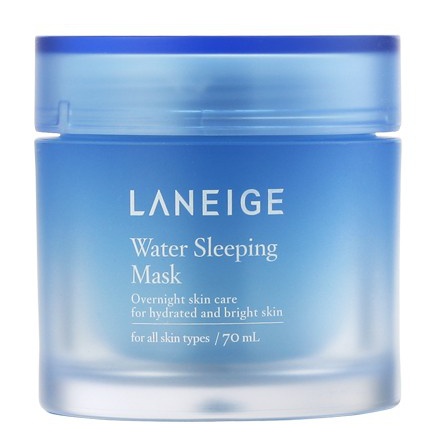
LANEIGE Water Sleeping Mask
The LANEIGE Water Sleeping Mask is a cult-favorite overnight treatment designed to deliver intensive hydration while you sleep. As a pioneer in K-beauty moisture technology, LANEIGE formulated this mask to replenish the skin’s moisture barrier using a refreshing, gel-like texture that absorbs quickly without leaving a heavy or greasy residue. The formula is powered by humectants like Glycerin and Butylene Glycol, which work to draw moisture deep into the skin, while silicones like Cyclopentasiloxane provide a silky-smooth finish and help lock in hydration. This mask is designed to leave the complexion looking rested and radiant by morning. While it provides an immediate cooling sensation and impressive 'glass skin' results, our deep dive into the ingredient list reveals some important considerations for those with specific skin sensitivities or congestion concerns. Despite its lightweight feel, the inclusion of certain thickening agents means that acne-prone users should evaluate its compatibility with their specific skin needs.
Our Analysis
Our analysis of the LANEIGE Water Sleeping Mask indicates a Low overall comedogenic risk level, though it is not entirely free of potential triggers. The most significant finding is the presence of Algin, a thickener derived from brown algae with a high comedogenic rating of 4/5. Algin can form a film over the skin which, while helpful for moisture retention, may lead to clogged pores or congestion in individuals highly prone to breakouts. Because it is used as a texture enhancer, it may not cause issues for everyone, but it remains a key ingredient to monitor.
Skin Type Recommendations
This mask is ideal for dry, normal, and dehydrated skin types seeking a moisture boost. While the gel texture feels light, those with very oily or severely acne-prone skin should patch test first due to the Algin content, which could potentially contribute to pore congestion in reactive skin types.
Flagged Ingredients
Polysaccharide thickener derived from brown algae; creates clogging films.
MACR Analysis
5-Axis AI-Powered Risk Assessment
The MACR analysis found moderate concerns not captured by traditional comedogenic ratings, such as barrier disruption or irritation potential.
Overall Risk Score
Lower is better
Score by Skin Type
Lower is better
Same product, different risks based on your skin type
Fallback analysis found 1 potentially comedogenic ingredients with an overall risk score of 55/100.
Risk Breakdown
Skin Type Considerations
This analysis uses the Multi-Axis Comedogenic Risk (MACR) system. Results are AI-estimated and cannot account for actual ingredient concentrations. Individual reactions may vary. Consult a dermatologist for personalized advice.