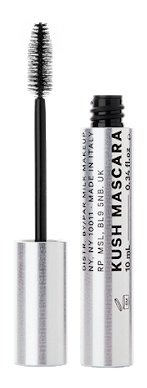
Milk Makeup Kush High Volume Mascara
Milk Makeup Kush High Volume Mascara is a popular beauty staple designed to deliver thick, heart-shaped fibers for intense volume and length. This mascara is widely recognized for its conditioning formula, which utilizes plant-derived oils and waxes to provide a soft, non-brittle feel while making lashes look significantly fuller and more dramatic. The texture is notably creamy and dense, thanks to a base of paraffin, glyceryl stearate, and synthetic beeswax, ensuring a smooth application that builds volume quickly without the crunchiness often associated with high-impact mascaras. While it is marketed as a conditioning makeup product, the formula is rich in heavy-duty emollients like cupuacu butter and hemp-derived seed oil intended to hydrate and protect. It offers a bold finish that defines the eyes effortlessly, though the inclusion of several rich saturated fatty acids and butters means the product provides a heavy occlusive barrier. For those who prioritize lash health and a voluminous aesthetic, this product delivers high performance, but it requires a careful look at its ingredient profile if you have reactive skin.
Our Analysis
Our analysis of the Milk Makeup Kush High Volume Mascara reveals a High comedogenic risk level, which is a crucial consideration for those with acne-prone skin. The most concerning ingredient is cupuacu butter, which carries a rating of 4/5; its high stearic and oleic content creates a heavy, water-absorbing occlusive barrier that can easily clog pores if it migrates. Additionally, hydrogenated vegetable oil (3/5) and saturated fatty acids like stearic and palmitic acid (2/5) further increase the risk of congestion or milia around the delicate eye area for susceptible users.
Skin Type Recommendations
This mascara is best for those with dry or normal skin types who want conditioning, high-volume lashes. It is not recommended for oily or acne-prone skin types, as the high-risk occlusives like cupuacu butter may trigger breakouts or milia if the product smudges or transfers to the skin.
Flagged Ingredients
High Stearic/Oleic content; forms a water-absorbing occlusive barrier.
Trans-fat texture can be occlusive.
Found in many butters; thickening agent with low-moderate risk.
Saturated fatty acid; provides barrier but can be occlusive.
Want Deeper Analysis?
Run our MACR (Multi-Axis Comedogenic Risk) analysis to get a comprehensive 5-axis risk assessment. This AI-powered analysis evaluates ingredients for Plugging Risk, Barrier Damage, Fungal Acne Risk, Oxidation Risk, and real-world User Reports — giving you personalized scores for your skin type.