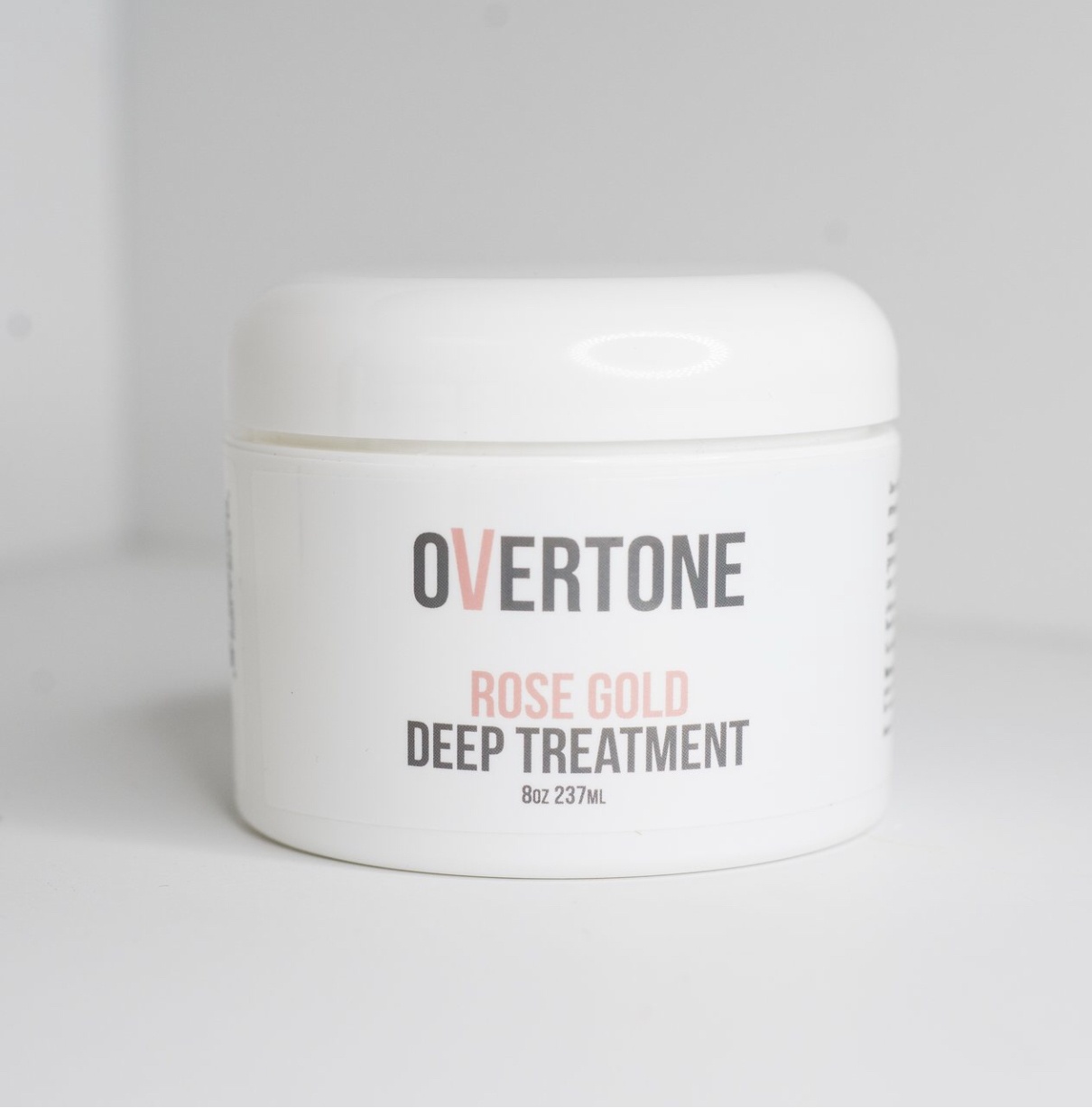
Overtone Rose Gold Deep Treatment
Overtone Rose Gold Deep Treatment is a pigment-depositing conditioner designed to maintain vibrant rose gold tones while providing intense hydration to the hair. While primarily a hair care product, its rich, buttery texture frequently comes into contact with the face, neck, and back during application and rinsing. The formula is packed with nourishing botanicals like evening primrose oil, avocado oil, and olive oil, which aim to restore hair health and shine. However, the base is heavily reliant on a dense blend of fatty alcohols—specifically cetearyl, cetyl, and stearyl alcohol—to provide its signature slip and conditioning feel. These ingredients help the product coat the hair shaft effectively but also contribute to a thick, occlusive film. For those who use this deep treatment in the shower, the residue can linger on the skin long after rinsing. It is essential for users with clear-skin goals to be mindful of how these heavy oils and emollients interact with their skin during their beauty routine.
Our Analysis
Our analysis of Overtone Rose Gold Deep Treatment reveals a HIGH comedogenic risk level. The formula contains several high-risk ingredients, most notably linseed oil and coconut oil, both rated 4/5 for their potential to clog pores. Linseed oil is highly unstable and can trigger inflammatory acne via oxidation, while coconut oil's lauric acid content can solidify within the pore. Additionally, the presence of sesame oil and the synergistic effect of cetearyl alcohol increase the risk of 'backne' or hairline breakouts. While hydrating for hair, these ingredients are significant triggers for skin congestion.
Skin Type Recommendations
This product is poorly suited for acne-prone, oily, or sensitive skin types due to the high concentration of comedogenic oils like coconut and linseed. It is best for those with dry, non-acne-prone skin. If you use it, we recommend washing your face and back after rinsing the treatment.
Flagged Ingredients
Highly unstable; rapid oxidation causes inflammatory acne.
High Lauric Acid content solidifies inside the pore.
Moderate risk; heavy texture can trap debris.
Fatty alcohol emollient with low-moderate comedogenicity on its own. However, when combined with Ceteareth-20, the synergistic effect can significantly increase pore-clogging potential (combined rating of 4).
A fatty alcohol (emollient) that is generally safe, but can be problematic for very sensitive individuals.
Waxy fatty alcohol; low risk but can add heaviness.
Rich and heavy oil; excellent for dry skin but can be too heavy for very oily skin types.
High in GLA (gamma-linolenic acid); good for hormonal acne, low clog risk.
High Oleic Acid content (similar to sebum); generally safe but can exacerbate fungal acne (Malassezia).
Want Deeper Analysis?
Run our MACR (Multi-Axis Comedogenic Risk) analysis to get a comprehensive 5-axis risk assessment. This AI-powered analysis evaluates ingredients for Plugging Risk, Barrier Damage, Fungal Acne Risk, Oxidation Risk, and real-world User Reports — giving you personalized scores for your skin type.