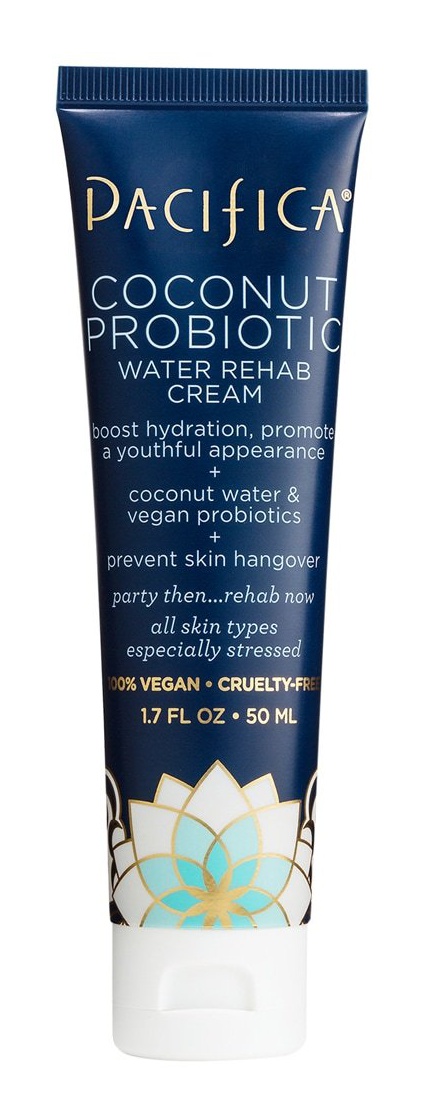
Pacifica Coconut Probiotic Water Rehab Cream
Pacifica Coconut Probiotic Water Rehab Cream is designed to rescue stressed skin using a blend of aloe barbadensis leaf juice, coconut water, and vegan probiotics. Marketed as a lightweight 'rehab' for the complexion, it aims to hydrate and soothe dull, dehydrated skin. The inclusion of aloe vera provides a cooling, anti-inflammatory base, while coconut-derived ingredients work to soften the skin's texture. Despite the 'water' terminology in its name, the cream has a substantial emollient profile intended to lock in moisture and prevent transepidermal water loss. It features Tocopherol (Vitamin E) for antioxidant protection and various fatty alcohols to create a smooth, spreadable consistency. While it feels refreshing upon application, the formula relies on specific esters and thickening agents to achieve its creamy feel. For users looking for a vegan and cruelty-free hydration boost, this product offers a botanical approach to skincare. However, its effectiveness and safety depend heavily on your skin's tolerance for specific lipids and esters, making it essential to evaluate the ingredient list against your personal triggers for congestion.
Our Analysis
Our analysis of the Pacifica Coconut Probiotic Water Rehab Cream reveals a HIGH comedogenic risk level. The most significant concern is Ethylhexyl Palmitate (listed as Octyl Palmitate), which has a rating of 4/5 and is highly likely to cause pore congestion. The formula also contains Caprylic/Capric Triglyceride, Stearic Acid, and fatty alcohols like Cetyl and Stearyl Alcohol, all rated 2/5. While these are often tolerated in isolation, their cumulative presence in a moisturizing cream can be problematic for those with narrow pores. These ingredients can trap sebum and debris, potentially leading to breakouts.
Skin Type Recommendations
This cream is best for dry, non-acne-prone skin that requires heavy emollient support. However, we do not recommend this for oily, combination, or acne-prone skin types. The high concentration of Ethylhexyl Palmitate and other fatty acids poses a significant risk for congestion and inflammatory acne in sensitive or blemish-prone individuals.
Flagged Ingredients
Common texture enhancer that is highly likely to cause congestion.
Fractionated coconut oil; removed most clogging long-chain acids but can still affect some.
Found in many butters; thickening agent with low-moderate risk.
A fatty alcohol (emollient) that is generally safe, but can be problematic for very sensitive individuals.
Waxy fatty alcohol; low risk but can add heaviness.
Pure Vitamin E is thick and sticky; safe in small amounts as an antioxidant, but potentially clogging in pure oil form.
Want Deeper Analysis?
Run our MACR (Multi-Axis Comedogenic Risk) analysis to get a comprehensive 5-axis risk assessment. This AI-powered analysis evaluates ingredients for Plugging Risk, Barrier Damage, Fungal Acne Risk, Oxidation Risk, and real-world User Reports — giving you personalized scores for your skin type.