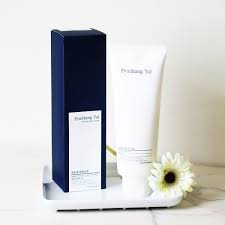
Pyunkang Yul Cleansing Foam
Pyunkang Yul Cleansing Foam is a unique, stretchy cleanser designed to lift away impurities while maintaining a focus on skin health. This Korean skincare favorite features Saposhnikovia Divaricata Root Extract as its primary ingredient, a calming herbal extract used in traditional medicine to soothe the skin. Combined with Glycerin, the formula aims to provide a deep clean without leaving the face feeling tight or stripped. The texture is famously viscous and elastic, creating a dense, bouncy foam when mixed with water that effectively grips onto dirt and sebum. While the brand is celebrated for its minimalist approach and commitment to gentle formulations, the specific cleansing agents used to create its rich lather require closer inspection for those with congestion-prone skin. This cleanser is ideal for those looking for a thorough, refreshing wash, but its ingredient profile suggests it may not be the best fit for everyone’s acne-safe journey, despite its many soothing benefits.
Our Analysis
Our analysis flags Pyunkang Yul Cleansing Foam with a High comedogenic risk level. The formula relies heavily on saturated fatty acids to achieve its signature foam. Specifically, Lauric Acid (4/5) and Myristic Acid (3/5) are high-ranking pore-cloggers that can be problematic for oily skin types. Furthermore, Glyceryl Stearate SE and Stearic Acid increase the likelihood of congestion. While these ingredients are effective surfactants, their molecular structure allows them to potentially lodge in the pores, making this product a risky choice for users currently struggling with active breakouts or chronic comedones.
Skin Type Recommendations
This cleanser is not recommended for acne-prone, oily, or combination skin types due to multiple high-risk comedogenic ingredients like Lauric Acid. Those with very dry or non-reactive skin may tolerate it well, but individuals with sensitive skin should be cautious as the fatty acid-based formula can sometimes be overly alkaline.
Flagged Ingredients
Can be irritating and clogging in isolation due to molecular structure.
Saturated fatty acid that can be problematic for oily skin.
Self-emulsifying version contains stearates that can clog pores.
Found in many butters; thickening agent with low-moderate risk.
Forms a breathable barrier; rarely clogs pores directly but can trap other comedogenic ingredients underneath it.
Want Deeper Analysis?
Run our MACR (Multi-Axis Comedogenic Risk) analysis to get a comprehensive 5-axis risk assessment. This AI-powered analysis evaluates ingredients for Plugging Risk, Barrier Damage, Fungal Acne Risk, Oxidation Risk, and real-world User Reports — giving you personalized scores for your skin type.