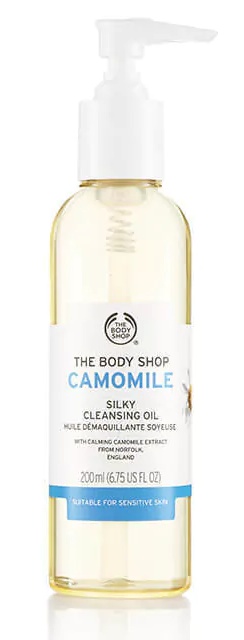
The Body Shop Camomile Silky Cleansing Oil
The Body Shop Camomile Silky Cleansing Oil is a popular first-step cleanser designed to melt away makeup, SPF, and daily impurities while soothing the skin. Formulated with skin-softening camomile extract from Norfolk, England, this oil-to-milk formula aims to leave the complexion feeling clean and refreshed. The base of this product is heavily reliant on botanical oils, featuring Glycine Soja Oil (Soybean Oil) and Prunus Amygdalus Dulcis Oil (Sweet Almond Oil) as its primary ingredients. These provide an exceptionally silky slip and a rich, luxurious texture that glides over the face without pulling. While these oils offer nourishment and are high in fatty acids, the formula also includes Helianthus Annuus (Sunflower) seed oil for added moisture and tocopherol for antioxidant protection. It is widely celebrated for being gentle on sensitive skin and highly effective at removing stubborn waterproof makeup. However, the heavy emollient profile creates a thick consistency that may feel substantial on the skin, requiring a thorough rinse or a second-step water-based cleanser to ensure no residue remains.
Our Analysis
Our analysis categorizes The Body Shop Camomile Silky Cleansing Oil as a high-risk product for pore congestion. The formula contains ethylhexyl palmitate, which carries a high comedogenic rating of 4/5, making it a frequent culprit for breakouts in acne-prone individuals. Additionally, the inclusion of soybean oil and sesame oil (both rated 3/5) increases the likelihood of trapped debris. While sweet almond oil and caprylic/capric triglyceride provide hydration for dry skin, their presence in such a heavy oil-based format can be occlusive, potentially leading to stubborn blackheads or whiteheads for those with reactive pores.
Skin Type Recommendations
This cleansing oil is best suited for those with very dry, dehydrated, or mature skin types that require intense lipid replenishment. It is not recommended for oily, combination, or acne-prone skin due to the high concentration of comedogenic oils and esters that are likely to trigger congestion and breakouts.
Flagged Ingredients
Common texture enhancer that is highly likely to cause congestion.
Moderate comedogenicity; depends on the refinement level of the oil.
Moderate risk; heavy texture can trap debris.
Rich in Oleic acid; nourishing for dry skin but potentially occlusive for oily skin.
Fractionated coconut oil; removed most clogging long-chain acids but can still affect some.
Pure Vitamin E is thick and sticky; safe in small amounts as an antioxidant, but potentially clogging in pure oil form.
Want Deeper Analysis?
Run our MACR (Multi-Axis Comedogenic Risk) analysis to get a comprehensive 5-axis risk assessment. This AI-powered analysis evaluates ingredients for Plugging Risk, Barrier Damage, Fungal Acne Risk, Oxidation Risk, and real-world User Reports — giving you personalized scores for your skin type.