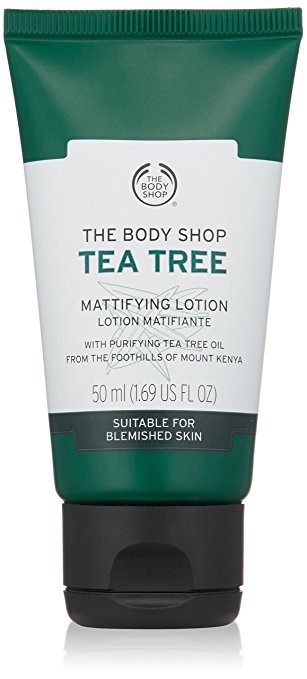
The Body Shop Tea Tree Mattifying Lotion
The Body Shop Tea Tree Mattifying Lotion is marketed as a lightweight, everyday moisturizer specifically designed for those struggling with excess shine and blemish-prone skin. Infused with Community Fair Trade tea tree oil from Kenya, this lotion aims to provide essential hydration while maintaining a shine-free finish. The formula relies heavily on a silicone base, featuring ingredients like Cyclopentasiloxane and Dimethicone Crosspolymer to create a smooth, velvet-like texture that blurs imperfections. Aluminum Starch Octenylsuccinate is included to actively absorb surface oils throughout the day, making it a popular choice for those seeking a matte complexion under makeup. While the inclusion of tea tree oil offers natural antibacterial properties, the product's feel is thin and fast-absorbing, designed to avoid the heavy greasiness often associated with traditional creams. However, despite its purifying claims, a deep dive into the ingredient list reveals several components that may be counterproductive for those with highly reactive or congestion-prone skin, making it essential to evaluate its pore-clogging potential before adding it to your routine.
Our Analysis
Our analysis classifies The Body Shop Tea Tree Mattifying Lotion as a HIGH comedogenic risk. The most significant concern is Laureth-4, which carries a maximum comedogenic rating of 5/5. This oxidative surfactant is known for creating inflammatory comedones, which can worsen active breakouts. Furthermore, the inclusion of Tamanu Oil and Sorbitan Isostearate—both rated 2/5—adds to the potential for pore congestion. While Tocopherol (Vitamin E) is a beneficial antioxidant, its presence in this specific formulation contributes to the overall risk for users sensitive to thicker oils. These ingredients may undermine the antibacterial benefits of the tea tree oil.
Skin Type Recommendations
This lotion is best suited for oily skin types that are not prone to inflammatory acne. However, we strongly advise those with acne-prone, sensitive, or congestion-heavy skin to avoid this product due to the high concentration of Laureth-4. Dry skin types may find the mattifying starch and silicones too drying.
Flagged Ingredients
Oxidative surfactant creating inflammatory comedones.
Thick, healing oil; heavy texture but anti-bacterial.
Emulsifier with lower clog potential than Oleate.
Pure Vitamin E is thick and sticky; safe in small amounts as an antioxidant, but potentially clogging in pure oil form.
Want Deeper Analysis?
Run our MACR (Multi-Axis Comedogenic Risk) analysis to get a comprehensive 5-axis risk assessment. This AI-powered analysis evaluates ingredients for Plugging Risk, Barrier Damage, Fungal Acne Risk, Oxidation Risk, and real-world User Reports — giving you personalized scores for your skin type.