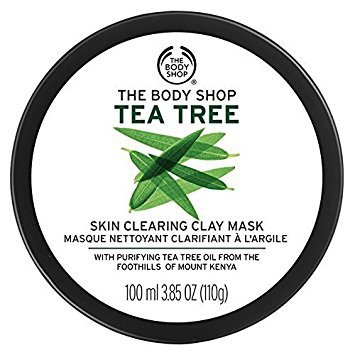
The Body Shop Tea Tree Skin Clearing Clay Mask
The Body Shop Tea Tree Skin Clearing Clay Mask is a popular choice for those looking to combat oiliness and blemishes. Formulated with Kaolin clay, this mask aims to draw out impurities and absorb excess sebum, while Glycerin provides a touch of moisture to prevent the skin from feeling stripped. The addition of Tamanu oil offers antibacterial benefits, making it theoretically ideal for troubled skin. However, despite its 'skin-clearing' name, the texture is surprisingly thick and creamy. This is largely due to the high concentration of Myristyl Myristate and Cetearyl Alcohol found early in the ingredient list. While it feels luxurious upon application and provides a cooling sensation typical of tea tree products, the formula contains several heavy esters and fatty alcohols that may counteract the purifying effects of the clay. For those with sensitive or acne-prone skin, understanding how these specific components interact with your pores is crucial before incorporating this treatment into your weekly routine.
Our Analysis
Our analysis reveals a HIGH comedogenic risk for this product. The primary concern is Myristyl Myristate, which carries a maximum rating of 5/5; this waxy ester is notorious for causing congestion. Additionally, Ethylhexyl Palmitate (Rating 4) is a known pore-clogger. While Cetearyl Alcohol is usually low-risk, its presence alongside other emollients can increase the likelihood of breakouts for some users. Despite the inclusion of purifying Kaolin and antibacterial Tamanu oil, the heavy, occlusive nature of the base ingredients makes this mask a risky choice for those actively struggling with acne.
Skin Type Recommendations
This mask is best suited for individuals with very oily skin that is not prone to cystic or inflammatory acne. However, we strongly advise those with acne-prone, sensitive, or congestion-prone skin to avoid it. The high concentration of comedogenic esters makes it likely to trigger new breakouts despite its clay base.
Flagged Ingredients
Waxy ester that is highly occlusive and difficult for skin to break down.
Common texture enhancer that is highly likely to cause congestion.
Fatty alcohol emollient with low-moderate comedogenicity on its own. However, when combined with Ceteareth-20, the synergistic effect can significantly increase pore-clogging potential (combined rating of 4).
Thick, healing oil; heavy texture but anti-bacterial.
Pure Vitamin E is thick and sticky; safe in small amounts as an antioxidant, but potentially clogging in pure oil form.
Want Deeper Analysis?
Run our MACR (Multi-Axis Comedogenic Risk) analysis to get a comprehensive 5-axis risk assessment. This AI-powered analysis evaluates ingredients for Plugging Risk, Barrier Damage, Fungal Acne Risk, Oxidation Risk, and real-world User Reports — giving you personalized scores for your skin type.