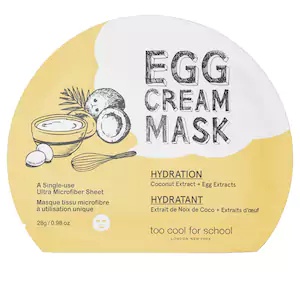
Too Cool For School Egg Cream Mask
The Too Cool For School Egg Cream Mask is a cult-favorite Korean sheet mask designed to provide an instant boost of hydration and radiance. This ultra-fine microfiber mask adheres closely to the skin, delivering a potent serum infused with egg yolk and egg white extracts to nourish and brighten the complexion. The formula features a moisturizing base of Butylene Glycol and Glycerin, which help to draw moisture into the skin, while Cyclopentasiloxane provides a silky, smooth finish. This mask is widely known for its ability to create a 'glass skin' effect, aiming to refine skin texture and provide a concentrated dose of nutrients in just 20 minutes. While it feels incredibly luxurious and comforting on the skin, the creamy texture is achieved through a blend of emollients that may be problematic for some. Users with sensitive or acne-prone skin should carefully evaluate the specific fatty acids used to achieve its rich consistency, as the ingredient list reveals several components that could potentially impact pore health.
Our Analysis
Our analysis of the Too Cool For School Egg Cream Mask reveals a moderate comedogenic risk for those prone to breakouts. The most significant concern is Oleic Acid, which carries a high rating of 4/5 and is known to disrupt skin barrier function while inducing pore blockages. The formula also contains Capric/Caprylic Triglyceride and Cetearyl Alcohol. While Cetearyl Alcohol is a common fatty alcohol, it can become highly comedogenic (reaching a rating of 4) when combined with specific emulsifiers. These ingredients make the mask a potential trigger for congestion in reactive skin types.
Skin Type Recommendations
This mask is best suited for dry, dehydrated, or mature skin types that benefit from rich emollients. However, we do not recommend it for oily or acne-prone skin due to the high concentration of Oleic Acid. Sensitive skin types should patch test first to ensure the fatty acids do not cause irritation.
Flagged Ingredients
Disrupts skin barrier function and induces pore blockage.
Fractionated coconut oil; removed most clogging long-chain acids but can still affect some.
Fatty alcohol emollient with low-moderate comedogenicity on its own. However, when combined with Ceteareth-20, the synergistic effect can significantly increase pore-clogging potential (combined rating of 4).
Want Deeper Analysis?
Run our MACR (Multi-Axis Comedogenic Risk) analysis to get a comprehensive 5-axis risk assessment. This AI-powered analysis evaluates ingredients for Plugging Risk, Barrier Damage, Fungal Acne Risk, Oxidation Risk, and real-world User Reports — giving you personalized scores for your skin type.