
The Hidden Truth About Marine Ingredients
Is Your Routine Acne-Safe?
Do not guess. Instantly check your products for pore-clogging ingredients with our AI-powered tool.
Check Ingredients NowFor many skincare enthusiasts, the word "marine" or "seaweed" evokes images of luxury, deep hydration, and clean beauty. Algae extracts are often marketed as miracle ingredients sourced from the depths of the ocean, promising everything from anti-aging benefits to intense moisture. However, for those of us with acne-prone or sensitive skin, a beautiful ingredient list can sometimes hide a frustrating secret: a high comedogenic rating.
As a dermatologist, I often see patients who have switched to high-end, "natural" skincare only to experience a sudden surge in whiteheads or cystic acne. One of the most common culprits is algae extract. Understanding the comedogenic rating of algae is not as simple as a single number; it requires a deep dive into the specific species and how they interact with your skin's unique chemistry.
What is a Comedogenic Rating?
Before we dissect algae specifically, let’s define the comedogenic scale. This scale ranges from 0 to 5:
- 0: Will not clog pores
- 1: Very low chance of clogging pores
- 2: Moderately low chance
- 3: Moderate chance
- 4: Fairly high chance
- 5: High probability of clogging pores
While this scale isn't an exact science (as formulation and concentration matter), it serves as a vital red flag for those prone to acne cosmetica—acne caused by topical products.
Why Algae Extract is Complicated
"Algae extract" is a broad, umbrella term that encompasses thousands of different species. In the skincare industry, we primarily deal with red, brown, green, and blue-green algae. Each of these has a different chemical profile and, consequently, a different effect on your pores.
The "Red Flag" Algae: Red and Brown Seaweed
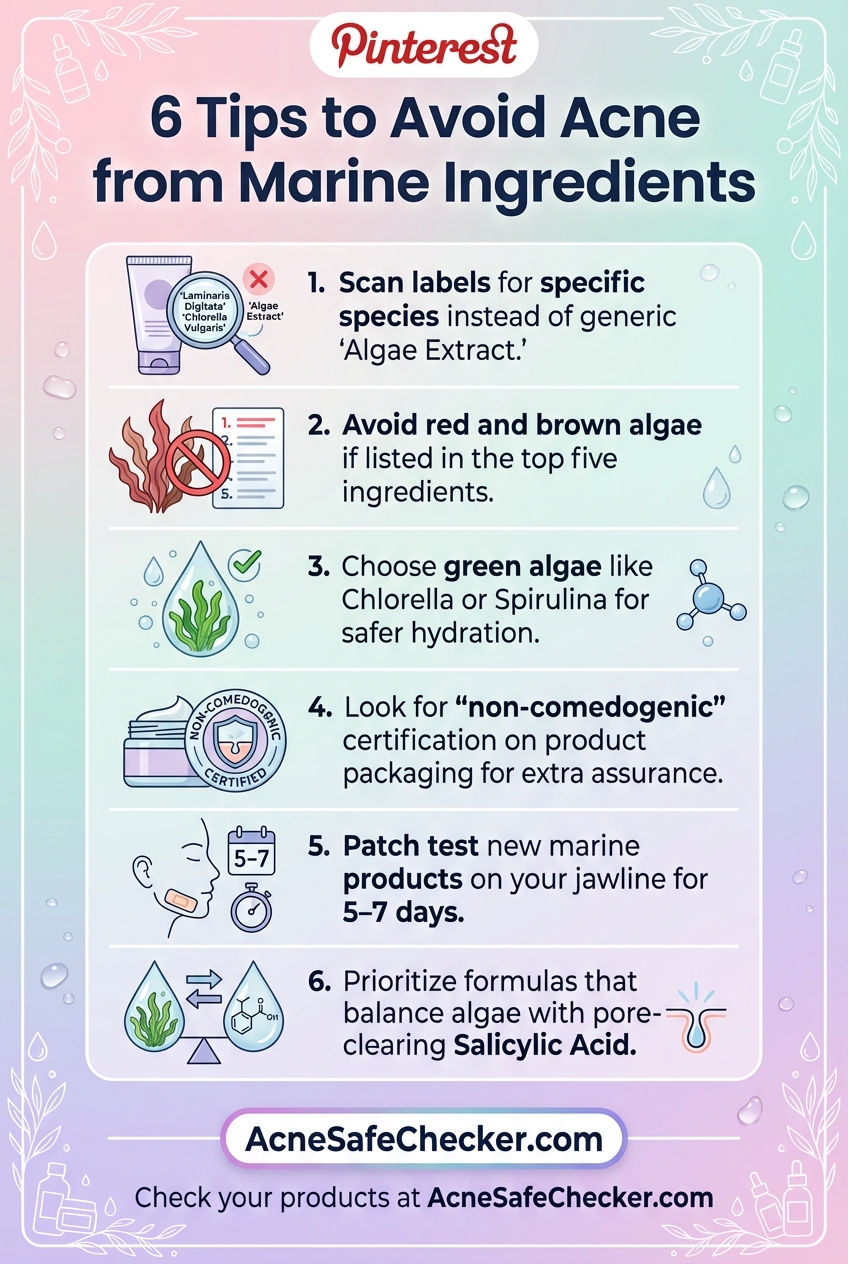
Many common algae extracts, particularly Red Algae (Algae Extract) and certain Brown Algae (Laminaria Digitata or Laminaria Saccharina), are notorious in the dermatological community for having a comedogenic rating of 5 out of 5.
If you see "Algae Extract" listed generally on a label without a specific species name, it is safest to assume it leans toward the higher end of the scale. These extracts are often rich in minerals and, most importantly, iodine.
The Science: Why Algae Clogs Pores
There are two primary scientific reasons why certain algae extracts are highly comedogenic:
- Iodine Content: Seaweeds are sponges for minerals, particularly iodine. When applied topically, iodine can irritate the lining of the pore, stimulating a process called follicular hyperkeratinization. This is essentially where skin cells shed too quickly and glue together, forming a plug (comedone) that traps sebum and bacteria.
- Salt and Mineral Density: The high salt content can be irritating to certain skin types, leading to localized inflammation that narrows the pore opening, making it easier for blockages to occur.
Not All Algae are Equal: Safer Alternatives
While some algae are pore-clogging nightmares, others are actually beneficial for acne-prone skin due to their anti-inflammatory properties.
- Chlorella (Green Algae): Typically has a much lower comedogenic rating (around 0-1) and is packed with chlorophyll and antioxidants that help soothe the skin.
- Spirulina (Blue-Green Algae): Known for its antibacterial properties, spirulina is generally considered safe for most skin types, provided the formula is well-balanced.
- Carrageenan: Though derived from red algae, it is often used as a thickener. It still carries a high comedogenic risk (rating of 3-4) and should be avoided by those with active breakouts.
How to Read Your Skincare Label
If you are prone to breakouts, you should scan your ingredient lists for these specific INCI (International Nomenclature Cosmetic Ingredient) names:
- Avoid (Rating 4-5): Laminaria Digitata, Laminaria Saccharina, Carrageenan, Red Algae, and generic Algae Extract.
- Use with Caution (Rating 2-3): Ascophyllum Nodosum (Kelp), Fucus Vesiculosus (Bladderwrack).
- Generally Safe (Rating 0-1): Chlorella Vulgaris, Spirulina Platensis.
Practical Steps for Acne-Prone Skin
If you love the hydrating benefits of marine ingredients but fear the breakouts, follow these clinical recommendations:
- Check the Position on the Label: If "Algae Extract" is one of the first five ingredients, the concentration is high, and the risk of clogging is significant. If it is at the very bottom (after preservatives like Phenoxyethanol), the risk is lower.
- Look for "Non-Comedogenic" Certification: While not a guarantee, products that have undergone third-party comedogenicity testing are a safer bet.
- Patch Test: Apply the product to a small area of your jawline for 5–7 days. This is the only way to see how your specific sebum production reacts to the extract.
- Prioritize Formulation over Ingredients: A product with a tiny amount of algae but a high amount of Salicylic Acid may not cause issues, as the acid helps keep the pores clear.
Conclusion
Algae extract is a powerhouse of nutrition for the skin, but it is a double-edged sword. For someone with dry, non-acne-prone skin, it provides unparalleled mineral replenishment. However, for those struggling with congestion, a rating of 5/5 is a risk that is often not worth taking.
When in doubt, choose products that specify the type of algae used. Knowledge is your best defense against breakouts. By understanding the comedogenic rating of your ingredients, you take the guesswork out of your routine and move one step closer to clear, healthy skin.