
If you have ever felt like your skin was simultaneously oily and uncomfortably tight, or if your acne treatments leave your face stinging and red, you are likely dealing with a compromised skin barrier. For those with acne-prone skin, this creates a frustrating paradox: the products used to clear breakouts often strip the skin of its essential oils, leading to more inflammation and, ironically, more acne.
Is Your Routine Acne-Safe?
Do not guess. Instantly check your products for pore-clogging ingredients with our AI-powered tool.
Check Ingredients NowAs a dermatologist, I see this daily. The key to breaking this cycle isn't just more acne medication; it’s a targeted approach to barrier repair that respects your pores. In this guide, we will explore the science of the skin barrier and how to choose a repair cream that heals without causing new congestion.
Understanding the Skin Barrier: The 'Brick and Mortar' Model
To understand why a repair cream is necessary, we must first look at the anatomy of the skin. The skin barrier, scientifically known as the stratum corneum, is the outermost layer of the epidermis. Think of it as a brick wall: the skin cells (corneocytes) are the bricks, and the intercellular lipids (ceramides, cholesterol, and fatty acids) are the mortar.
When this 'mortar' is healthy, it performs two critical functions:
- Transepidermal Water Loss (TEWL) Prevention: It keeps essential moisture inside the skin.
- Protection: It prevents environmental irritants, pollutants, and bacteria (P. acnes) from entering the deeper layers of the skin.
When the barrier is damaged—often by over-exfoliation, harsh retinoids, or environmental stress—the mortar cracks. Moisture escapes, and irritants get in. For acne-prone individuals, this triggers an inflammatory response that can worsen breakouts and lead to post-inflammatory erythema (red spots).
The Connection Between Barrier Health and Acne
Many patients assume that because they have oily skin, they don't need a heavy repair cream. However, oily skin can still be dehydrated. When your barrier is compromised, your skin may actually produce more sebum to compensate for the lack of moisture, leading to a cycle of oiliness and dehydration.
Furthermore, a damaged barrier is a more hospitable environment for acne-causing bacteria. A healthy barrier maintains an 'acid mantle' with a slightly acidic pH (around 4.5 to 5.5). When this pH is disrupted, the skin’s natural defense mechanisms are weakened, allowing bacteria to flourish and inflammation to skyrocket.
Key Ingredients to Look For
When searching for a barrier repair cream for acne-prone skin, the goal is to find 'bio-identical' lipids that mimic the skin’s natural composition without being 'occlusive' enough to cause comedones (clogged pores).
1. Ceramides
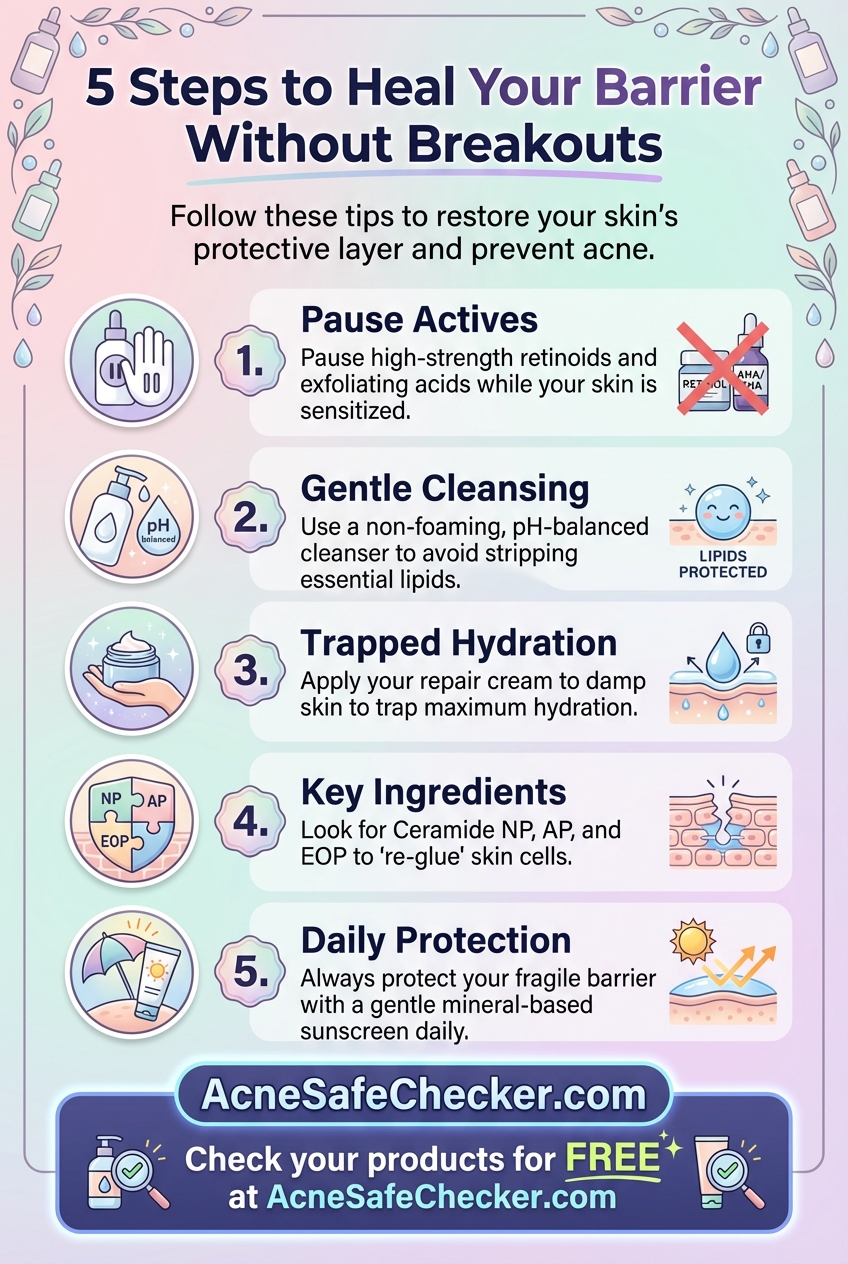
Ceramides are lipids that make up over 50% of the skin’s natural composition. Look for products containing Ceramide NP, AP, or EOP. These are non-comedogenic and essential for 're-gluing' the skin cells back together.
2. Niacinamide (Vitamin B3)
This is a powerhouse for acne-prone skin. Not only does it help stimulate the skin's natural production of ceramides, but it also regulates sebum production and has anti-inflammatory properties to calm existing breakouts.
3. Squalane
Unlike many heavy oils, squalane is a lightweight, non-comedogenic oil that mimics the skin's natural sebum component (squalene) but in a stable, shelf-ready form. It provides deep hydration without a greasy finish.
4. Panthenol (Pro-Vitamin B5) and Allantoin
These are soothing agents that act as humectants. They draw water into the skin and significantly reduce the 'stinging' sensation associated with barrier damage.
Ingredients to Avoid
While repairing the barrier is the priority, we must remain vigilant about pore-clogging potential. Avoid ingredients high on the comedogenic scale, such as:
- Coconut Oil (Cocos Nucifera): Highly comedogenic for most acne sufferers.
- Isopropyl Myristate: A common emollient that can trigger follicular irritation.
- Heavy Waxes and Thick Butters: While great for dry body skin, ingredients like cocoa butter can be too heavy for the facial pores of someone prone to cystic acne.
Practical Advice: How to Integrate a Repair Cream
If your skin is currently sensitive, peeling, or reactive, follow these steps to restore health:
- Simplify Your Routine: Temporarily pause your high-strength retinoids, AHAs, and BHAs. Your skin cannot heal while it is being actively exfoliated.
- Cleanse Gently: Use a non-foaming, pH-balanced cleanser that doesn't leave your skin feeling 'squeaky clean.'
- Apply on Damp Skin: After washing, pat your face lightly and apply your barrier repair cream while the skin is still slightly damp. This helps trap extra hydration.
- The Layering Method: If you use a light gel moisturizer, apply your barrier repair cream on top of it to seal in the moisture.
- Sun Protection: A damaged barrier is more susceptible to UV damage. Always use a mineral sunscreen (zinc oxide or titanium dioxide) during the day, as these are often less irritating than chemical filters for sensitized skin.
Conclusion
Repairing your skin barrier is not a one-night process; it usually takes 2 to 4 weeks for the stratum corneum to fully renew itself. However, by choosing a cream specifically formulated with ceramides and niacinamide—and avoiding heavy occlusives—you can heal the 'mortar' of your skin without inviting new breakouts.
Remember, a healthy skin barrier is your first line of defense against acne. When your skin is hydrated and resilient, it can better handle the active treatments needed to keep your complexion clear in the long run. Treat your skin with empathy, and it will reward you with a healthy, radiant glow.