
Finding the perfect moisturizer when you have acne-prone skin often feels like a high-stakes gamble. On one hand, your skin might feel tight, flaky, or irritated from acne treatments like salicylic acid or retinoids. On the other hand, there is the persistent fear that applying a cream will lead to a fresh crop of breakouts by morning. This is the classic dilemma: your skin needs hydration to heal, but your pores need to breathe.
Is Your Routine Acne-Safe?
Do not guess. Instantly check your products for pore-clogging ingredients with our AI-powered tool.
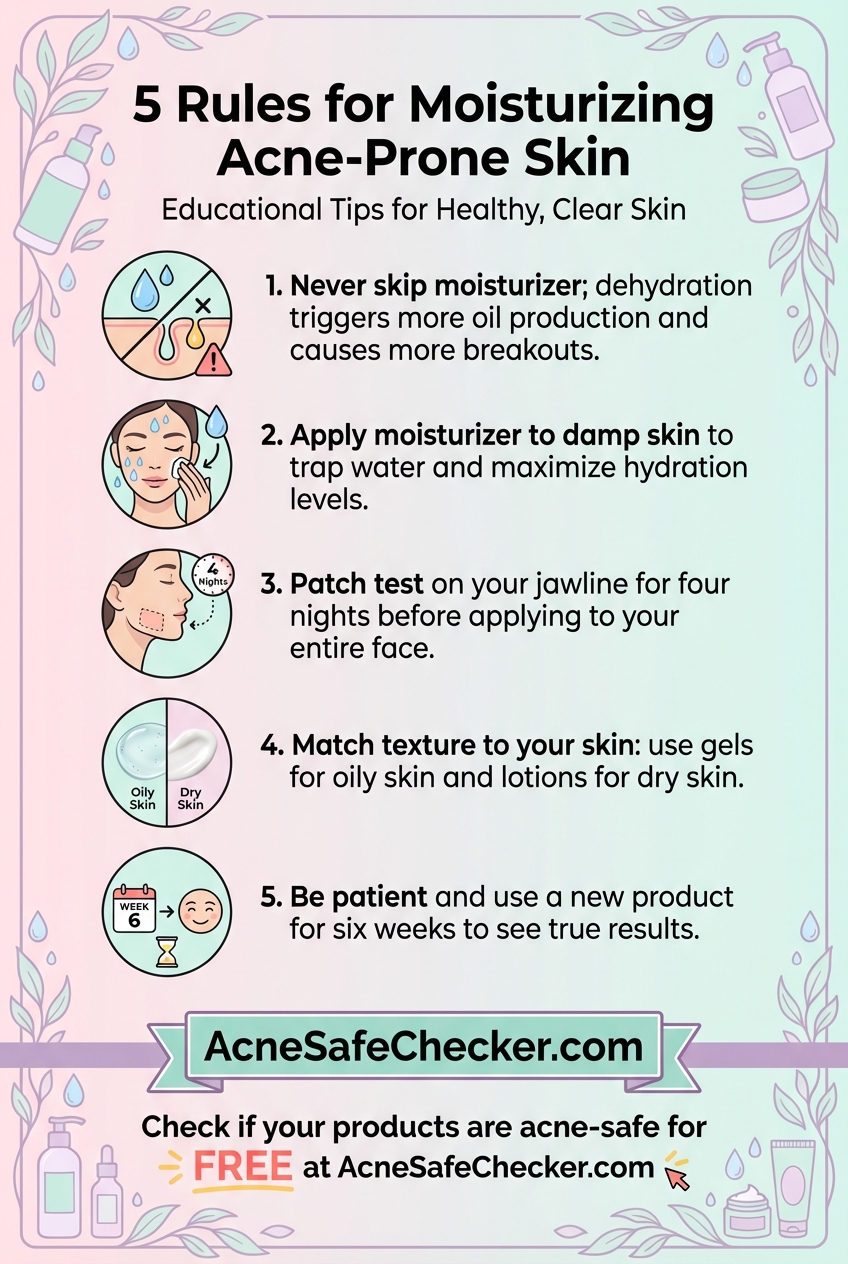
Check Ingredients NowAs a dermatologist, I often see patients who skip moisturizer entirely, thinking they are doing their oily skin a favor. In reality, dehydrated skin can actually trigger more oil production as a compensatory mechanism, leading to a vicious cycle of shine and clogs. The solution lies in choosing "non-comedogenic" formulas—products specifically designed not to block pores.
Fortunately, you don’t need a luxury budget to find effective formulas. The local drugstore is home to some of the most scientifically sound, non-comedogenic moisturizers available today.
What Does "Non-Comedogenic" Actually Mean?
To understand non-comedogenic products, we first have to understand the "comedo." A comedo is the medical term for a clogged pore. A closed comedo is a whitehead, and an open comedo is a blackhead.
When a product is labeled "non-comedogenic," it means the manufacturer has formulated the product to exclude ingredients known to cause these blockages. Historically, this was tested using a "rabbit ear assay," though today, most testing involves human volunteers or sophisticated ingredient analysis.
The Nuance of the Label
It is important to note that "non-comedogenic" is not a strictly regulated FDA term with a universal standard. It is a guideline. While it serves as an excellent starting point for those with acne, individual reactions vary. What works for one person’s pores might still cause issues for another, depending on their unique sebum (oil) composition.
Why Acne-Prone Skin Needs Hydration
Many people confuse "oil" with "hydration." Oil (sebum) is the waxy substance produced by your sebaceous glands. Hydration refers to the water content within the skin cells. You can have very oily skin that is simultaneously dehydrated.
When the skin’s moisture barrier is compromised—often due to harsh cleansers or active acne ingredients—it becomes inflamed. This inflammation can exacerbate acne. A non-comedogenic moisturizer acts as a seal, preventing transepidermal water loss (TEWL) and allowing the skin barrier to repair itself. A healthy barrier is your first line of defense against the bacteria that cause acne.
Key Ingredients to Look For
When scanning the aisles of your local drugstore, look for these "gold standard" ingredients that provide hydration without the heft:
1. Hyaluronic Acid
This is a humectant that can hold up to 1,000 times its weight in water. It draws moisture into the skin without adding any oil, making it the perfect choice for those who are afraid of a "greasy" feel.
2. Ceramides
Ceramides are lipids naturally found in the skin barrier. Many drugstore brands specialize in ceramide-rich formulas. They help restore the skin’s natural protective layer, which is often stripped by acne medications.
3. Niacinamide (Vitamin B3)
This is a powerhouse for acne sufferers. Not only does it help soothe redness and inflammation, but it also helps regulate sebum production over time.
4. Squalane
Unlike many oils, squalane is highly stable and mimics the skin’s natural oils without being occlusive. It provides a lightweight, silky finish that won't trigger breakouts.
Ingredients to Approach with Caution
While every skin type is different, if you are highly prone to congestion, you may want to be wary of high concentrations of the following in your facial moisturizers:
- Isopropyl Myristate and its derivatives: Often used to give products a smooth feel, but known to be highly comedogenic for many.
- Coconut Oil: While excellent for the body or hair, it is a frequent culprit for facial breakouts.
- Thick Waxes and Heavy Lanolin: These are often too occlusive for acne-prone individuals.
Practical Steps: How to Incorporate a New Moisturizer
Even with a non-comedogenic label, you should follow a strategic approach when introducing a new product into your routine:
- The Patch Test: Apply a small amount of the moisturizer to a specific area (like the side of your jawline) for three to four nights. If no new clogs appear in that spot, it is likely safe for full-face application.
- Apply to Damp Skin: To maximize hydration, apply your moisturizer while your skin is still slightly damp from cleansing. This helps trap the water on the surface.
- Choose the Right Texture:
- Oily Skin: Look for "Gels" or "Water Creams."
- Combination/Dry Skin: Look for lightweight "Lotions."
- Irritated/Post-Treatment Skin: Look for "Light Creams" with soothing agents like Allantoin or Centella Asiatica.
Conclusion
Achieving clear skin doesn't mean you have to endure dryness and irritation. By choosing a drugstore non-comedogenic moisturizer, you provide your skin with the essential tools it needs to heal and function optimally. Look for science-backed ingredients like hyaluronic acid and ceramides, and don't be afraid to experiment until you find the texture that feels best on your skin.
Remember, consistency is key in any skincare journey. Give a new product at least four to six weeks—the length of a full skin cell turnover cycle—to truly see how it impacts your complexion. With the right affordable formula, you can achieve a balanced, hydrated, and clear glow.