
For those navigating the aisles of Sephora with acne-prone skin, the experience can feel like a high-stakes guessing game. Between the beautiful packaging and the promises of a 'glass skin' glow, there lies a hidden risk: comedogenic ingredients. As a dermatologist, I see patients daily who have inadvertently triggered 'acne cosmetica'—breakouts caused by their beauty products.
Is Your Routine Acne-Safe?
Do not guess. Instantly check your products for pore-clogging ingredients with our AI-powered tool.
Check Ingredients NowFinding a truly acne-safe routine at Sephora requires moving beyond marketing claims like 'clean' or 'natural' and looking deep into the ingredient deck. This guide will help you decipher what 'acne-safe' really means and provide a curated list of staples to keep your complexion clear.
Understanding the Science: What Does 'Acne-Safe' Mean?
In clinical terms, an acne-safe product is primarily non-comedogenic. This means the formula has been designed and ideally tested to ensure it does not clog pores (pores are technically called comedones).
Acne is a complex inflammatory condition driven by four main factors: excess sebum (oil) production, the buildup of dead skin cells (hyperkeratotic plugging), the presence of C. acnes bacteria, and inflammation. When you apply a product containing heavy oils or waxes, you essentially 'glue' those dead skin cells into the pore, creating a plug. This is why even a high-end, expensive cream can cause a breakout within days of use.
The Myth of 'Oil-Free'
It is a common misconception that 'oil-free' automatically means acne-safe. Some synthetic esters (like Isopropyl Palmitate) or certain fatty acids can be more comedogenic than natural oils like Squalane or Rosehip oil. When shopping at Sephora, we look for 'non-comedogenic' labels, but we also manually vet for common triggers like cocoa butter, coconut oil, and certain algae extracts.
The Sephora Acne-Safe Curated List
To build a routine that supports skin health without triggering congestion, I recommend focusing on these categories and specific brand favorites available at Sephora.
1. The Foundation: Cleansers
A good cleanser should remove impurities without stripping the skin’s moisture barrier. If the barrier is compromised, the skin may overproduce oil to compensate.
- The Ordinary Glucoside Foaming Cleanser: An ultra-gentle, sulfate-free option that maintains the skin's pH. It is devoid of heavy oils and pore-clogging thickeners.
- Youth To The People Superfood Antioxidant Cleanser: This is a cult favorite for a reason. It uses a gel-based formula that thoroughly cleanses without leaving a residue that could lead to congestion.
- Skinfix Barrier+ Foaming Oil Cleanser: Despite the word 'oil' in the name, this uses specific surfactants that emulsify and rinse away completely, making it safe for those who double-cleanse.
2. Targeted Treatment: Serums
This is where you can actively fight acne. Look for ingredients like Salicylic Acid (BHA), Niacinamide, and Azelaic Acid.
- The Ordinary Niacinamide 10% + Zinc 1%: Niacinamide helps regulate sebum production, while Zinc provides anti-inflammatory benefits.
- Paula’s Choice Skin Perfecting 2% BHA Liquid Exfoliant: The gold standard for keeping pores clear. It penetrates deep into the follicle to dissolve the 'glue' that leads to breakouts.
- Dr. Dennis Gross Alpha Beta Universal Daily Peel: A pre-dosed pad that combines AHAs and BHAs to resurface the skin without heavy occlusives.
3. Hydration: Moisturizers
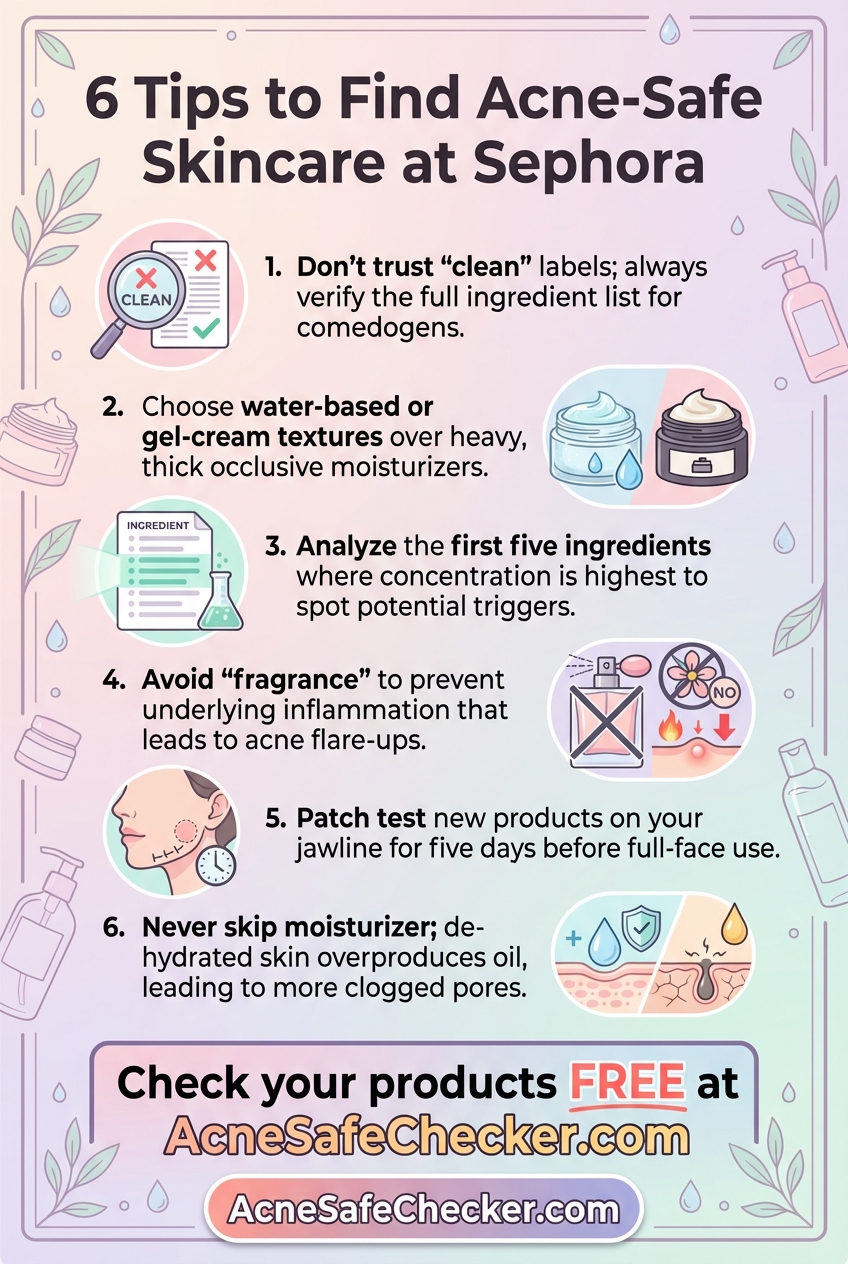
Many acne patients skip moisturizer, which is a mistake. Dehydrated skin is less efficient at shedding dead cells. The key is choosing water-based or gel-cream textures.
- Kiehl’s Since 1851 Ultra Facial Oil-Free Gel Cream: A lightweight, cooling formula that provides 24-hour hydration without a single pore-clogging ingredient.
- Drunk Elephant Protini Polypeptide Firming Refirming Moisturizer: While rich in peptides, the base is sophisticated and generally well-tolerated by those with acne-prone skin.
- Tower 28 Beauty SOS Daily Barrier Recovery Cream: Designed for sensitive skin, this is free of the essential oils and waxes that frequently plague 'clean' beauty brands.
4. Protection: Non-Comedogenic Sunscreens
Sunscreen is non-negotiable, but traditionally, SPF formulas have been notoriously greasy.
- Supergoop! Unseen Sunscreen SPF 40: This silicone-based primer/sunscreen is oil-free and leaves a weightless finish that doesn't feel like a heavy layer on the skin.
- Innistree Daily UV Defense Sunscreen: A water-based formula that absorbs quickly and uses modern filters that rarely irritate acne-prone complexions.
How to Vet Your Own Sephora Favorites
If you find a product not on this list, here is a professional strategy for vetting it:
- Check the first five ingredients: Ingredients are listed in order of concentration. If a heavy oil or wax is in the top five, it’s a higher risk.
- Use an Ingredient Checker: Websites like COSDNA or AcneClinicNYC allow you to paste an ingredient list to check for comedogenic ratings. Aim for ingredients rated 0-2.
- The 'Patch Test' Rule: Apply the product to a small area of your jawline for 3-5 days. If you see 'closed comedones' (tiny white bumps) or redness, it’s not safe for your specific skin type.
- Avoid 'Fragrance' where possible: While fragrance doesn't technically clog pores, it causes inflammation, and inflammation is the precursor to an acne flare-up.
Conclusion
Shopping for acne-safe products at Sephora doesn't mean you are limited to a boring routine. By prioritizing non-comedogenic, gel-based, and science-backed formulas, you can enjoy the luxury of high-end skincare while maintaining a clear, healthy complexion. Remember, consistency is more important than potency. Choose a simple, acne-safe routine and give it at least 6-8 weeks to show results. Your pores will thank you.