
The Hidden Link Between Your Laundry and Your Breakouts
Is Your Routine Acne-Safe?
Do not guess. Instantly check your products for pore-clogging ingredients with our AI-powered tool.
Check Ingredients NowWhen we think about acne treatments, we usually focus on cleansers, retinoids, and moisturizers. However, as a dermatologist, I often see patients who follow a perfect skincare routine but still struggle with persistent breakouts on their cheeks, jawline, and back. Often, the culprit isn't what they are putting on their skin, but what their skin is resting against: their clothes and pillowcases.
Your laundry detergent plays a significant role in your skin health. Because your skin is in constant contact with fabrics for 24 hours a day, any irritating or comedogenic residue left behind by your detergent can trigger inflammation, clog pores, and exacerbate acne. In this guide, we will explore the science of how laundry products affect your skin and how to choose the best laundry detergent for acne-prone skin.
How Detergent Triggers Acne: The Science
Acne is fundamentally an inflammatory condition. While traditional acne is caused by excess sebum and C. acnes bacteria, "laundry-induced" breakouts typically fall into two categories: Acne Mechanica and Contact Dermatitis.
1. Acne Mechanica
This occurs when physical friction or trapped heat irritates the skin. If your detergent leaves a waxy residue on your pillowcase, that residue creates friction and traps sweat and oils against your pores while you sleep. This irritation leads to micro-comedones—the precursors to full-blown pimples.
2. Irritant Contact Dermatitis
Many commercial detergents contain harsh surfactants and synthetic fragrances. These chemicals can disrupt the skin barrier (the acid mantle). When the barrier is compromised, the skin becomes inflamed and more susceptible to bacteria. For those with sensitive or acne-prone skin, this inflammation often manifests as small, itchy red bumps that look remarkably like a breakout.
Key Ingredients to Avoid
To keep your skin clear, you must become an expert at reading labels. Not all detergents are created equal, and many "natural" brands still contain ingredients that can irritate the skin. Avoid these three main offenders:
Synthetic Fragrances and Scents
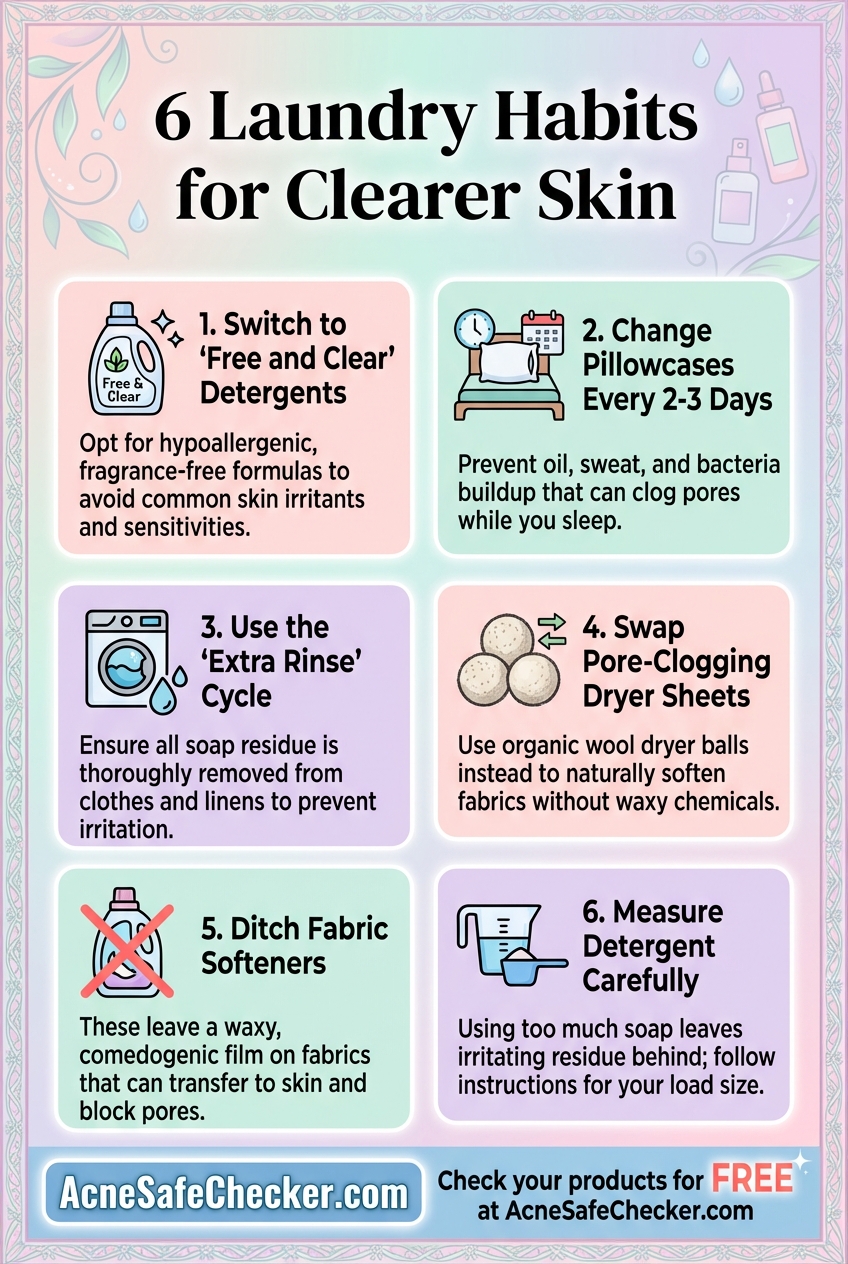
Fragrance is the number one cause of skin irritation in household products. Even if a product is labeled "unscented," it may contain masking fragrances to hide the chemical smell. Look for labels that specifically state "Fragrance-Free."
Dyes and Brighteners
Optical brighteners are chemicals that stay on the fabric to make clothes appear whiter and brighter by reflecting blue light. These chemicals are designed to remain in the fibers, meaning they are in direct contact with your skin all day. Dyes are similarly unnecessary and serve only an aesthetic purpose while posing a high risk for irritation.
Fabric Softeners and Dryer Sheets
If you have acne-prone skin, fabric softeners are your greatest enemy. Softeners work by coating the fabric fibers in a thin, waxy layer of chemicals (often containing tallow or quaternary ammonium compounds). This waxy film is highly comedogenic—meaning it clogs pores. When you sleep on a pillowcase treated with fabric softener, you are essentially pressing a pore-clogging film against your face for eight hours.
What to Look for in a Skin-Safe Detergent
When shopping for an acne-safe detergent, simplicity is your best friend. Follow these dermatologist-approved criteria:
- "Free and Clear" Labels: These products are generally free of dyes and perfumes. They are the gold standard for patients with eczema, psoriasis, and acne.
- Hypoallergenic Certification: This indicates the product has been tested to minimize the risk of allergic reactions.
- Plant-Based Surfactants: Detergents that use coconut-derived or vegetable-based surfactants are often gentler than those using harsh petroleum-based sulfates like Sodium Lauryl Sulfate (SLS).
- High Solubility: Choose liquid detergents over powders. Liquid formulas tend to rinse away more cleanly, leaving less residue in the fibers of your sheets and towels.
Practical Steps for Clearer Skin
Changing your detergent is a great first step, but how you do your laundry is just as important as what you use. Use these practical tips to minimize skin irritation:
1. The Double Rinse Cycle
Most modern washing machines have an "Extra Rinse" setting. Use it for your bedding and towels. This ensures that every last trace of surfactant is stripped from the fabric before it touches your face.
2. Don’t Overuse Detergent
More soap does not mean cleaner clothes. In fact, using too much detergent makes it harder for the machine to rinse the fabric clean, leading to heavy residue buildup. Follow the manufacturer’s instructions strictly, or even use slightly less than recommended.
3. Wash Your Pillowcases Frequently
For acne patients, I recommend changing pillowcases every 2–3 days. Oil, sweat, and dead skin cells accumulate quickly on the fabric. By washing frequently with a "free and clear" detergent, you ensure you are resting your face on a truly clean surface.
4. Switch to Wool Dryer Balls
If you miss the softness that dryer sheets provide, switch to 100% organic wool dryer balls. They soften clothes naturally by bouncing between folds of fabric and reducing static without leaving any chemical residue or pore-clogging waxes on your laundry.
Conclusion
Managing acne-prone skin requires a holistic approach that goes beyond the bathroom cabinet. By switching to a fragrance-free, dye-free laundry detergent and eliminating fabric softeners, you remove a significant source of daily inflammation and pore-clogging residue. While it may take a few weeks to notice the difference, your skin barrier will thank you for the relief from harsh chemicals. Remember: clear skin starts with everything that touches your face, including your laundry.