
Finding a cluster of pimples on your cheeks can be incredibly frustrating. Unlike the oily T-zone (forehead, nose, and chin), the cheeks have a different skin density and different reasons for breaking out. As a dermatologist, I often see patients who are confused because their skin isn’t necessarily 'oily,' yet they can’t seem to shake persistent cheek blemishes.
Is Your Routine Acne-Safe?
Do not guess. Instantly check your products for pore-clogging ingredients with our AI-powered tool.
Check Ingredients NowIn this article, we will dive into the science of cheek acne, the most common environmental triggers, and the practical steps you can take today to achieve a clearer complexion.
The Biology of Cheek Acne
To understand why pimples form on your cheeks, we first have to look at the anatomy of the pore. Every pore is the opening to a hair follicle, which contains a sebaceous gland. These glands produce sebum (oil) to keep your skin lubricated.
Acne occurs when three factors collide: excess sebum production, the buildup of dead skin cells (hyperkeratosis), and the proliferation of Cutibacterium acnes (C. acnes) bacteria. When these factors occur on the cheeks, the resulting inflammation can lead to everything from small whiteheads to deep, painful cystic lesions. Because the skin on your cheeks is thinner than on your forehead, these breakouts can sometimes lead to more persistent redness or scarring if not treated correctly.
1. The 'Acne Mechanica' Factor: Phones and Pillowcases
One of the most common causes of cheek-specific acne is something we call acne mechanica. This is acne triggered by friction, pressure, or heat.
Your Smartphone
Think about how often you touch your phone throughout the day, then press it against your face for a call. Research shows that smartphones carry more bacteria than a toilet seat. When you press that screen to your cheek, you are transferring bacteria, oil, and old makeup back into your pores.
Dirty Pillowcases
Your pillowcase is a sponge for sweat, saliva, hair products, and dead skin cells. If you aren't washing your pillowcase at least once or twice a week, you are essentially resting your face on a bed of irritants for eight hours every night, which can clog pores and trigger inflammation specifically on the side of the face you sleep on.
2. Comedogenic Skincare and Makeup
Not all skincare is created equal. Many people inadvertently use products containing "comedogenic" ingredients—substances known to clog pores.
Common culprits found in moisturizers and foundations include:
- Isopropyl Myristate: A skin softener that is highly comedogenic.
- Coconut Oil: While great for the body, it is too heavy for most facial skin types.
- Certain Silicones: While not inherently bad for everyone, some people find they trap sweat and bacteria against the skin.
If you are breaking out on your cheeks, look for products labeled "non-comedogenic" or "oil-free."
3. Hormonal Fluctuations
While we typically associate hormonal acne with the jawline, it frequently migrates up toward the lower cheeks. This is especially common in adult women. Fluctuations in androgens (male hormones present in everyone) can stimulate the sebaceous glands to produce thicker, stickier oil. This often results in deep, cystic pimples that feel like hard knots under the skin rather than typical surface whiteheads.
4. Touching Your Face
It is a subconscious habit for many: leaning your cheek on your hand while working at a desk or scrolling through your computer. This constant friction and the transfer of oils and bacteria from your hands can lead to localized breakouts. Breaking this habit is one of the simplest, yet most effective, ways to reduce cheek irritation.
5. Haircare Product Migration
If you use heavy conditioners, leave-in treatments, or hair oils, these products can transfer to your cheeks during the day or while you sleep. This is often referred to as "pomade acne." If you notice pimples specifically near your hairline or the outer edges of your cheeks, your hair routine might be the hidden culprit.
Practical Steps to Clear Cheek Acne
If you’re ready to take control of your skin, follow this dermatologist-approved checklist:
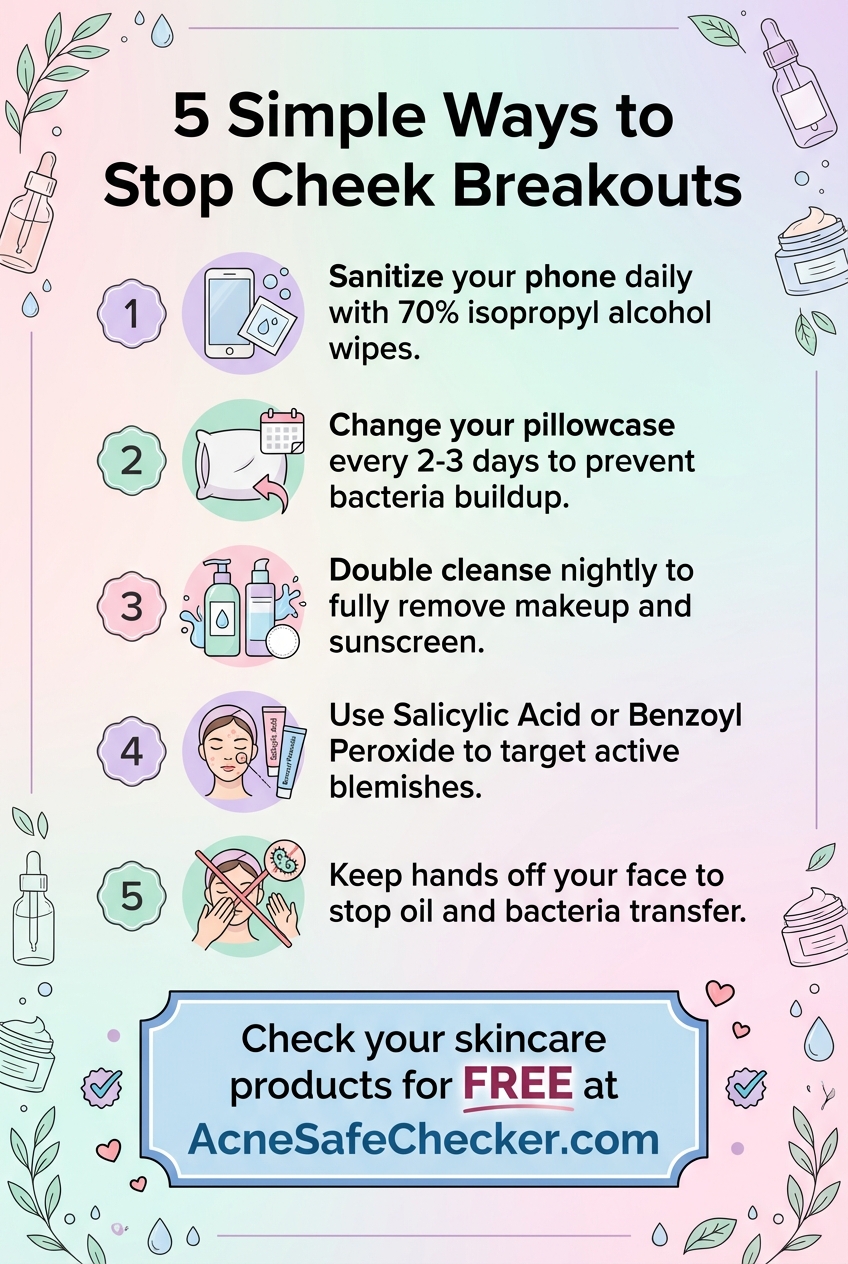
- Sanitize Your Tech: Wipe down your phone screen daily with a 70% isopropyl alcohol wipe.
- Switch to Silk or Clean Cotton: Change your pillowcase every 2–3 days. Silk can be gentler on acne-prone skin as it creates less friction.
- Double Cleanse: If you wear makeup or SPF, use a micellar water or oil-based cleanser first to break down products, followed by a gentle, water-based cleanser.
- Incorporate Actives: Look for products containing Salicylic Acid (to deep-clean pores) or Benzoyl Peroxide (to kill acne-causing bacteria).
- Hands Off: Make a conscious effort to keep your hands away from your face throughout the day.
Conclusion
Pimples on the cheeks are rarely the result of just one thing. They are usually a combination of environmental habits, product choices, and internal biology. By identifying your specific triggers—whether it’s your phone habits or your choice of moisturizer—you can begin to see significant improvements in your skin clarity.
If your acne is painful, cystic, or leaving permanent scars, it is important to consult a board-certified dermatologist. We can provide prescription-strength treatments like retinoids or hormonal therapies to help you achieve the clear skin you deserve.