
Dealing with closed comedones—those stubborn, flesh-colored bumps that never seem to come to a head—can be one of the most frustrating skincare challenges. Often referred to as "texture" or "congested skin," these tiny bumps are essentially pores that have become trapped under a layer of skin cells and sebum.
Is Your Routine Acne-Safe?
Do not guess. Instantly check your products for pore-clogging ingredients with our AI-powered tool.
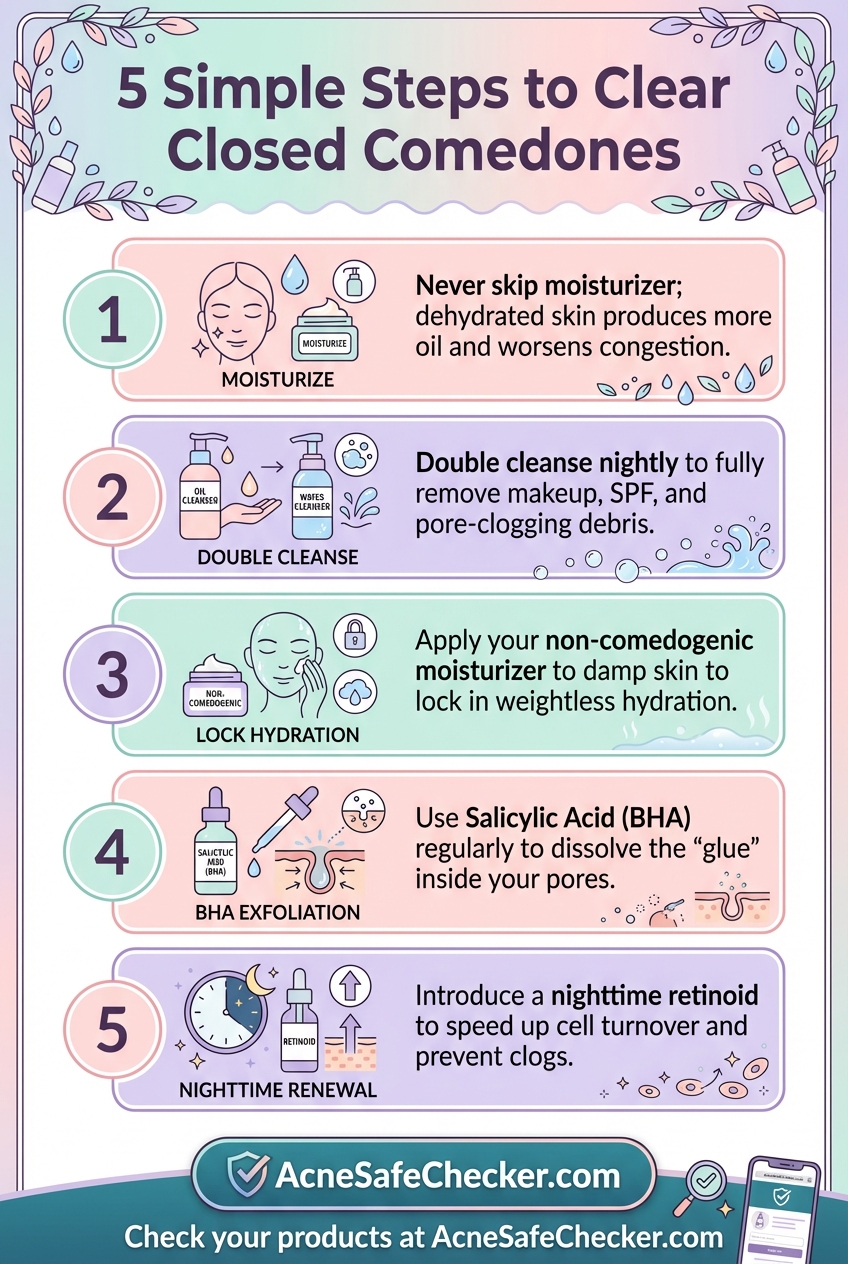
Check Ingredients NowOne of the most common mistakes people make when fighting closed comedones is skipping moisturizer altogether. There is a pervasive myth that adding hydration will only "smother" the skin further. In reality, dehydrated skin can lead to an overproduction of oil and a buildup of dead skin cells, which actually worsens the formation of these clogs. The key isn't to avoid moisture; it's to find the right kind of moisture.
Understanding the Science of Closed Comedones
To understand why a non-comedogenic moisturizer is essential, we must first look at why closed comedones form. In a healthy skin cycle, dead skin cells shed naturally (desquamation). However, in skin prone to comedones, a process called retention hyperkeratosis occurs. This is when skin cells become "sticky" and fail to shed, mixing with excess sebum to form a plug within the follicle.
Unlike an open comedone (a blackhead), where the pore remains open and the sebum oxidizes and turns dark, a closed comedone is covered by a thin layer of skin. This creates an anaerobic environment where bacteria can eventually thrive if the pore remains blocked. Using a heavy, occlusive moisturizer can act like a seal, trapping these materials inside and turning a small bump into a painful inflammatory acne lesion.
What Does "Non-Comedogenic" Actually Mean?
The term "non-comedogenic" indicates that a product is formulated specifically to avoid clogging pores. While the FDA does not strictly regulate this label, dermatologists generally use it to describe products that lack heavy oils, waxes, and thickeners known to trigger breakouts.
When shopping for a moisturizer to treat closed comedones, you are looking for a formula that provides hydration (water content) rather than excessive occlusion (oil-based sealing).
Ingredients to Look For
- Hyaluronic Acid and Glycerin: These are humectants that draw water into the skin without adding oil.
- Squalane: A lightweight, bio-identical oil that mimics the skin’s natural sebum but is far less likely to clog pores than traditional plant oils.
- Ceramides: Essential for repairing the skin barrier, especially if you are using drying acne treatments like Retinoids or Salicylic Acid.
- Niacinamide (Vitamin B3): Helps regulate oil production and reduces the appearance of pore size.
- Salicylic Acid (LHA/BHA): Some moisturizers contain low concentrations of BHA to gently exfoliate the pore lining while hydrating.
Ingredients to Avoid
- Isopropyl Myristate and Isopropyl Palmitate: Known pore-cloggers often found in thick creams.
- Coconut Oil: Highly comedogenic and a common culprit for forehead bumps.
- Lanoline: A heavy sheep-wool wax that can be too rich for acne-prone skin.
- Algae Extract: Frequently used in high-end skincare, but can be highly irritating and comedogenic for some.
How to Choose the Best Moisturizer for Your Skin Type
Not all non-comedogenic moisturizers are created equal. You must match the vehicle (the texture) to your specific skin needs.
1. For Oily and Congested Skin: Gel-Based Formulas
If your skin is naturally shiny or greasy, a water-based gel is your best friend. These formulas usually contain high levels of water and humectants. They absorb almost instantly and leave no residue behind, minimizing the risk of trapping debris in your pores.
2. For Combination Skin: Lightweight Lotions
If you have dry patches on your cheeks but closed comedones on your forehead or chin, a lightweight lotion is ideal. Look for "oil-free" labels that utilize dimethicone—a breathable silicone that protects the barrier without sinking into the pores.
3. For Dry but Acne-Prone Skin: Barrier Creams
It is possible to have dry skin and closed comedones simultaneously. In this case, you need ceramides. A non-comedogenic barrier cream will help heal the flakiness without triggering more texture. Avoid "balms" or "heavy butters" and stick to dermatological brands formulated for sensitive, acne-prone skin.
Practical Steps to Clear Closed Comedones
While the right moisturizer prevents new clogs, you often need a proactive routine to clear existing ones. Follow these steps for the best results:
- Double Cleanse: Use a non-comedogenic cleansing oil or micellar water followed by a gentle water-based cleanser to ensure all makeup and sunscreen are removed.
- Chemical Exfoliation: Incorporate a Salicylic Acid (BHA) toner 2-3 times a week. BHA is oil-soluble, meaning it can get inside the pore to dissolve the "glue" holding the clog together.
- Apply Moisturizer to Damp Skin: To get the most out of a lightweight moisturizer, apply it while your skin is still slightly damp. This traps the water on your skin, providing deep hydration without needing heavy oils.
- Introduce Retinoids: If your closed comedones are persistent, a nighttime retinoid (like Adapalene) can speed up cell turnover, preventing the "sticky cell" phenomenon altogether.
Conclusion
Finding the best non-comedogenic moisturizer for closed comedones is about balance. You want to support your skin’s natural barrier without overwhelming it with heavy lipids. By choosing products rich in humectants like hyaluronic acid and barrier-repairing ingredients like ceramides, you can achieve a smooth, hydrated complexion without the fear of further clogging your pores.
Remember, skincare is a marathon, not a sprint. When switching to a non-comedogenic routine, give your skin at least 4 to 6 weeks to show improvement as your pores begin to clear and your skin cycle resets.