
Finding the perfect foundation when you have oily, acne-prone skin often feels like an endless cycle of trial and error. You want coverage to hide current breakouts and redness, but frequently, the very products meant to help you feel confident end up clogging your pores and triggering new blemishes. This is known as acne cosmetica—acne triggered or exacerbated by the use of cosmetic products.
Is Your Routine Acne-Safe?
Do not guess. Instantly check your products for pore-clogging ingredients with our AI-powered tool.
Check Ingredients NowAs a dermatologist, I see this daily. The good news is that you don’t have to choose between a clear complexion and wearing makeup. By understanding the science of ingredients and how they interact with your skin’s sebum, you can select an acne-safe foundation that keeps you matte and breakout-free.
Understanding the Term "Non-Comedogenic"
When searching for an acne-safe foundation, the first term you’ll encounter is "non-comedogenic." In scientific terms, a comedo is a clogged pore (the precursor to a pimple). Therefore, a non-comedogenic product is formulated specifically not to block pores.
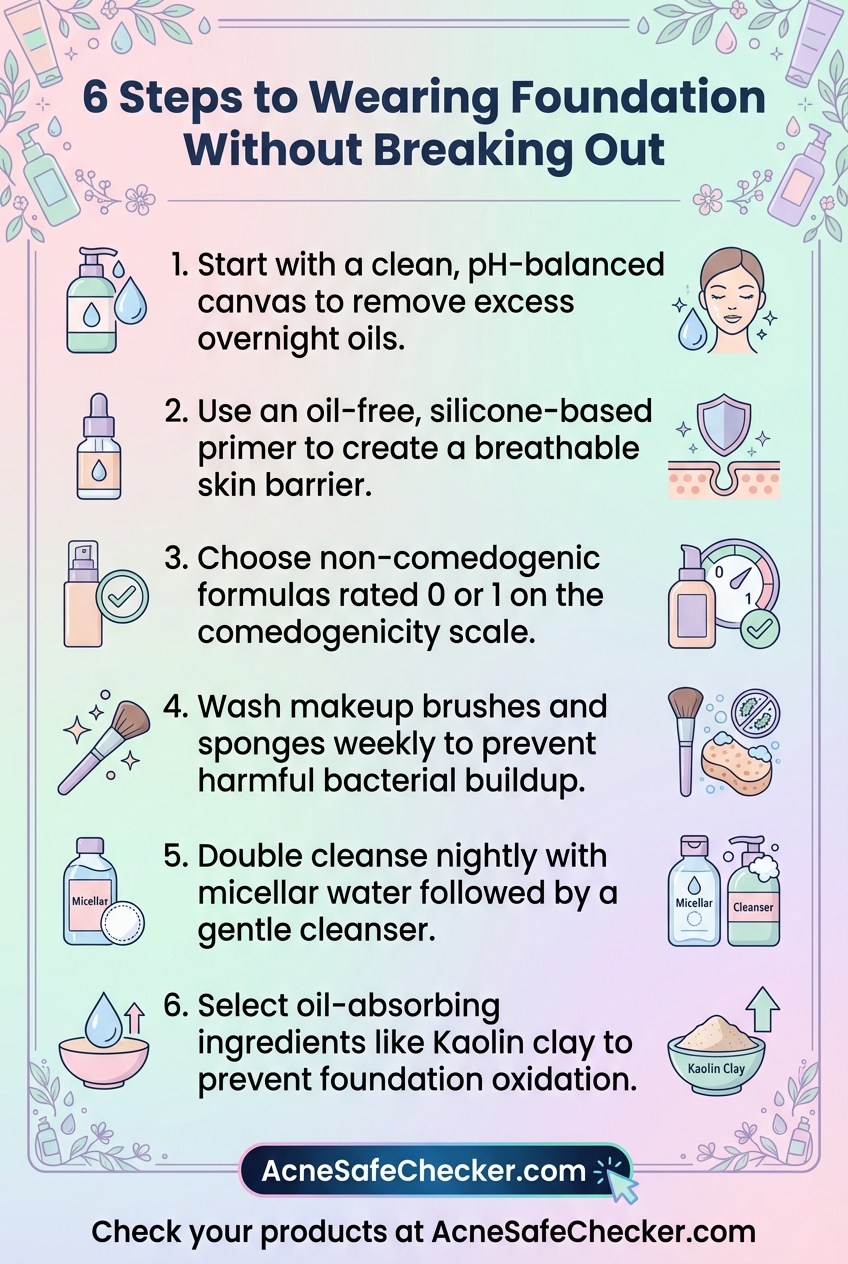
However, it is important to realize that "non-comedogenic" is not a strictly regulated FDA term. It is often a claim made by brands based on the "Comedogenicity Scale," which ranks ingredients from 0 to 5. A 0 or 1 is unlikely to clog pores, while a 4 or 5 is highly likely to cause a breakout. For oily skin, we aim for formulas that rely heavily on ingredients at the bottom of this scale.
The Science of Oily Skin and Makeup Interaction
Oily skin is characterized by overactive sebaceous glands that produce an abundance of sebum. When you apply foundation, the oils in the makeup can mix with your natural sebum. If the foundation is too heavy or contains occlusive waxes, it creates a "seal" over the pore. This anaerobic environment is the perfect breeding ground for Cutibacterium acnes, the bacteria responsible for inflammatory acne.
Furthermore, oily skin has a higher tendency to "oxidize" foundation. This is the chemical reaction where the oils on your face react with the pigments in the makeup, causing it to turn orange or darken over the course of the day. Choosing an oil-absorbing, pH-balanced formula is key to preventing this shift.
Key Ingredients to Look For
When scanning the ingredient label, look for these acne-fighting and oil-absorbing powerhouses:
1. Salicylic Acid (BHA)
Some foundations are formulated with a small percentage of Salicylic Acid. This beta-hydroxy acid is oil-soluble, meaning it can penetrate into the pores to dissolve excess sebum and dead skin cells while you wear your makeup.
2. Silica and Kaolin Clay
These are natural minerals that act as sponges. They absorb excess oil throughout the day, providing a matte finish and preventing the foundation from sliding into fine lines or pooling in pores.
3. Niacinamide (Vitamin B3)
Niacinamide is a favorite in dermatology for its anti-inflammatory properties. It helps soothe the redness associated with active acne and can actually help regulate sebum production over time.
4. Zinc Oxide and Titanium Dioxide
Found in mineral foundations, these provide physical sun protection and have mild anti-inflammatory properties that can help calm irritated skin.
Hidden Cloggers: Ingredients to Avoid
Even products marketed for oily skin can sometimes contain "red flag" ingredients. Avoid the following if you are prone to breakouts:
- Isopropyl Myristate and Palmitate: Often used to give makeup a smooth glide, these are highly comedogenic.
- Certain Alcohols: While some alcohols help a product dry quickly, high concentrations of SD Alcohol 40 or Denatured Alcohol can strip the skin, causing a rebound effect where your skin produces more oil to compensate.
- Bismuth Oxychloride: Common in mineral makeup to provide a shimmery finish, this can be highly irritating and cause itchy breakouts for those with sensitive, acne-prone skin.
- Coconut Oil (Cocos Nucifera): While great for the body, it is a 4 on the comedogenicity scale and should stay far away from your face.
Practical Steps for Application and Wear
How you apply your foundation is just as important as the formula you choose. Follow these steps to ensure your skin stays healthy:
- Start with a Clean Canvas: Use a gentle, pH-balanced cleanser to remove overnight oil before applying any products.
- Use an Oil-Free Primer: A silicone-based (dimethicone) primer can create a breathable barrier between your skin and the pigment, smoothing out texture without clogging pores.
- Clean Your Tools: If you use a brush or sponge, you must wash it at least once a week. These tools harbor bacteria and old oil that can be reintroduced to your skin, causing "mechanical" acne.
- The Double Cleanse: At the end of the day, a single pass with a face wash often isn't enough to remove long-wear foundation. Use a micellar water followed by your regular cleanser to ensure every trace of pigment is gone.
Conclusion
Navigating the world of makeup with oily, acne-prone skin requires a discerning eye for ingredient labels. By prioritizing non-comedogenic, oil-absorbing formulas and maintaining a strict hygiene routine for your application tools, you can enjoy a flawless finish without compromising your skin's health. Remember, the goal of an acne-safe foundation is not just to cover the skin, but to respect the delicate balance of your skin’s microbiome and pore structure.