
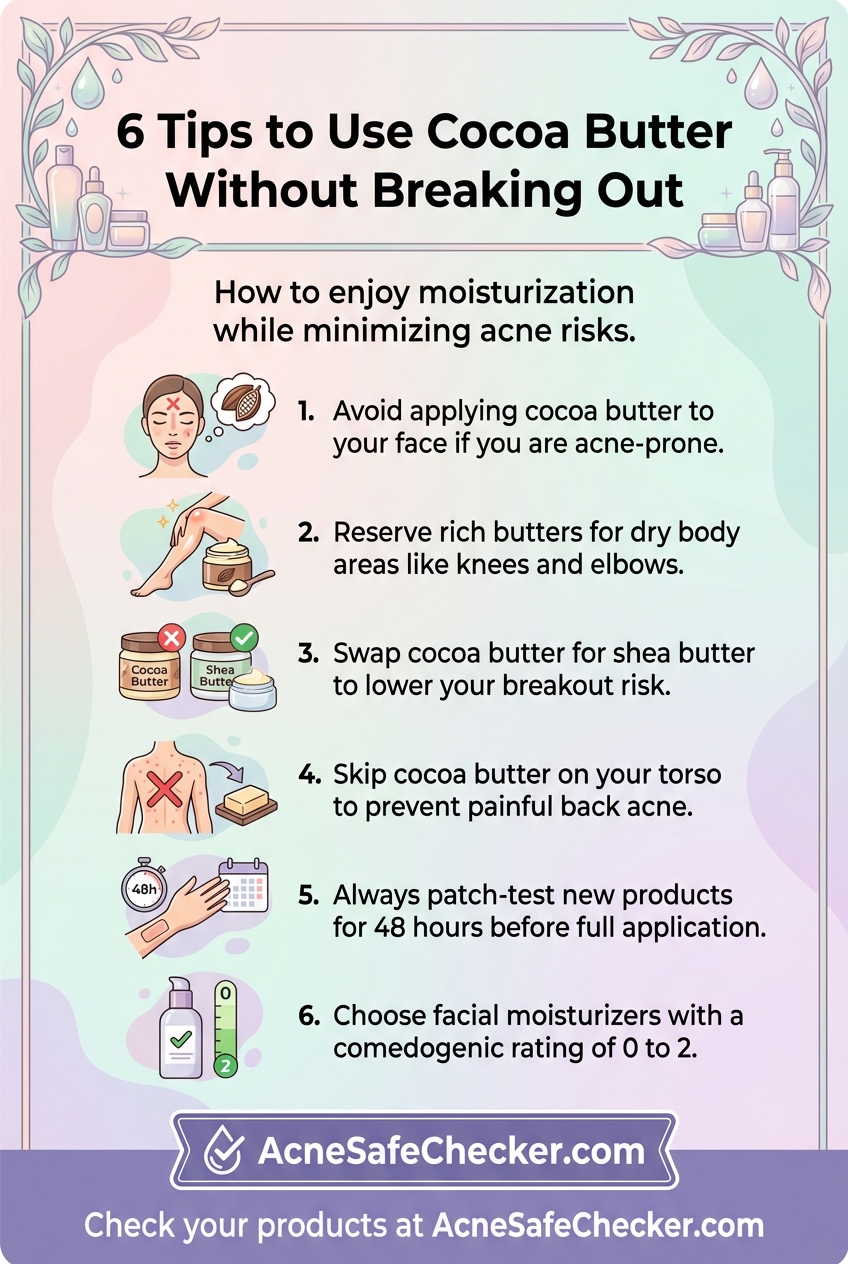
Cocoa butter is one of the most beloved ingredients in the beauty world. Known for its rich, chocolatey aroma and its ability to melt into the skin, it has been a staple in moisturizing creams and stretch mark treatments for decades. However, if you have ever applied a cocoa-butter-based cream to your face only to wake up with a cluster of breakouts, you are not alone.
Is Your Routine Acne-Safe?
Do not guess. Instantly check your products for pore-clogging ingredients with our AI-powered tool.
Check Ingredients NowAs a dermatologist, I often see patients who are confused by natural ingredients. There is a common misconception that 'natural' automatically means 'safe for all skin types.' When it comes to cocoa butter, the reality is more complex. While it is a powerhouse for hydration, its physical and chemical structure makes it a high-risk ingredient for anyone prone to acne.
What is a Comedogenic Rating?
To understand why cocoa butter behaves the way it does, we first need to define the comedogenic scale. This is a scientific ranking system used in dermatology to determine how likely a specific ingredient is to clog pores (form comedones).
The scale ranges from 0 to 5:
- 0: Will not clog pores
- 1: Very low probability of clogging pores
- 2: Low probability
- 3: Moderate probability
- 4: High probability
- 5: Very high probability of clogging pores
The Comedogenic Rating of Cocoa Butter
Cocoa butter has a comedogenic rating of 4.
This ranking places it firmly in the 'highly comedogenic' category. For individuals with oily or acne-prone skin, a rating of 4 is a significant red flag. It means that the molecular structure of the butter is thick enough to sit on top of the pore, trapping sebum, dead skin cells, and bacteria underneath. This creates the perfect environment for inflammatory acne and blackheads to flourish.
The Science: Why is Cocoa Butter So Clogging?
The reason behind cocoa butter’s high rating lies in its fatty acid profile. Cocoa butter is primarily composed of saturated fats, specifically stearic acid and palmitic acid.
From a scientific perspective, these long-chain saturated fatty acids are incredibly stable and occlusive. While 'occlusive' is a great term if you are trying to prevent water loss in extremely dry skin (transepidermal water loss), it is problematic for the face. These fats are solid at room temperature and have a thick consistency that does not easily penetrate the skin barrier, leading to a physical blockage of the follicular opening.
Cocoa Butter vs. Shea Butter: The Great Debate
Many patients confuse cocoa butter with shea butter, but their impact on your pores is worlds apart. While cocoa butter sits at a 4, shea butter typically carries a comedogenic rating of 0 to 2.
Shea butter contains a higher concentration of linoleic acid, which is often deficient in the sebum of acne patients. This makes shea butter a much safer alternative for those who want the richness of a natural butter without the high risk of a breakout.
Can Anyone Use Cocoa Butter?
Despite its high comedogenic rating, cocoa butter is not an 'evil' ingredient; it simply requires targeted application. Here is how I recommend using it based on your skin type:
1. For the Face
If you have oily, combination, or acne-prone skin, I advise staying away from cocoa butter on your face entirely. Even if it is listed halfway down the ingredient deck of a moisturizer, it can still trigger 'acne cosmetica'—a form of acne caused by topical products.
2. For the Body
The skin on our bodies, particularly on our legs, elbows, and knees, has fewer sebaceous glands than our faces. Cocoa butter is an excellent choice for treating extremely dry skin on the body, cracked heels, or as a preventative measure for stretch marks during pregnancy. However, if you suffer from 'bacne' (back acne), avoid using it on your torso.
3. For Dry/Mature Skin
Those with very dry or mature skin that produces almost no oil may find that they can tolerate cocoa butter on the face. In these cases, the skin's natural barrier is often so depleted that the occlusive nature of cocoa butter provides a necessary shield.
Dermatologist-Approved Non-Comedogenic Alternatives
If you love the feel of a rich oil or butter but want to keep your pores clear, consider these alternatives with lower comedogenic ratings:
- Squalane (Rating: 0-1): Mimics the skin’s natural oils and provides deep hydration without clogging.
- Argan Oil (Rating: 0): Rich in Vitamin E and fatty acids, but surprisingly lightweight.
- Hemp Seed Oil (Rating: 0): Known for its anti-inflammatory properties and zero risk of pore-clogging.
- Rosehip Seed Oil (Rating: 1): Excellent for scarring and aging skin while remaining safe for most acne-prone individuals.
Conclusion
In the world of skincare, cocoa butter is a legendary moisturizer, but it is not a universal solution. With a comedogenic rating of 4, it is a high-risk ingredient for anyone struggling with congestion or active breakouts.
My professional advice? Save the cocoa butter for your body and your DIY lip balms. When it comes to your face, prioritize ingredients with a rating of 0 to 2 to ensure your path to hydration doesn't lead to a path of breakouts. Always remember to patch-test any new product for at least 48 hours to see how your unique skin chemistry reacts.