
If you have ever spent twenty minutes in a brightly lit drugstore aisle staring at the back of a setting powder compact, you aren’t alone. For those of us with acne-prone or sensitive skin, every ingredient feels like a potential landmine. Among the most debated ingredients in the world of cosmetics is talc.
Is Your Routine Acne-Safe?
Do not guess. Instantly check your products for pore-clogging ingredients with our AI-powered tool.
Check Ingredients NowThe question persists: Is talc pore-clogging? As a dermatologist, I see patients daily who are terrified that their favorite finishing powder is the silent culprit behind their persistent whiteheads and congested pores. To understand the truth, we need to look past the myths and dive into the science of comedogenicity and skin physiology.
What Exactly is Talc?
Talc is a naturally occurring mineral composed of magnesium, silicon, and oxygen. In the world of cosmetics, it is prized for its unique ability to absorb moisture, reduce friction, and provide a silky-smooth texture to products like eyeshadows, blushes, and setting powders. It is the softest known mineral, which makes it ideal for creating that “blurred” soft-focus effect we often seek in makeup.
However, because it is a mineral that sits on the surface of the skin, many assume it must be physically blocking the pores. To determine if this is true, we look at the comedogenic scale.
Is Talc Comedogenic? The Scientific Verdict
In dermatology, we use a scale from 0 to 5 to measure how likely an ingredient is to cause a comedo (a clogged pore). A rating of 0 means it is non-comedogenic, while a 5 means it is highly likely to cause breakouts.
Talc typically ranks as a 1 on the comedogenic scale.
This means that talc itself is considered “low-comedogenic.” For the vast majority of people, talc particles are too large to actually enter the pore and create a plug (sebum and dead skin cells). Instead, talc sits on the surface of the stratum corneum (the outermost layer of skin).
The Role of Particle Size
Not all talc is created equal. Cosmetic-grade talc is milled to a specific particle size. While these particles are fine enough to feel smooth, they are generally not small enough to cause follicular occlusion—the clinical term for a clogged pore—on their own.
If Talc Isn’t the Problem, Why Am I Breaking Out?
If you find that your talc-based powder is causing breakouts, the talc might not be the primary villain. Usually, the issue stems from one of three areas:
1. The "Binder" Ingredients
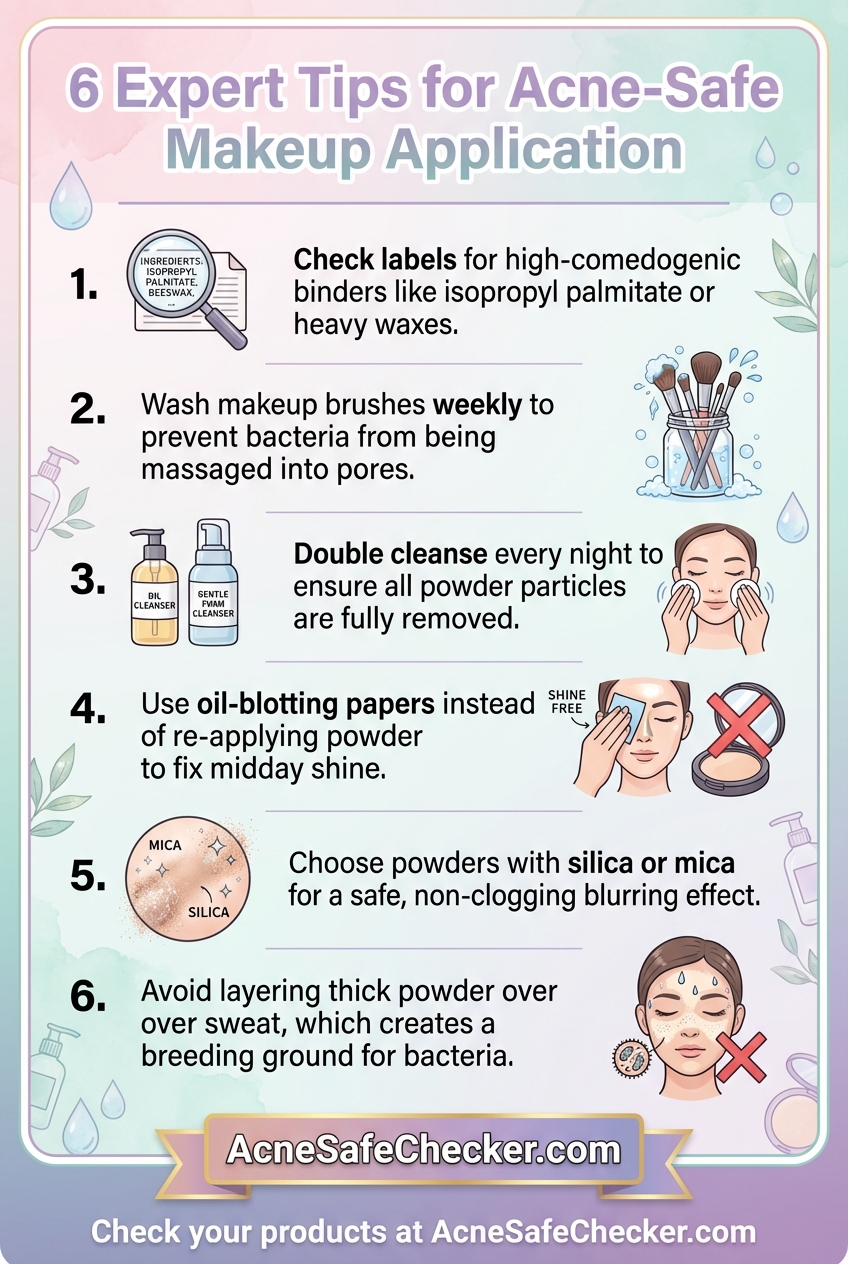
Pure talc is rarely used alone. To make a pressed powder, manufacturers use binders like isopropyl palmitate, ethylhexyl palmitate, or certain oils and waxes. Many of these binders rank much higher on the comedogenic scale (3 or 4) than talc does. It is often these additives, not the talc itself, that lead to acne.
2. Heavy Application and "Caking"
When we apply layer upon layer of powder to soak up oil throughout the day, we create a thick physical barrier. This barrier can trap sweat, bacteria, and natural sebum against the skin. This environment is a breeding ground for C. acnes bacteria, leading to inflammation and breakouts.
3. Contaminated Tools
As a dermatologist, I often find that it isn’t the makeup itself, but the application tool. Makeup brushes and sponges harbor bacteria, dead skin cells, and old oils. If you are using a dirty brush to apply a talc-based powder, you are effectively massaging bacteria into your pores.
Purity and Safety: A Brief Note
You may have heard concerns regarding asbestos contamination in talc. It is important to note that cosmetic-grade talc (USP grade) is strictly regulated and tested to ensure it is asbestos-free. From a skin-health perspective, pure, high-quality talc is safe, but if you have respiratory sensitivities or prefer to avoid it for personal reasons, there are many alternatives available.
Practical Advice for Acne-Prone Skin
If you are prone to congestion but love the finish of a powder, follow these dermatologist-recommended steps:
- Check the full ingredient list: Avoid powders that contain talc alongside high-comedogenic ingredients like coconut oil or cocoa butter.
- Prioritize Hygiene: Wash your makeup brushes at least once a week with a gentle cleanser to prevent bacterial buildup.
- Remove Thoroughly: Use a double-cleansing method (an oil-based cleanser followed by a water-based one) at night to ensure all powder particles and binders are completely removed from your pores.
- Blot, Don't Re-cake: Instead of adding more powder to fix midday shine, use oil-blotting papers first. This removes the excess oil rather than just burying it under more product.
Top Talc-Free Alternatives
If you find that your skin is sensitive to talc or you simply want to try something else, look for powders utilizing these ingredients:
- Silica: Excellent for oil absorption and blurring, with a very low risk of clogging pores.
- Cornstarch (Zea Mays): A natural alternative, though it can sometimes be a food source for certain types of fungal acne if the skin is left damp.
- Mica: Provides a subtle shimmer and is generally non-comedogenic.
The Bottom Line
Is talc pore-clogging? For most people, no. Its low comedogenic rating suggests it is unlikely to be the sole cause of your acne. However, the formulation as a whole matters. If you have acne-prone skin, focus less on the talc and more on the presence of heavy oils and waxes, your application habits, and your evening cleansing routine.
If you continue to experience breakouts despite good hygiene, consult with a board-certified dermatologist to rule out other factors like hormonal acne or sensitivity to specific pigments.