
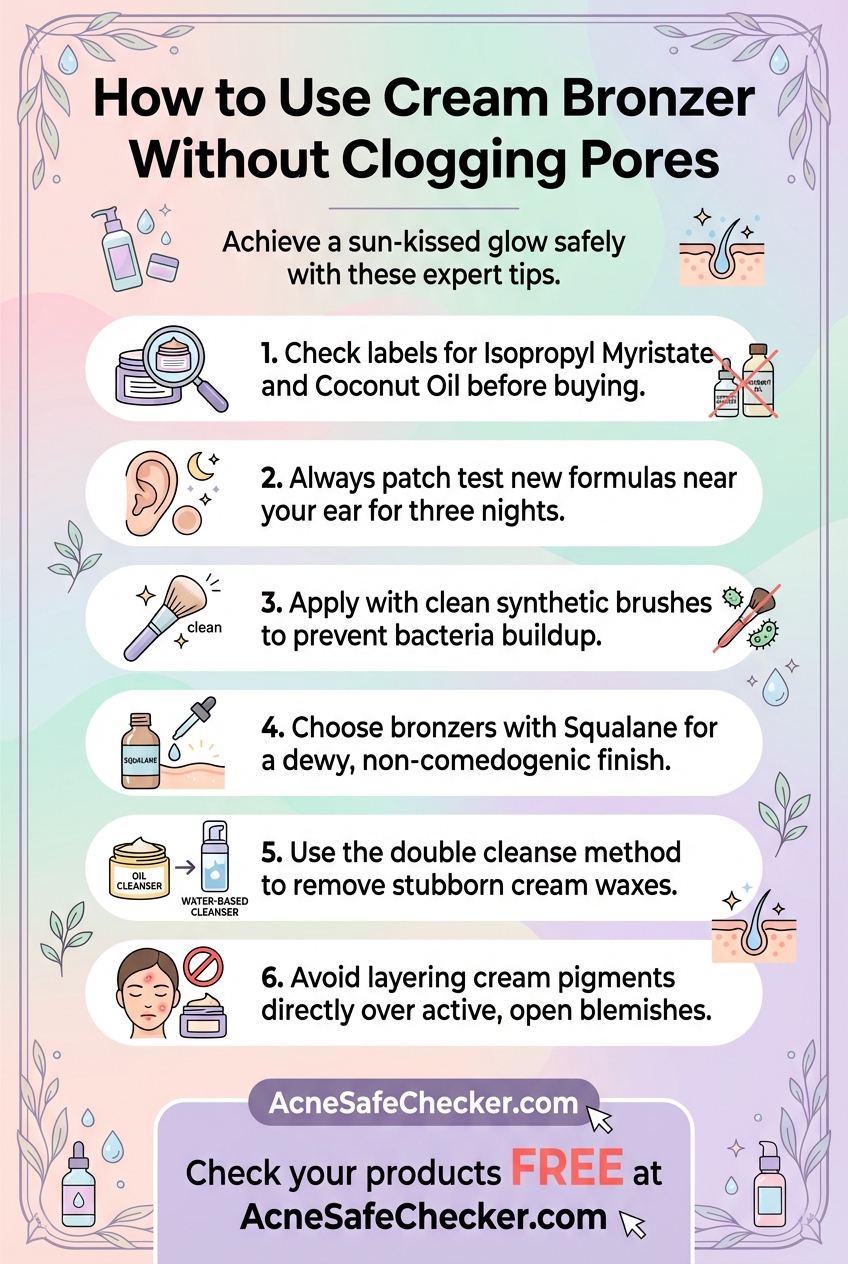
Achieving that effortless, "just-back-from-the-islands" radiance is a primary goal for many makeup enthusiasts. However, for those with acne-prone or sensitive skin, the transition from traditional powders to the currently trending cream formulas often comes with a hidden cost: congestion, whiteheads, and painful cysts.
Is Your Routine Acne-Safe?
Do not guess. Instantly check your products for pore-clogging ingredients with our AI-powered tool.
Check Ingredients NowAs a dermatologist, I frequently see patients who have sacrificed their skin health for a dewy finish. The good news? You don’t have to choose between a sculpted, sun-kissed complexion and clear skin. By understanding the science of comedogenicity and learning how to decipher ingredient labels, you can find a cream bronzer that enhances your beauty without compromising your dermatological health.
Understanding Acne Cosmetica: Why Some Bronzers Cause Breakouts
"Acne cosmetica" is a specific form of acne triggered by the use of cosmetic products. Unlike hormonal acne, which typically appears along the jawline, acne cosmetica often manifests as small, itchy bumps or whiteheads in the areas where you apply your makeup—in this case, the cheekbones, forehead, and bridge of the nose.
Cream products are inherently more likely to cause this than powders because they require emollient bases to maintain their texture. These bases often rely on oils, waxes, and fatty acids that sit on the skin's surface or sink into the ostium (the pore opening), creating a plug that traps sebum and bacteria. When this happens, a comedo is formed, leading to the breakouts we all want to avoid.
The Red Flag Ingredients: What to Avoid
When searching for a cream bronzer that won't cause breakouts, the first step is to become a label detective. While the term "non-comedogenic" is a helpful starting point, it isn't a regulated legal term. You must look for specific ingredients known to be highly comedogenic (pore-clogging):
1. Isopropyl Myristate and its Derivatives
This ingredient is often added to creams to give them a smooth, silky feel and to help them soak into the skin. Unfortunately, it is highly comedogenic and can aggravate acne significantly.
2. Coconut Oil (Cocos Nucifera Oil)
While beloved in hair care, coconut oil is a level 4 on the comedogenic scale (which goes from 0 to 5). It is far too heavy for the facial skin of anyone prone to congestion.
3. Synthetic Lanolin and Certain Waxes
Heavy waxes used to keep cream products solid can act as an occlusive barrier that is too thick for oily skin types. Look out for Acetylated Lanolin Alcohol in particular.
4. Bismuth Oxychloride
Commonly found in shimmery bronzers to provide a "glow," this mineral can be physically irritating to the pore lining, leading to inflammation and subsequent breakouts.
What to Look For: The Science of Acne-Safe Bronzing
To achieve a safe glow, you want ingredients that provide slip and pigment without suffocating the skin. Here is what I recommend for my acne-prone patients:
- Squalane: A lightweight, non-comedogenic oil that mimics the skin’s natural sebum. It provides the "dewy" look of a cream without the heavy, pore-clogging potential of traditional oils.
- Hyaluronic Acid: Often included in cream formulas to provide hydration. It’s a humectant, meaning it draws water into the skin rather than sitting on top of it with heavy lipids.
- Silica: This mineral can help blur the skin and provide a smooth application while actually helping to absorb a small amount of excess oil throughout the day.
- Non-Nano Zinc Oxide: Sometimes found in "clean" bronzers, this can actually be soothing for inflamed skin while providing some physical sun protection.
Practical Steps for a Breakout-Free Application
Even with the perfect product, how you apply and remove your bronzer matters. Follow these professional steps to ensure your skin stays clear:
1. The Patch Test
Before applying a new cream bronzer to your entire face, test it on a small area near your ear for three consecutive nights. If no bumps appear, it is likely safe for your specific skin chemistry.
2. Use Clean Tools
Cream products are a breeding ground for bacteria if you dip dirty fingers into the pot. Use a synthetic brush or a damp beauty sponge, and wash these tools at least once a week with a gentle, fragrance-free cleanser.
3. The Double Cleanse Method
Cream bronzers are designed to stay put, which means a simple water-based face wash might not be enough to remove them completely. Start with a non-comedogenic cleansing oil or micellar water to break down the pigments and waxes, then follow with your regular medicated or gentle cleanser.
4. Layering Wisely
If you have active acne, avoid applying cream bronzer directly over an open blemish. The pigments can settle into the wound, causing further irritation and potential scarring (post-inflammatory hyperpigmentation).
Conclusion: Glowing Skin Without the Compromise
The shift toward cream makeup is a win for anyone looking for a natural, skin-like finish. By prioritizing formulas rich in squalane and humectants while avoiding heavy oils and myristates, you can enjoy the aesthetic benefits of a bronzed glow without the dermatological fallout. Remember: the best makeup is the kind that makes you feel confident both when it’s on and after it’s washed off. If you continue to struggle with breakouts despite changing your products, consult with a board-certified dermatologist to rule out underlying causes.