
The Acne-Makeup Paradox: Breaking the Cycle
Is Your Routine Acne-Safe?
Do not guess. Instantly check your products for pore-clogging ingredients with our AI-powered tool.
Check Ingredients NowFor many individuals struggling with acne, makeup feels like a double-edged sword. You want to cover the redness and inflammation to feel more confident, but you fear that the very products you use to hide the breakout are the ones causing the next one. This is the "acne-makeup paradox," and as a dermatologist, it is one of the most common concerns I address in my clinic.
Finding a non-pore clogging concealer isn't just about reading the front of a bottle; it’s about understanding the science of your skin and the chemistry of the ingredients you apply to it. In this guide, we will break down what "non-comedogenic" actually means, which ingredients to avoid, and how to apply concealer in a way that promotes healing rather than further irritation.
What Does "Non-Comedogenic" Really Mean?
You have likely seen the term "non-comedogenic" on countless labels. Technically, a comedone is a clogged pore—either a blackhead (open comedone) or a whitehead (closed comedone). Therefore, a non-comedogenic product is formulated specifically to avoid blocking pores.
However, it is important to understand that the term "non-comedogenic" is not strictly regulated by the FDA. A product can claim to be non-pore clogging based on internal testing, but every individual’s skin chemistry is unique. A product that is safe for one person might cause a "breakout" in another due to sensitivities or specific skin types. This is why looking at the ingredient list (the INCI list) is far more important than the marketing claims on the front.
The Comedogenicity Scale
In dermatology, we often refer to the comedogenicity scale, which ranks ingredients from 0 (will not clog pores) to 5 (highly likely to clog pores). When choosing a concealer for acne, we want to stay as close to 0 or 1 as possible.
Scientific Explanation: How Pores Become Clogged
To understand why some concealers fail us, we have to look at the anatomy of a pore. Acne occurs when the pilosebaceous unit—comprising the hair follicle and the sebaceous gland—becomes blocked. This blockage is usually a result of three factors: excess sebum (oil) production, a buildup of dead skin cells (hyperkeratosis), and the presence of C. acnes bacteria.
When you apply a heavy, occlusive concealer, you are adding a physical barrier. If that concealer contains heavy waxes or certain oils, it creates a "plug" that traps sebum and dead skin cells inside the follicle. This anaerobic environment is the perfect breeding ground for bacteria, leading to the painful, red bumps we recognize as inflammatory acne.
Ingredients to Avoid in Your Concealer
If you have acne-prone skin, keep a close eye on your labels and try to avoid the following ingredients, which are known to be highly comedogenic or irritating:
- Isopropyl Myristate and Isopropyl Palmitate: Often used to give products a smooth feel, these are notorious for clogging pores.
- Acetylated Lanolin: While lanolin is a great moisturizer for dry body skin, its derivatives are often too heavy for facial skin prone to acne.
- D&C Red Dyes: Some synthetic red pigments used to color cosmetics are highly comedogenic. If you notice breakouts specifically where you apply blush or color-correcting concealer, this might be the culprit.
- Coconut Oil (Cocos Nucifera Oil): While popular in natural beauty, coconut oil is a 4 on the comedogenicity scale and should be avoided by anyone with active acne.
- Sodium Lauryl Sulfate (SLS): Sometimes found in creamy formulas, this can strip the skin’s natural barrier, leading to irritation that worsens acne.
Beneficial Ingredients to Look For
Modern cosmetic chemistry has allowed for the creation of "treatment concealers"—products that hide blemishes while actively working to heal them. Look for these skin-friendly additions:
- Salicylic Acid (BHA): A beta-hydroxy acid that penetrates deep into the pores to dissolve the glue holding dead skin cells together.
- Niacinamide (Vitamin B3): An anti-inflammatory powerhouse that helps reduce the redness associated with active breakouts and regulates oil production.
- Zinc Oxide: Often found in mineral concealers, it provides a physical barrier and has natural anti-inflammatory properties.
- Kaolin or Bentonite Clay: These can help absorb excess oil throughout the day, preventing the concealer from "sliding" and settling into pores.
Professional Tips for Applying Concealer to Acne
How you apply your makeup is just as important as what you apply. Follow these steps to ensure your coverage is seamless and safe:
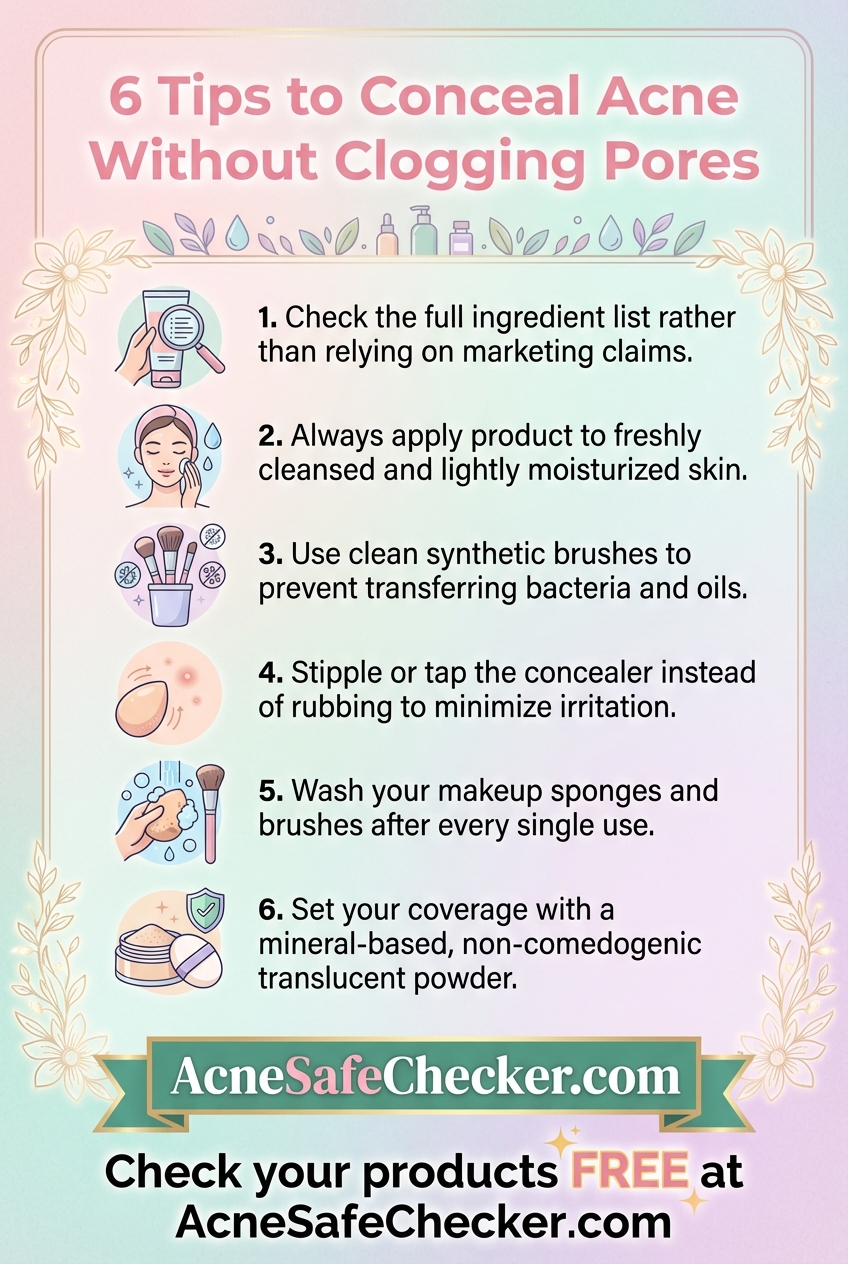
1. Start with a Clean Slate
Never apply concealer over old makeup. Ensure your skin is freshly cleansed and lightly moisturized. A lightweight, oil-free moisturizer creates a smooth canvas, preventing the concealer from clinging to dry patches of healing skin.
2. Use Clean Tools
Using your fingers can transfer bacteria and oils from your hands to your face. Use a synthetic concealer brush or a damp makeup sponge, and—most importantly—wash these tools after every single use. Bacteria thrive in the moist environment of a used makeup sponge.
3. The "Stippling" Technique
Instead of rubbing or swiping, which can irritate an active pimple and lead to more redness, use a stippling (tapping) motion. Apply a small amount of concealer directly to the blemish and tap the edges gently to blend it into the surrounding skin.
4. Set with a Non-Comedogenic Powder
To ensure your concealer stays in place without clogging pores, use a translucent, mineral-based setting powder. This prevents the product from migrating into fine lines or pores during the day.
Conclusion: Confidence Without Compromise
Managing acne is a journey that requires patience and the right tools. You do not have to choose between clear skin and the confidence that comes with a polished appearance. By prioritizing non-pore clogging concealers formulated with high-quality, non-comedogenic ingredients, you can effectively camouflage breakouts while supporting your skin's healing process.
Always remember to patch-test new products and listen to your skin. If a breakout persists or worsens despite using "safe" products, consult with a board-certified dermatologist to create a customized treatment plan that addresses the root cause of your acne.