
For years, those with acne-prone or oily skin were told to avoid oil at all costs. The logic seemed sound: why add more oil to a face that is already struggling with an overproduction of sebum? However, as our understanding of skin chemistry has evolved, so has our approach to cleansing.
Is Your Routine Acne-Safe?
Do not guess. Instantly check your products for pore-clogging ingredients with our AI-powered tool.
Check Ingredients NowEnter the cleansing oil—a product that can either be a holy grail for deep cleaning or a nightmare for your pores, depending entirely on its formulation. If you have been searching for a cleansing oil that doesn't clog pores, you aren't just looking for a product; you are looking for a way to achieve a deep clean without the fear of a post-wash breakout.
The Science of "Like Dissolves Like"
To understand why a dermatologist would recommend an oil to someone with acne, we have to look at basic chemistry. The principle of "like dissolves like" is the foundation of oil cleansing.
Sebum (the natural oil your skin produces), waterproof sunscreen, and long-wear makeup are all lipophilic, meaning they are oil-soluble. Traditional water-based cleansers often struggle to break these substances down effectively, leading to residue that sits in the pore and eventually causes a comedone (a clog). A properly formulated cleansing oil binds to these impurities, lifting them away from the skin's surface more efficiently than soap-based cleansers alone.
What Makes a Cleansing Oil Non-Comedogenic?
The term "non-comedogenic" is frequently used in marketing, but it refers specifically to ingredients that have a low probability of clogging pores. When selecting a cleansing oil that doesn't clog pores, we look at the Comedogenicity Scale, which ranks ingredients from 0 (will not clog) to 5 (high probability of clogging).
Ingredients to Look For
When scanning the ingredient list, prioritize oils that are high in linoleic acid, which is often deficient in the skin of acne sufferers. Safe options include:
- Squalane: A stable, lightweight oil that mimics the skin's natural lipid barrier without being heavy.
- Grapeseed Oil: Naturally high in linoleic acid and non-greasy.
- Safflower Oil: A highly non-comedogenic oil that helps maintain the skin barrier.
- Hemp Seed Oil: Known for its anti-inflammatory properties and a rating of 0 on the comedogenic scale.
- MCT Oil (Caprylic/Capric Triglyceride): Derived from coconut but processed to remove the heavy fatty acids that cause clogs.
Ingredients to Avoid
Conversely, some oils are notorious for causing "acne cosmetica." If you are prone to congestion, avoid products containing:
- Coconut Oil (Cocos Nucifera): Highly comedogenic (rated 4).
- Cocoa Butter: Rich and moisturizing, but too heavy for pore-prone skin.
- Isopropyl Myristate: A synthetic oil used to enhance absorption that is a frequent trigger for breakouts.
The Secret is in the Emulsifier
There is a significant difference between rubbing pure kitchen olive oil on your face and using a formulated cleansing oil. A professional-grade cleansing oil contains emulsifiers.
Emulsifiers are the ingredients that allow the oil to mix with water. When you splash your face with water after massaging the oil in, the emulsifier turns the oil into a milky lotion that rinses away completely. Without a high-quality emulsifier, the oil—and the dirt it has collected—stays trapped on your skin, which is the primary cause of oil-cleansing-related breakouts.
How to Double Cleanse Without Breaking Out
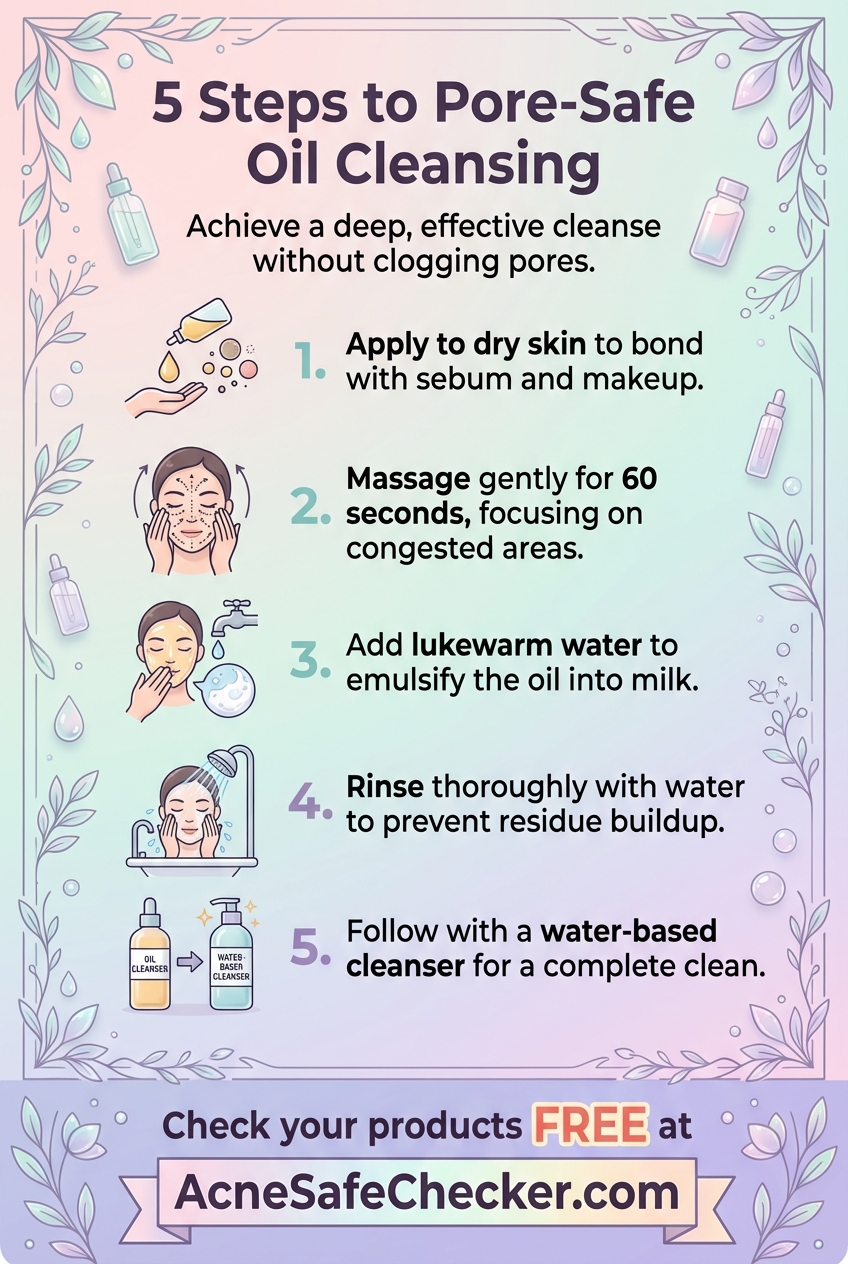
To ensure your cleansing oil doesn't clog pores, you must follow the correct technique. This process is known as the "Double Cleanse."
- Apply to Dry Skin: Start with dry hands and a dry face. This allows the oil to bond with the sebum and makeup without interference from water.
- Gentle Massage: Use your fingertips to massage the oil into your skin for 60 seconds. Focus on areas with visible congestion, such as the nose and chin.
- Emulsify: Add a small amount of lukewarm water to your hands and continue massaging. The oil should turn white and milky.
- Rinse Thoroughly: Rinse with plenty of lukewarm water.
- The Second Step: Follow up immediately with a gentle, water-based, non-foaming or lightly foaming cleanser. This ensures that every last trace of oil and debris is removed from the skin.
Common Pitfalls for Acne-Prone Skin
Even with the right product, some users experience issues. One common mistake is "over-massaging." While it is tempting to try and "rub out" blackheads, excessive friction can cause irritation and inflammation, leading to more acne. Another mistake is using water that is too hot, which can strip the skin and cause a rebound production of oil.
Finally, remember that your skin may need a transition period. However, a true "purge" from a cleansing oil is rare. If you notice new, deep cystic bumps after starting a new oil, it is likely a reaction to an ingredient rather than a purge, and you should discontinue use.
Conclusion
A cleansing oil that doesn't clog pores can be a transformative addition to your skincare routine, especially if you wear sunscreen or makeup daily. By focusing on non-comedogenic ingredients like squalane or grapeseed oil and ensuring the product emulsifies perfectly, you can enjoy the benefits of deep cleansing without compromising your skin's clarity.
Always remember: the goal of cleansing is to respect the skin barrier while removing what doesn't belong. When done correctly, oil cleansing leaves the skin balanced, hydrated, and—most importantly—clear.