
If you have spent any time on skincare social media lately, you have likely encountered the term "slugging." This practice—coating your face in a thick layer of petroleum-based ointment before bed—promises a waking glow and a repaired skin barrier. However, for those with acne-prone skin or a history of congested pores, the sight of a thick, greasy tube of Aquaphor Healing Ointment can be a source of immediate anxiety.
Is Your Routine Acne-Safe?
Do not guess. Instantly check your products for pore-clogging ingredients with our AI-powered tool.
Check Ingredients NowThe question remains: Does Aquaphor clog pores? As a dermatologist, I hear this daily. The answer is more nuanced than a simple yes or no. To understand whether Aquaphor belongs in your skincare routine, we need to dive into the science of comedogenicity, the anatomy of a pore, and the "trap effect."
What Exactly is Aquaphor?
To understand how Aquaphor interacts with your skin, we first have to look at its ingredient profile. Unlike its cousin, Vaseline (which is 100% white petrolatum), Aquaphor is a multi-ingredient ointment. Its formulation includes:
- 41% Petrolatum: The gold standard of occlusives, which prevents transepidermal water loss (TEWL).
- Mineral Oil: A lightweight emollient.
- Ceresin: A mineral wax used to thicken the formula.
- Lanolin Alcohol: A fatty alcohol derived from sheep's wool that acts as an emollient (note: this is a potential allergen for some).
- Panthenol and Glycerin: Humectants that draw moisture into the skin.
The Difference Between Occlusives and Comedogens
In the world of dermatology, we distinguish between "occlusives" and "comedogens." An occlusive is a barrier-forming agent that sits on top of the skin to lock in moisture. A comedogen is a substance that physically enters the pore, mixes with sebum, and creates a plug (a comedone).
The Scientific Verdict: Is Aquaphor Comedogenic?
From a strictly scientific standpoint, petrolatum—the primary ingredient in Aquaphor—is non-comedogenic.
The molecular size of petrolatum is too large to actually penetrate the human pore. It essentially sits on the surface of the stratum corneum (the outermost layer of skin). Because it cannot enter the pore, it cannot, by itself, create the physical plug that leads to a blackhead or whitehead.
However, the "Non-Comedogenic" label on a bottle can be misleading. While the ingredients themselves may not clog pores, the environment they create on the skin can lead to breakouts. This is where the confusion for many acne sufferers begins.
The "Trap Effect": How Aquaphor Can Lead to Breakouts
If Aquaphor isn't technically clogging your pores, why do some people break out after using it? The answer lies in what is happening underneath the ointment.
Aquaphor is a powerful occlusive. It is designed to seal everything into the skin. If you apply Aquaphor to a face that hasn't been thoroughly cleansed, you are effectively sealing in:
- Excess Sebum: Your skin’s natural oils.
- Dead Skin Cells: Which naturally shed and need to exit the pore.
- Bacteria: Specifically Cutibacterium acnes, the bacteria responsible for inflammatory acne.
- Pollutants: Residual dirt or makeup from the day.
When these elements are trapped against the skin under a thick occlusive layer, they can create a "pressure cooker" effect for your pores. For someone with oily or acne-prone skin, this stagnant environment is the perfect recipe for a breakout.
Who Should Use Aquaphor on Their Face?
Despite the risks for some, Aquaphor is a dermatological staple for a reason. It is incredibly effective for specific skin types and conditions:
- Severely Dry Skin: If your skin is flaking or feels tight, Aquaphor provides immediate relief.
- Eczema and Compromised Barriers: It helps shield the skin while the barrier repairs itself.
- Post-Procedure Recovery: We frequently recommend it after chemical peels or laser treatments to facilitate healing.
- Winter Protection: It acts as a shield against harsh, cold winds that cause "windburn."
Who Should Avoid It?
If you have active cystic acne or naturally very oily skin, I typically advise against applying Aquaphor to the entire face. Your skin already produces enough sebum to maintain its barrier; adding a heavy occlusive may disrupt your skin's natural balance and lead to congestion.
Practical Steps: How to Use Aquaphor Safely
If you want to reap the benefits of Aquaphor without the fear of a breakout, follow these dermatologist-approved steps:
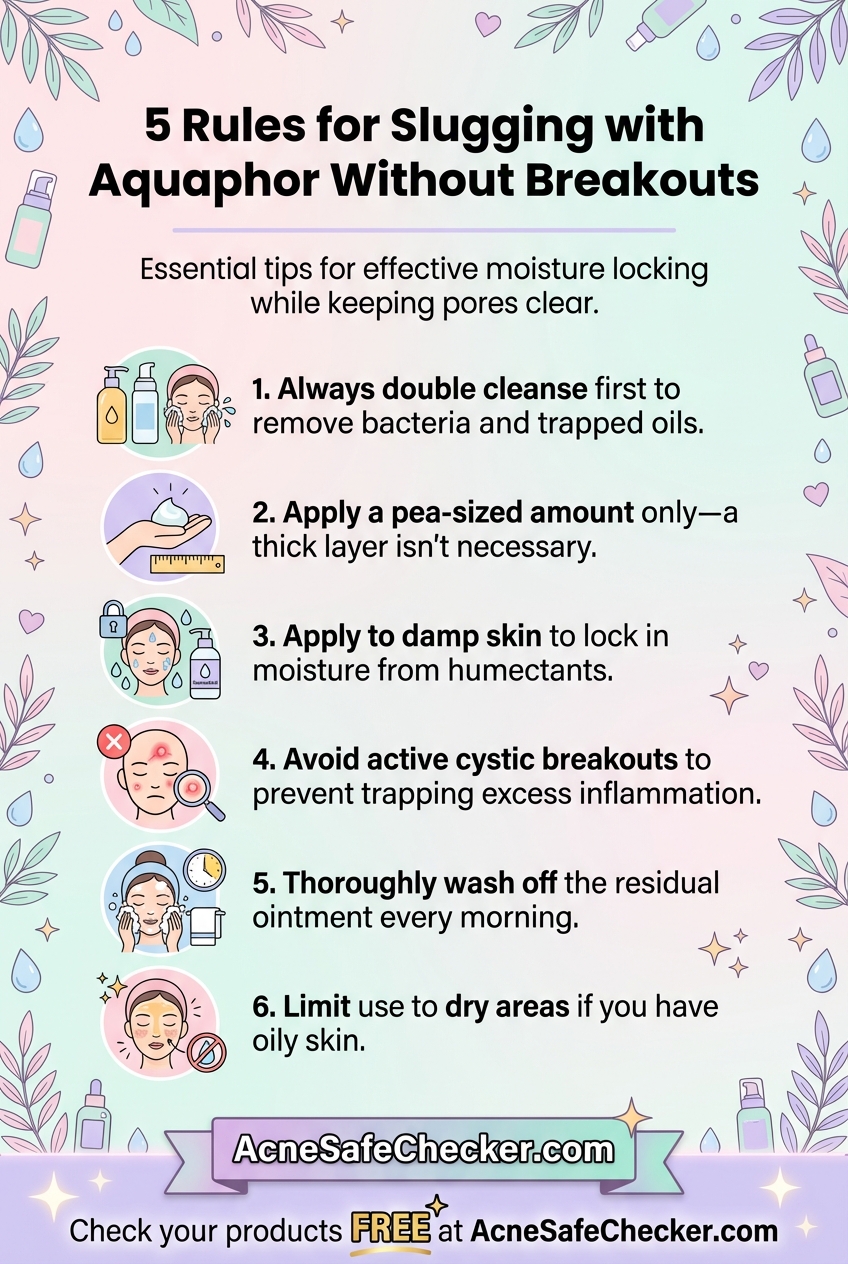
- The Double Cleanse: Never apply Aquaphor to a "mostly clean" face. Use an oil-based cleanser followed by a water-based gentle cleanser to ensure every trace of dirt and makeup is gone.
- Apply to Damp Skin: To maximize hydration, apply your humectants (like hyaluronic acid) first, then a thin layer of Aquaphor while the skin is still slightly damp.
- The "Pea-Size" Rule: You do not need a thick mask. A pea-sized amount is usually enough to cover the entire face in a thin, protective film.
- Avoid Active Breakouts: If you have an active whitehead or cyst, avoid that area. Occlusion can increase inflammation in an already infected pore.
- Wash it Off Properly: In the morning, ensure you use a gentle cleanser to remove the residual ointment and the debris it trapped overnight.
Conclusion
Does Aquaphor clog pores? Scientifically, its ingredients are non-comedogenic. However, its heavy occlusive nature means it can trap pore-clogging substances if used incorrectly. If you have dry or sensitive skin, Aquaphor can be a miracle worker for skin health. If you are acne-prone, proceed with caution: prioritize a perfect cleanse and use it sparingly. Skincare is never one-size-fits-all, but with the right technique, even the heaviest ointments can have a place in a healthy routine.