
Finding the perfect sunscreen is often the final boss in an acne sufferer's skincare journey. You know you need SPF to prevent post-inflammatory hyperpigmentation (PIH)—those stubborn dark spots left behind by breakouts—but the fear of a thick, greasy formula triggering a new wave of pustules is very real.
Is Your Routine Acne-Safe?
Do not guess. Instantly check your products for pore-clogging ingredients with our AI-powered tool.
Check Ingredients NowEnter the Beauty of Joseon Relief Sun: Rice + Probiotics (SPF50+ PA++++). This K-Beauty sensation has taken the world by storm, praised for its elegant texture and skin-nourishing ingredients. But the burning question remains: Is it actually acne-safe? As a dermatologist, I’ve analyzed the formulation to help you decide if this viral product deserves a place in your acne-fighting arsenal.
The Anatomy of the Formula: Key Ingredients
To understand if a product is acne-safe, we have to look past the marketing and dive into the INCI (International Nomenclature of Cosmetic Ingredients) list. The Beauty of Joseon Relief Sun is formulated with 30% Rice Extract and Grain Fermented Extracts.
Rice Bran Water and Extracts
Rice has been used for centuries in traditional Korean medicine (Hanbang). It is rich in vitamins B, C, and E, as well as minerals and amino acids. For acne-prone skin, rice is remarkably soothing. It helps hydrate without the heaviness of occlusive oils, which is a significant win for those with oily-to-combination skin types.
The Probiotic Complex
This sunscreen utilizes a variety of fermented grain extracts (Lactobacillus/Rice Ferment, Saccharomyces/Rice Ferment Filtrate, etc.). Probiotics help strengthen the skin’s microbiome. A healthy microbiome is crucial for acne patients because it helps the skin defend itself against C. acnes bacteria and reduces overall inflammation.
Niacinamide (Vitamin B3)
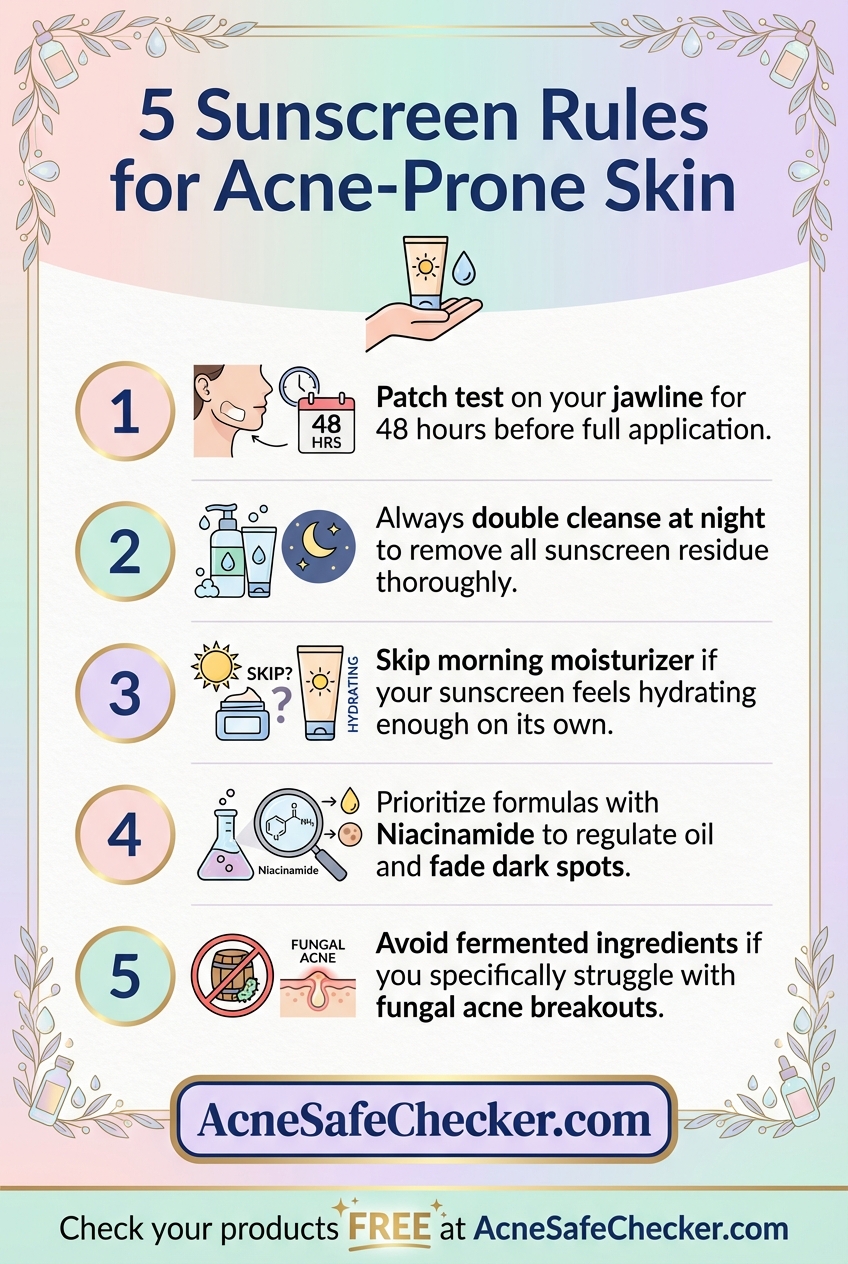
Niacinamide is a superstar ingredient for acne. It helps regulate sebum production, improves the skin barrier, and fades the redness associated with active breakouts. Its presence in this sunscreen provides a functional benefit beyond just sun protection.
Is it Comedogenic? Breaking Down the Pore-Clogging Potential
In the world of dermatology, "acne-safe" usually refers to a product being non-comedogenic—meaning it shouldn't clog pores. However, comedogenicity is not a binary "yes" or "no" across all skin types.
The Beauty of Joseon sunscreen is free from many common offenders like high concentrations of coconut oil, cocoa butter, or isopropyl myristate. It uses modern, high-tech chemical filters like Tinosorb S and Uvinul A Plus, which are generally lighter and less irritating than older chemical filters like oxybenzone.
A Note on Fatty Alcohols and Esters
The formula does contain Cetearyl Olivate and Sorbitan Olivate. While these are generally considered safe for most acne-prone individuals, a very small percentage of users who are extremely sensitive to fatty acid derivatives may find them slightly rich. However, for 95% of users, these ingredients provide necessary hydration without causing congestion.
The Fungal Acne (Malassezia Folliculitis) Disclaimer
It is important to distinguish between traditional bacterial acne and fungal acne. Fungal acne is caused by an overgrowth of yeast in the hair follicles. If you suffer specifically from fungal acne, the fermented ingredients in Beauty of Joseon might be problematic. Yeast "feeds" on certain fermented byproducts and fatty acids.
Verdict for Fungal Acne: If you have confirmed fungal acne, proceed with caution or look for a ferment-free alternative. For traditional hormonal or cystic acne, this product is generally very safe.
Why Texture Matters for Acne-Prone Skin
One of the primary reasons people with acne stop wearing sunscreen is the "heavy" feeling. Thick, physical sunscreens (containing high percentages of Zinc Oxide or Titanium Dioxide) can feel like a mask, trapping sweat and oil underneath.
Beauty of Joseon Relief Sun has a lightweight, lotion-like consistency. It absorbs quickly into the skin with a natural finish—neither overly matte nor excessively dewy. This "weightlessness" is vital for acne patients because it prevents the suffocating environment that allows bacteria to thrive.
Practical Steps: How to Incorporate it into Your Routine
If you are prone to breakouts, follow these steps to ensure the best experience with any new sunscreen:
- Patch Test First: Apply a small amount on your jawline for 48 hours to check for any reactive breakouts or irritation.
- The Double Cleanse is Mandatory: Since this sunscreen is designed to adhere to the skin for protection, you must remove it thoroughly at night. Use a micellar water or a gentle oil cleanser followed by your regular water-based cleanser. Failure to remove sunscreen properly is often what leads to "sunscreen-induced" acne, rather than the product itself.
- Monitor Your Moisturizer: Because this formula is quite hydrating, those with very oily skin might find they can skip their morning moisturizer and use this as a 2-in-1 product. Over-layering too many products can lead to congestion.
Conclusion: The Final Verdict
From a dermatological perspective, Beauty of Joseon Relief Sun: Rice + Probiotics is highly acne-safe. Its inclusion of Niacinamide, its lightweight texture, and its lack of heavy occlusives make it an excellent choice for those struggling with breakouts.
While no product can claim to be 100% acne-safe for every single human being—due to the unique chemistry of our skin—this sunscreen is one of the most "friendly" formulations on the market today. It provides the high-level protection needed to prevent acne scars from darkening while keeping the skin barrier resilient and calm.
If you have been avoiding sunscreen for fear of breakouts, Beauty of Joseon is a sophisticated, scientifically-backed entry point that likely won't let you down.