
Finding the perfect skincare routine often feels like navigating a minefield. You carefully select products labeled "dermatologist-tested" or "for sensitive skin," only to wake up with a fresh crop of breakouts. When this happens, the culprit is often a hidden ingredient that—while safe for many—can be a nightmare for those with acne-prone skin. One such ingredient frequently found in moisturizers and makeup is cetyl acetate.
Is Your Routine Acne-Safe?
Do not guess. Instantly check your products for pore-clogging ingredients with our AI-powered tool.
Check Ingredients NowIf you have been scanning your ingredient lists and wondering, "Does cetyl acetate clog pores?" you are asking the right question. As a dermatologist, I have seen many patients struggle with persistent congestion caused by ingredients they didn't even know were there. In this article, we will break down the science of cetyl acetate, its comedogenic rating, and whether you should keep it in your beauty cabinet.
What is Cetyl Acetate?
To understand its impact on your skin, we first need to look at what cetyl acetate actually is. In the world of cosmetic chemistry, cetyl acetate is an ester. It is formed by the reaction of cetyl alcohol (a fatty alcohol) and acetic acid.
In skincare and makeup formulations, it serves primarily as an emollient and skin-conditioning agent. Manufacturers love it because it provides a smooth, silky feel to a product without the heavy, greasy sensation of traditional oils. It helps soften the skin and acts as a lubricant, allowing products like foundations and lotions to glide on effortlessly.
Does Cetyl Acetate Clog Pores?
The short answer is: Yes, cetyl acetate is considered highly comedogenic.
On the standard comedogenicity scale—which ranks ingredients from 0 (will not clog pores) to 5 (highly likely to clog pores)—cetyl acetate consistently earns a rating of 4 out of 5. This means that for individuals predisposed to acne, this ingredient has a significant potential to trigger the formation of comedones (blackheads and whiteheads).
Why is it so Comedogenic?
While cetyl alcohol on its own is generally considered safe for most skin types (rating a 2 on the scale), the chemical modification into cetyl acetate changes its behavior on the skin. This ester has a molecular structure that allows it to penetrate the follicular opening effectively. Once there, it can mix with your natural sebum and dead skin cells, creating a "plug" that traps bacteria and leads to inflammation.
Why is Cetyl Acetate Used if it Clogs Pores?
You might be wondering why a known pore-clogger is included in skincare at all. The reality is that comedogenicity is subjective to the individual.
- Texture and Aesthetics: It provides a "dry-oil" finish that many consumers find luxurious.
- Penetration Enhancement: It can help other beneficial active ingredients penetrate deeper into the skin.
- Benefit for Dry Skin: For individuals with extremely dry or compromised skin barriers who do not struggle with acne, cetyl acetate can be an excellent emollient that prevents moisture loss.
However, for those with oily, combination, or acne-prone skin, these benefits rarely outweigh the risk of a breakout.
How to Identify Cetyl Acetate on Labels
When auditing your skincare and makeup, look closely at the ingredient deck. It is often found in:
- Long-wear foundations
- Cream blushes and highlighters
- Rich night creams
- Anti-aging serums
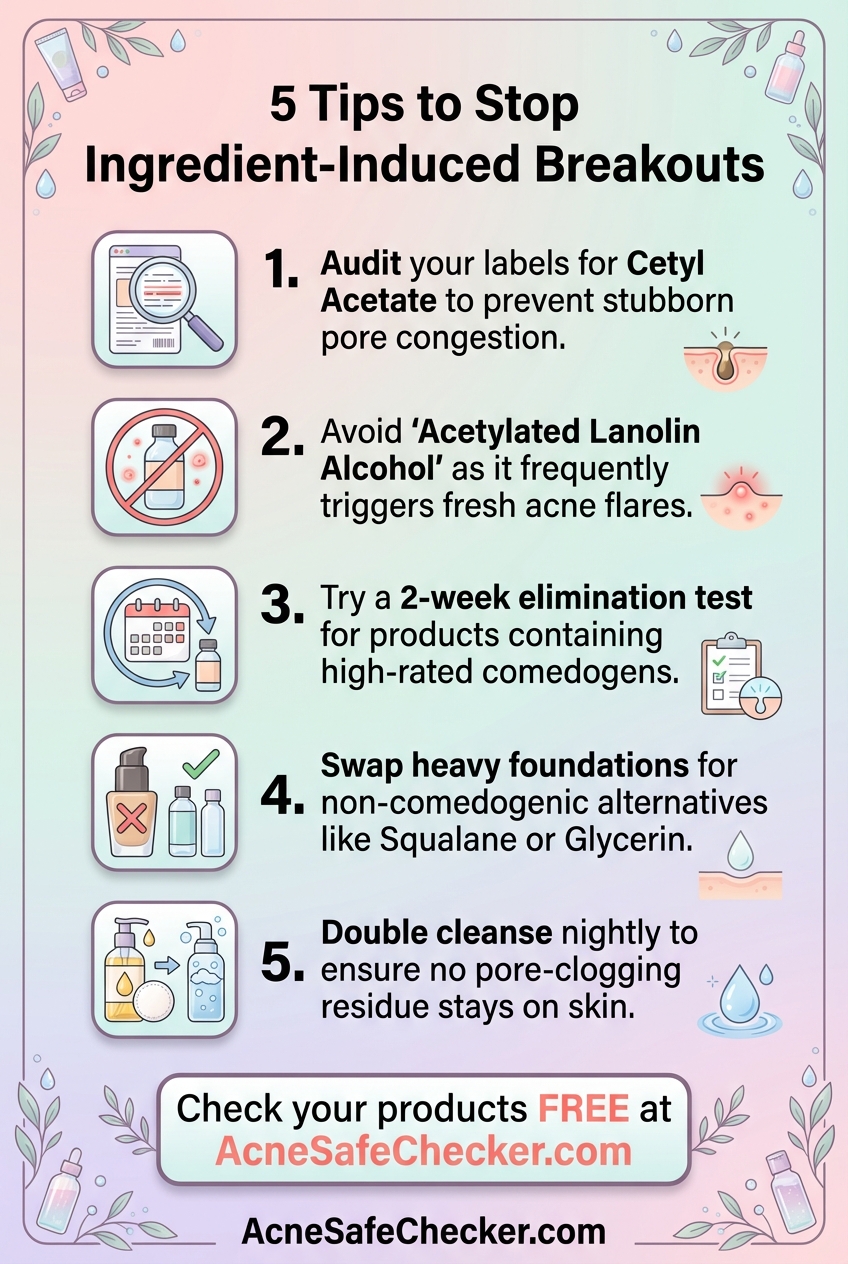
You should also be wary of its close relative, Acetylated Lanolin Alcohol. This ingredient is often paired with cetyl acetate and carries a similarly high comedogenic rating (4 or 5). If you see one, you will often find the other nearby.
Practical Steps: What Should You Do?
If you suspect cetyl acetate is the reason behind your stubborn congestion, follow these steps to clear your complexion:
1. The Ingredient Audit
Check your current products. If a product you use daily contains cetyl acetate and you are experiencing "closed comedones" (small, flesh-colored bumps), try removing that specific product from your routine for two weeks to see if your skin improves.
2. Look for Non-Comedogenic Alternatives
Seek out products that use lightweight emollients with lower comedogenic ratings. Ingredients like squalane, caprylic/capric triglyceride, or glycerin provide hydration and smoothness without the high risk of clogging pores.
3. Double Cleanse
If you absolutely love a product that contains cetyl acetate (perhaps a high-end foundation) and you aren't ready to part with it, ensure you are double cleansing at night. Use a micellar water or a non-comedogenic oil cleanser followed by a water-based cleanser to ensure no residue is left in your pores overnight.
4. Professional Guidance
If you have removed known comedogens and are still struggling with acne, consult with a board-certified dermatologist. Sometimes, what looks like ingredient-induced acne is actually a hormonal or bacterial issue that requires medical intervention.
Conclusion
While cetyl acetate is a safe and effective emollient for those with very dry, non-acne-prone skin, it is a significant red flag for anyone struggling with breakouts. With a comedogenic rating of 4, it is highly likely to cause issues for oily and combination skin types.
By becoming a "label detective" and choosing products formulated with your specific skin concerns in mind, you can avoid the frustration of product-induced breakouts and achieve the clear, healthy glow you deserve.