
Dealing with hair thinning is stressful enough, but many individuals embarking on a hair regrowth journey encounter an unexpected and frustrating side effect: facial breakouts. If you have started using Rogaine or generic versions of the drug and noticed bumps along your hairline, forehead, or temples, you are likely asking: Does minoxidil cause acne?
Is Your Routine Acne-Safe?
Do not guess. Instantly check your products for pore-clogging ingredients with our AI-powered tool.
Check Ingredients NowAs a dermatologist, I see this concern frequently. The relationship between minoxidil and acne isn't always straightforward. While the active medication itself is rarely the primary culprit, the ingredients surrounding it—and how you apply it—can significantly impact your skin’s health.
The Science: Is Minoxidil Comedogenic?
Strictly speaking, the active pharmaceutical ingredient minoxidil is not known to be comedogenic (pore-clogging). In clinical studies, minoxidil does not trigger the production of excess sebum or directly block the hair follicle. However, minoxidil cannot be applied to the scalp as a raw powder; it requires a "vehicle" to deliver the medication into the skin.
The Role of Propylene Glycol
The liquid version of minoxidil often contains high concentrations of propylene glycol. This ingredient helps the minoxidil penetrate the scalp, but it is a known skin irritant for many. In some users, propylene glycol can cause a condition called contact dermatitis. This manifests as redness, itching, and small red bumps that can look remarkably like acne, though they are technically an inflammatory reaction rather than a bacterial infection.
Alcohol and Skin Barrier Disruption
Most topical minoxidil formulations also contain alcohol to ensure the solution dries quickly. Alcohol is notorious for stripping the skin of its natural oils. When the skin becomes overly dry or its protective barrier is compromised, it may overcompensate by producing more oil (sebum). This excess sebum, combined with the irritation of the alcohol, creates a perfect environment for Cutibacterium acnes to thrive, leading to traditional breakouts.
Understanding "Acne Cosmetica"
When a topical product like minoxidil causes breakouts, we often categorize it as acne cosmetica. This occurs when the oily or chemical-heavy residue of a product migrates from the intended area (the scalp) to the face.
Because minoxidil is often applied at night, the product can easily transfer from your hair to your pillowcase, and then directly onto your face as you sleep. If the oily carrier oils or the propylene glycol sit on your forehead or cheeks for eight hours, they can clog pores and lead to comedones (whiteheads and blackheads).
Distinguishing Between Acne and Irritation
It is important to determine if you are experiencing true acne or a reaction to the product.
- True Acne: You will see a mix of blackheads, whiteheads, and perhaps deep, painful cysts. These usually take time to develop.
- Contact Dermatitis/Irritation: This usually appears as a cluster of small, uniform red bumps or a rash. It often itches or stings and appears shortly after you start using a new formulation.
- Folliculitis: Sometimes, minoxidil can cause inflammation of the hair follicles themselves. This looks like tiny pimples with a hair in the center, often located right at the hairline.
Practical Steps to Prevent Minoxidil-Related Acne
You do not necessarily have to choose between having hair and having clear skin. Here are dermatologist-approved strategies to mitigate breakouts while continuing your treatment:
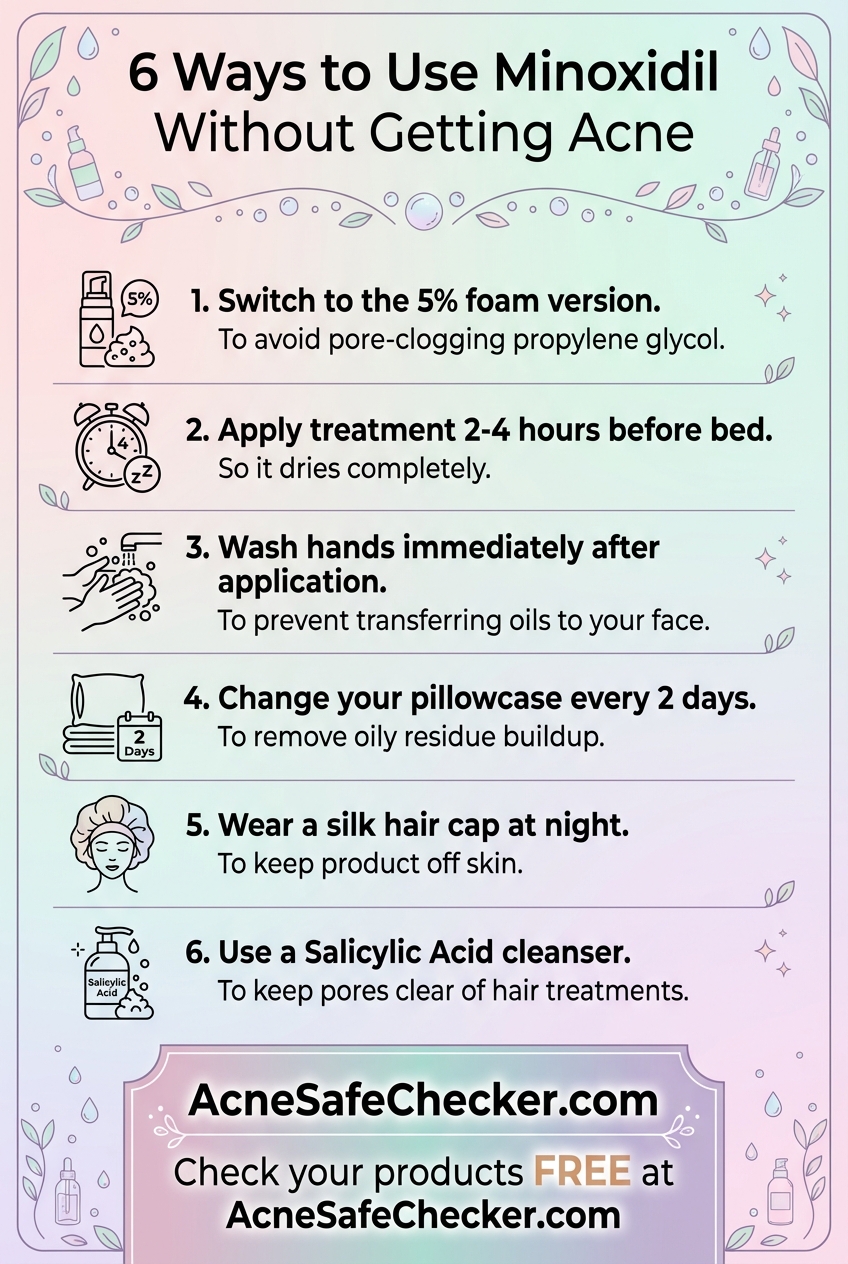
1. Switch to Foam Formulation
If you are using the liquid version of minoxidil, the single best move you can make is switching to the 5% foam version. The foam version is typically formulated without propylene glycol. Most patients find the foam significantly less irritating and less oily, which drastically reduces the risk of both contact dermatitis and clogged pores.
2. The "Wash and Wait" Technique
To prevent the product from migrating to your face, apply minoxidil at least 2 to 4 hours before going to bed. This allows the product to dry completely on the scalp. Additionally, washing your hands thoroughly after application is vital to ensure you aren't accidentally transferring the medication to your face during your skincare routine.
3. Protect Your Pillowcase
If you apply minoxidil at night, consider wearing a silk or breathable cotton hair cap to keep the product contained. Alternatively, change your pillowcase every 2 days. This prevents the buildup of dried minoxidil residue from being pressed into your skin night after night.
4. Optimize Your Skincare Routine
If you are prone to acne, ensure you are using a gentle, non-comedogenic cleanser twice daily. Ingredients like Salicylic Acid can help keep the pores clear of the oily residue left behind by hair treatments. If the breakouts are inflammatory, a thin layer of Benzoyl Peroxide on the affected areas can help neutralize bacteria.
When to Consult a Professional
If you have switched to the foam version and improved your application hygiene but still suffer from persistent breakouts, it is time to see a board-certified dermatologist. You may have a specific allergy to an inactive ingredient, or your acne may be unrelated to the minoxidil and require prescription treatments like retinoids or oral medications.
Conclusion
While minoxidil itself is not a direct cause of acne, the delivery systems used in many topical formulations can certainly trigger breakouts through irritation, barrier disruption, or pore-clogging residues. By switching to a foam-based vehicle and practicing better "product hygiene," most people can successfully regrow their hair without compromising the clarity of their complexion. Remember: healthy hair and healthy skin can—and should—coexist.