
For many men, the daily battle against a greasy forehead and persistent breakouts feels like a losing game. You wash your face, and two hours later, you’re reaching for a paper towel to blot the shine. This cycle isn’t just frustrating; it’s a biological challenge.
Is Your Routine Acne-Safe?
Do not guess. Instantly check your products for pore-clogging ingredients with our AI-powered tool.
Check Ingredients NowMale skin is fundamentally different from female skin. Driven by higher levels of testosterone, men’s skin is generally thicker, has more active sebaceous glands, and produces more oil (sebum). While sebum is essential for protecting the skin barrier, an excess leads to the dreaded 'oil slick' and provides a breeding ground for acne-causing bacteria.
Choosing the right cleanser is the most critical step in your routine. Here is a dermatologist’s guide to finding the best face wash for men with oily, acne-prone skin.
The Science: Why Men Get Oily and Break Out
The sebaceous glands in male skin are highly sensitive to androgens, particularly dihydrotestosterone (DHT). These hormones signal the glands to produce more oil. When this excess oil mixes with dead skin cells—a process called desquamation—it creates a 'plug' in the pore.
Once a pore is clogged, Cutibacterium acnes (the bacteria responsible for acne) begins to thrive in the oxygen-deprived environment. This leads to inflammation, resulting in the red bumps, whiteheads, and blackheads that we categorize as acne. The goal of a face wash for men isn't just to 'clean' the surface, but to manage these underlying biological factors without damaging the skin's protective barrier.
Key Ingredients to Look For
When scanning the label of a cleanser, you want to see clinically proven active ingredients that address oil production and bacterial growth.
1. Salicylic Acid (BHA)
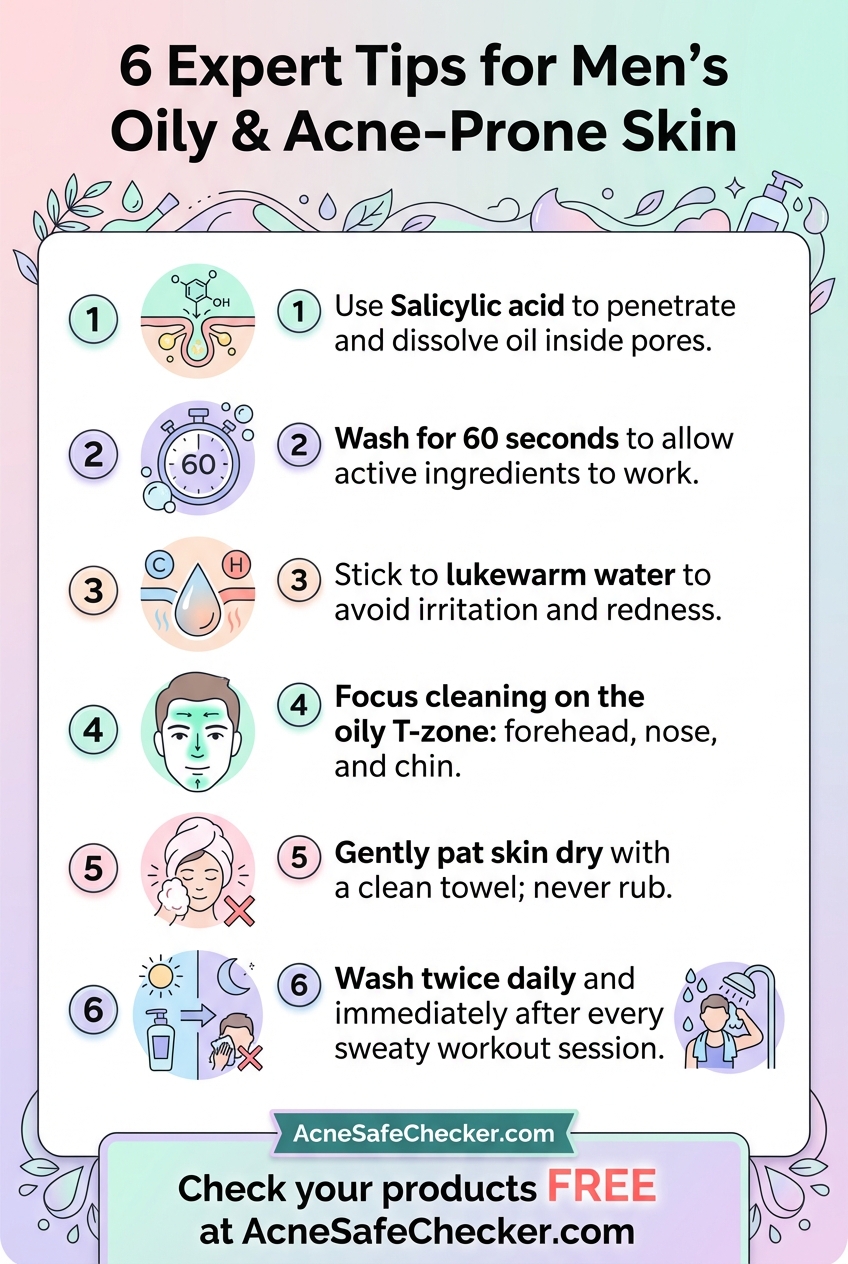
Salicylic acid is the gold standard for oily skin. Unlike Alpha Hydroxy Acids (AHAs), which are water-soluble, Salicylic acid is oil-soluble (lipophilic). This allows it to penetrate deep into the pores to dissolve the 'glue' holding dead skin cells together and break down the sebum plugs.
2. Benzoyl Peroxide
If your acne is inflammatory (red, painful bumps), benzoyl peroxide is a powerful ally. It works by introducing oxygen into the pores, which kills the anaerobic acne bacteria. It also helps to peel away dead skin cells to keep pores clear.
3. Niacinamide (Vitamin B3)
Niacinamide is a multitasking superstar. It helps regulate sebum production, reduces redness from active breakouts, and strengthens the skin's moisture barrier. It’s an excellent ingredient for men who find traditional acne treatments too irritating.
4. Clay (Kaolin or Bentonite)
For those with extremely oily skin, cleansers containing natural clays can help. These minerals act like a magnet, drawing out impurities and absorbing surface oil without the need for harsh chemicals.
Ingredients to Avoid
Many 'drugstore' soaps and body washes are far too harsh for the face. As a dermatologist, I advise men to stay away from the following:
- Sodium Lauryl Sulfate (SLS): This is a harsh surfactant that creates foam but can strip the skin of its natural lipids. When the skin is over-stripped, it often responds by producing more oil to compensate—a phenomenon known as reactive seborrhea.
- Heavy Oils and Petrolatum: These are 'comedogenic,' meaning they are likely to clog pores. Look for labels that specifically state "Non-Comedogenic."
- Physical Scrubs (Walnut shells or beads): Aggressive scrubbing causes micro-tears in the skin and spreads bacteria, which can actually worsen an acne flare-up.
The Professional Washing Routine
How you wash is just as important as what you wash with. Follow these steps for the best results:
Step 1: Use Lukewarm Water
Hot water can cause vasodilation (redness) and strip the skin of essential moisture. Stick to lukewarm water to soften the sebum without causing irritation.
Step 2: Be Gentle
Apply the cleanser using your fingertips in a circular motion. Focus on the 'T-zone'—the forehead, nose, and chin—as this is where oil glands are most concentrated. Resist the urge to scrub; let the chemical ingredients do the work.
Step 3: The 60-Second Rule
Most men rinse their face wash off in five seconds. To allow active ingredients like Salicylic acid to actually penetrate the pores, leave the cleanser on your skin for at least 60 seconds before rinsing.
Step 4: Pat Dry
Never rub your face with a dirty towel. Use a clean, soft towel and gently pat the skin dry to avoid mechanical irritation.
Frequency and Consistency
You should wash your face twice a day: once in the morning to remove oils produced during sleep, and once at night to remove the grime, pollution, and sweat accumulated during the day. If you work out, always wash your face immediately after your session to prevent 'sweat-induced' acne.
Conclusion: Consistency is King
Acne and oily skin won’t vanish overnight. It typically takes 4 to 6 weeks of consistent use to see a noticeable change in skin texture and a reduction in breakouts. By choosing a face wash formulated with the right science-backed ingredients and avoiding harsh irritants, you are taking the most important step toward a clearer, more confident complexion.
If your acne persists or causes scarring, always consult a board-certified dermatologist for a personalized treatment plan.