
Acne is more than just a surface-level nuisance; it is a complex inflammatory condition that requires a strategic, thoughtful approach to treatment. For those navigating the world of breakouts, the sheer number of serums, toners, and treatments available can be overwhelming. You may have the right ingredients, but if you are applying them in the wrong order, you could be rendering them ineffective—or worse, triggering further irritation and 'purge' breakouts.
Is Your Routine Acne-Safe?
Do not guess. Instantly check your products for pore-clogging ingredients with our AI-powered tool.
Check Ingredients NowMastering the art of layering is the secret to unlocking the full potential of your products. In this guide, we will break down the science of skincare sequencing specifically for acne-prone and congestion-prone skin.
The Science of Layering: Why Order Matters
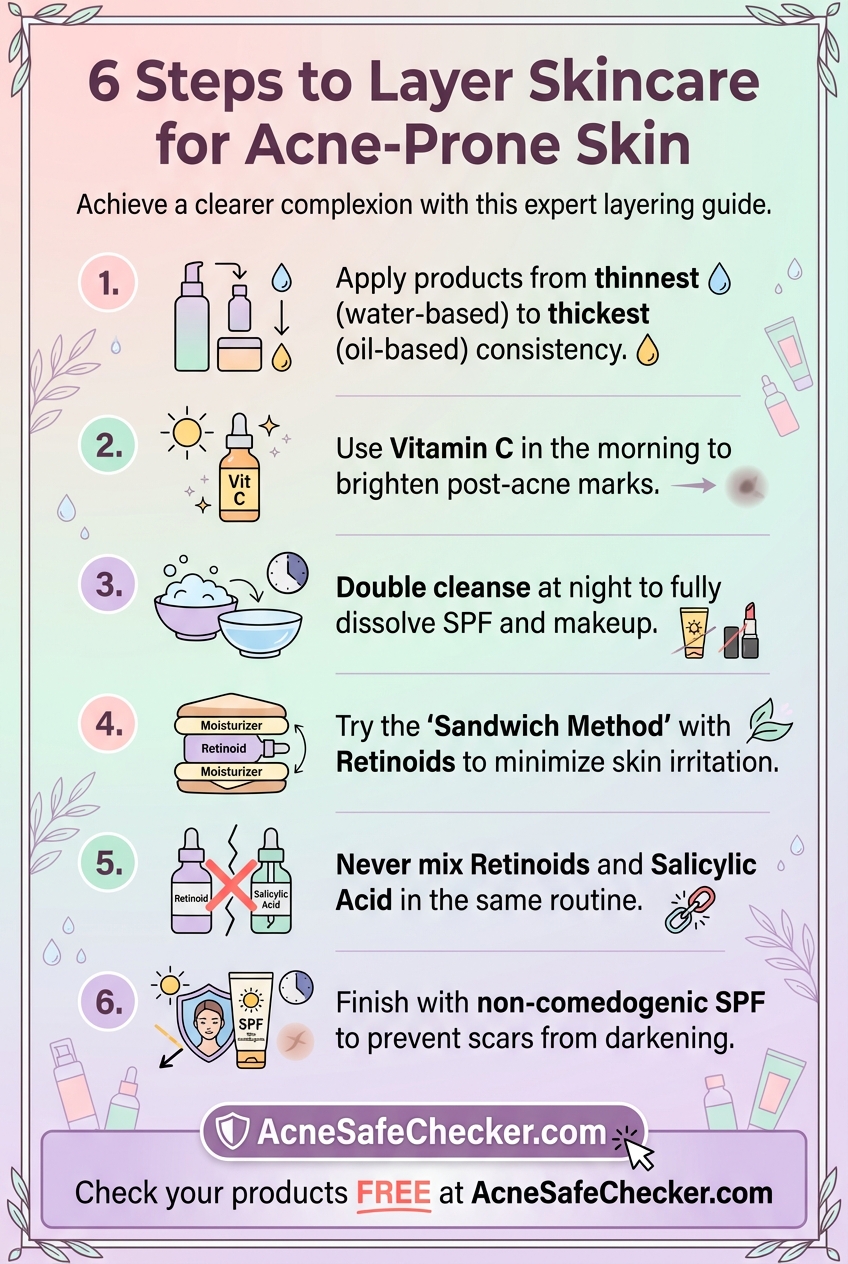
In dermatology, we prioritize product application based on two primary factors: molecular weight and pH levels. Skincare products are formulated to penetrate the skin barrier to varying degrees. As a general rule, you should apply products from the thinnest consistency (water-based) to the thickest (oil or cream-based).
If you apply a heavy moisturizer before a lightweight salicylic acid serum, the occlusive nature of the cream creates a barrier that the serum cannot penetrate. This leads to product 'pilling' and wasted active ingredients. Furthermore, some acne treatments are pH-dependent. Applying them out of sequence can destabilize the formula, causing either extreme irritation or total loss of efficacy.
The Golden Rule: Thinnest to Thickest
To keep your routine simple and effective, visualize your products on a spectrum. Start with watery liquids, move to gels and light lotions, and finish with creams and oils. For acne-prone skin, it is also vital to ensure every layer is labeled 'non-comedogenic,' meaning it is specifically formulated not to clog pores.
Your Step-by-Step Morning Routine
The goal of your morning routine is protection and prevention. You want to shield your skin from environmental pollutants and UV rays that can darken acne scars (post-inflammatory hyperpigmentation).
1. Cleanse (The Clean Slate)
Start with a gentle, sulfate-free cleanser. If you have active inflammatory acne, a wash containing 2% Salicylic Acid can help degunk pores before you apply other actives. Avoid harsh scrubs that can cause micro-tears and spread bacteria.
2. Toner or Essence (Optional)
If you use a hydrating toner, apply it to slightly damp skin. Look for ingredients like Niacinamide or Rose Water to soothe redness and balance sebum production.
3. Active Treatment Serums
Morning is the perfect time for antioxidants. Vitamin C is excellent for brightening acne marks, but ensure it is a stable formula (like Sodium Ascorbyl Phosphate), which is often better tolerated by acne-prone skin than pure L-Ascorbic Acid.
4. Lightweight Moisturizer
Even oily skin needs hydration. Skipping moisturizer can cause your sebaceous glands to overcompensate by producing more oil. Opt for a gel-based, oil-free moisturizer.
5. Sunscreen (The Non-Negotiable)
UV exposure thickens the outer layer of the skin, which can trap oil and lead to more breakouts. Use a mineral (Zinc Oxide) or chemical (Avobenzone) SPF of at least 30 every single day.
Your Step-by-Step Evening Routine
Nighttime is for repair and targeted treatment. This is when you should use your most potent acne-fighting ingredients.
1. The Double Cleanse
For acne-prone individuals, a double cleanse is a game-changer. Use a micellar water or a non-comedogenic cleansing balm to dissolve SPF and makeup, followed by your regular water-based cleanser to deep clean the pores.
2. Prescription or OTC Actives (The Heavy Hitters)
This is where you apply your retinoids (like Adapalene or Tretinoin) or Benzoyl Peroxide.
- Scientific Tip: If your skin is sensitive, use the 'Sandwich Method.' Apply a thin layer of moisturizer, then your retinoid, then another layer of moisturizer. This buffers the active ingredient without neutralizing its long-term benefits.
3. Targeted Spot Treatment
If you have a specific blemish, apply a spot treatment after your serum but before your final moisturizer.
4. Night Cream or Sealant
Use a slightly more nourishing moisturizer at night to support the skin barrier, which can be compromised by acne medications.
Strategic Ingredient Pairings
Not all ingredients play well together. Understanding these interactions is crucial for preventing chemical burns or inactivated products:
- Retinoids + Salicylic Acid: Do not use these at the exact same time. Use Salicylic Acid in the morning and your Retinoid at night to avoid extreme dryness.
- Benzoyl Peroxide + Vitamin C: These can neutralize each other. Use Vitamin C in the morning and Benzoyl Peroxide at night.
- Niacinamide + Everything: Niacinamide is a 'booster' ingredient that plays well with almost everything, helping to soothe the irritation caused by more aggressive acne treatments.
Common Pitfalls to Avoid
- Over-exfoliation: It is tempting to scrub acne away, but over-exfoliating destroys the acid mantle, leading to more inflammation and bacteria entry.
- Impatience: Most acne treatments take 6 to 12 weeks to show significant results. Skin cells turn over roughly every 28 days; you must give the products time to work through at least two cycles.
- Ignoring the Barrier: If your skin feels tight, shiny (but not oily), or stings when you apply even basic moisturizer, your barrier is compromised. Pause the actives and focus on hydration for a week.
Conclusion
Layering skincare for acne-prone skin is a balance of chemistry and intuition. By following the 'thinnest to thickest' rule and being mindful of how potent actives interact, you create an environment where your skin can heal and thrive. Remember: when it comes to acne, consistency always beats intensity. Start slow, listen to your skin, and give your routine the time it needs to reveal your clearest complexion yet.