
For many, the word "retinol" evokes images of glowing, ageless skin. For those with sensitive, acne-prone skin, however, it often triggers a different image: redness, peeling, and the dreaded "purge." If you have reactive skin that breaks out easily, you might feel like you are trapped between a rock and a hard place—needing the pore-clearing power of a retinoid but fearing the inflammatory aftermath.
Is Your Routine Acne-Safe?
Do not guess. Instantly check your products for pore-clogging ingredients with our AI-powered tool.
Check Ingredients NowAs a dermatologist, I see this dilemma daily. The good news is that retinol is not off-limits for sensitive skin. With the right formulation and a strategic approach, you can harness this gold-standard ingredient to clear acne and refine skin texture without compromising your skin barrier.
Why Retinol is the Gold Standard for Acne
To understand why we use retinol, we must understand the mechanics of acne. Acne is primarily driven by three factors: excess sebum (oil) production, the buildup of dead skin cells (hyperkeratinization) that clog pores, and the presence of acne-causing bacteria.
Retinol, a derivative of Vitamin A, works at a cellular level to address the first two issues. It accelerates cellular turnover, ensuring that dead skin cells are shed properly rather than sticking together to form a comedone (plug). Furthermore, it helps regulate oil production and offers anti-inflammatory benefits that can reduce the redness of existing blemishes.
The Paradox: Why Sensitive Skin Reacts to Retinol
The very mechanism that makes retinol effective is what causes irritation. As your skin speeds up its renewal process, the lipid barrier—the "bricks and mortar" that keep moisture in and irritants out—can become temporarily disrupted. This leads to "retinization," a transition period characterized by dryness, stinging, and flaking.
For those with sensitive skin, this barrier is already fragile. If you apply a high-concentration retinol to a compromised barrier, you trigger an inflammatory response that can actually worsen acne or lead to contact dermatitis. This is why the "more is better" approach never works for sensitive types.
Choosing the Right Formula: Look for Stability and Delivery
If you have sensitive, acne-prone skin, the formula is just as important as the active ingredient. Avoid high-strength, over-the-counter liquids that contain high concentrations of denatured alcohol, which can strip the skin.
1. Encapsulated Retinol
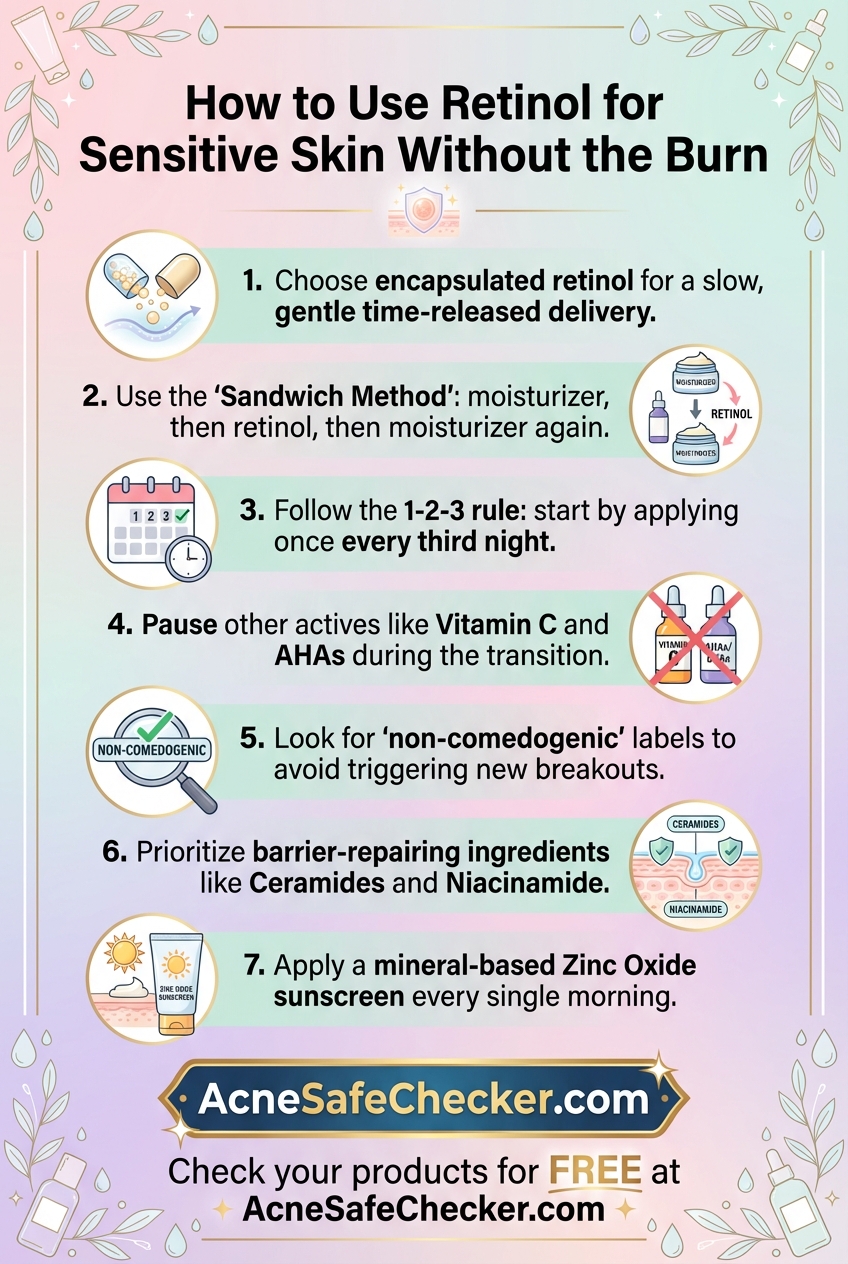
Look for "encapsulated" or "time-released" retinol. This technology wraps the retinol molecule in a lipid or carrier system, allowing it to penetrate the skin slowly over several hours rather than hitting the skin all at once. This significantly reduces the risk of irritation.
2. Retinol Esters vs. Pure Retinol
If you are extremely reactive, consider starting with a retinol ester, such as Retinyl Palmitate or Granactive Retinoid (Hydroxypinacolone Retinoate). These require more conversion steps within the skin to become active retinoic acid, making them much gentler than pure retinol or retinaldehyde.
3. Non-Comedogenic Vehicles
Check your ingredient labels for pore-clogging culprits. Even if a product contains retinol, if the base is heavy with isopropyl palmitate or certain natural oils (like coconut oil), it may trigger breakouts. Look for labels that explicitly state "non-comedogenic" or "oil-free."
The "Low and Slow" Protocol
Success with retinol on sensitive skin is a marathon, not a sprint. Follow these dermatologist-approved steps to introduce retinol into your routine safely:
The Sandwich Method
This is the ultimate hack for sensitive skin. After cleansing, apply a thin layer of a fragrance-free, ceramide-rich moisturizer. Wait five minutes, apply a pea-sized amount of retinol, and then apply another layer of moisturizer on top. This "sandwiches" the active ingredient, slowing its absorption and providing a buffer for your skin barrier.
The 1-2-3 Rule
Do not start by using retinol every night. Follow this schedule:
- Weeks 1-2: Apply once every third night.
- Weeks 3-4: Apply every other night if no irritation is present.
- Week 5+: Move to nightly use only if your skin feels comfortable.
Avoid the "Active Overload"
When starting retinol, temporarily pause other potent actives. This means no salicylic acid (BHA), glycolic acid (AHA), or Vitamin C in the same application window. Let the retinol be the star of your evening routine until your skin adjusts.
Protecting the Barrier: The Supporting Cast
A common mistake is focusing so much on the retinol that you neglect the rest of your routine. For sensitive acne-prone skin, your supporting products should be focused on hydration and soothing. Look for ingredients like:
- Niacinamide: Helps stabilize the barrier and reduces redness.
- Hyaluronic Acid: Provides non-greasy hydration to combat the dryness of retinization.
- Ceramides: Essential lipids that repair the skin's natural shield.
- Zinc Oxide (Sunscreen): Retinol increases photosensitivity. A daily mineral-based SPF is non-negotiable to prevent post-inflammatory hyperpigmentation (dark spots left by acne).
When to See a Professional
While mild flaking is normal, if you experience intense burning, persistent swelling, or weeping skin, stop use immediately. You may have an allergy or a severely damaged barrier that needs medical intervention.
Conclusion
Retinol is not an enemy to sensitive skin; it is a powerful tool that simply requires a specialized user manual. By choosing encapsulated formulas, employing the sandwich method, and respecting your skin's limits, you can achieve the clear, smooth complexion you desire. Remember: consistency beats intensity every time. Be patient with the process, and your skin will reward you.