
Introduction: The Struggle with the T-Zone
Is Your Routine Acne-Safe?
Do not guess. Instantly check your products for pore-clogging ingredients with our AI-powered tool.
Check Ingredients NowIf you have ever looked closely in the mirror and felt frustrated by the small, dark dots peppering your nose, you are not alone. These “strawberry nose” textures are one of the most common concerns I see in my clinical practice. While it is tempting to reach for harsh chemical peels or painful extraction tools, these often lead to irritation, scarring, and even larger pores over time.
Learning how to unclog pores on your nose naturally requires a blend of biological understanding and consistent, gentle care. In this guide, we will explore the science of sebum, the difference between blackheads and sebaceous filaments, and the most effective natural methods to achieve a clearer complexion without compromising your skin barrier.
The Science: What is Actually Clogging Your Pores?
Before we dive into the solutions, we must understand the anatomy of the pore. Your nose is part of the “T-zone,” an area characterized by a higher density of sebaceous glands. These glands produce sebum, a natural oil that protects and hydrates the skin.
Sebaceous Filaments vs. Blackheads
Many people mistake sebaceous filaments for blackheads. Sebaceous filaments are natural, tube-like structures that channel oil to the surface; they usually appear tan or grey. Blackheads (open comedones), however, occur when that oil and dead skin cells form a plug. When this plug is exposed to air, it oxidizes and turns black. Natural treatments aim to regulate this oil production and gently lift the debris without damaging the surrounding tissue.
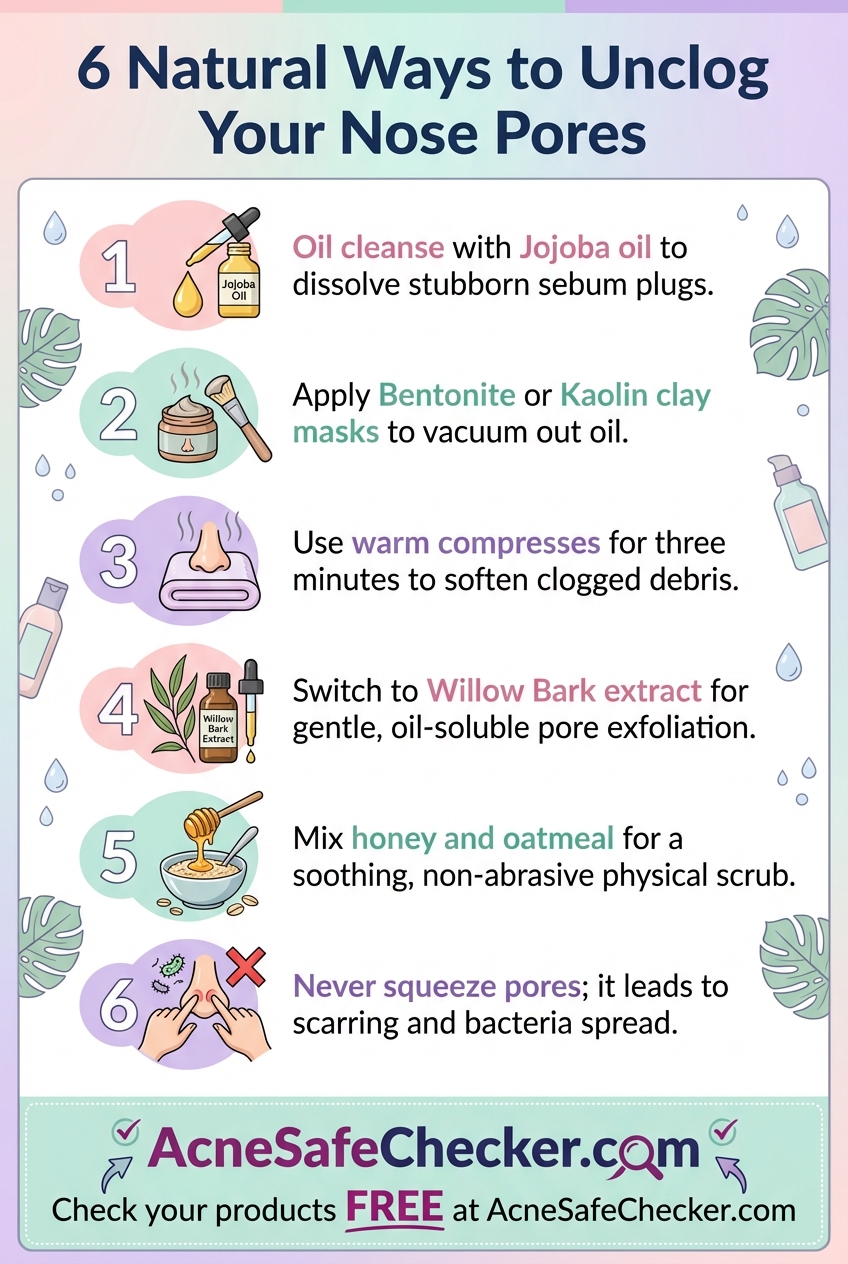
1. The Power of Oil Cleansing: "Like Dissolves Like"
It may seem counterintuitive to put oil on an oily nose, but chemistry tells us that "like dissolves like." Traditional foaming cleansers can strip the skin, causing a rebound effect where the nose produces even more oil.
Natural Approach: Use a non-comedogenic carrier oil like Jojoba oil or Hemp seed oil. These oils mimic the skin’s natural sebum.
- The Method: Massage the oil into your dry nose for 60 seconds. This helps soften the hardened sebum plugs. Follow with a warm (not hot) washcloth to gently wipe away the dissolved impurities. This is often more effective and far less damaging than adhesive pore strips.
2. Natural Clay Masks for Deep Detoxification
Clay is a powerhouse for natural pore maintenance. It acts like a vacuum, drawing out excess oil and toxins from deep within the follicular opening.
- Bentonite Clay: Derived from volcanic ash, this clay has a high cation exchange capacity, making it excellent for absorbing stubborn oils.
- Kaolin Clay: A gentler option for those with sensitive skin, it cleanses without over-drying.
Pro Tip: Mix your clay with a teaspoon of raw apple cider vinegar or rose water. Apply it only to your nose twice a week. Do not let the clay crack and dry completely, as this can cause capillary damage and dehydration; wash it off while it still feels slightly tacky.
3. Gentle Steaming and Warm Compresses
While steam does not technically "open" pores (pores do not have muscles to open and close), heat and moisture are incredibly effective at softening the "keratinous plug"—the mixture of protein and oil that clogs the pore.
The Method: After a shower, apply a warm, damp microfiber cloth to your nose for three minutes. This prepares the skin for other natural treatments, making it much easier for oils and clays to do their work. Avoid boiling water, as extreme heat can lead to broken capillaries (telangiectasia).
4. Harnessing Natural Salicylic Acid (Willow Bark)
In dermatology, Salicylic Acid (a BHA) is the gold standard for unclogging pores because it is oil-soluble. You can find this naturally in White Willow Bark extract.
Using a toner or compress infused with willow bark helps to chemically exfoliate the inside of the pore lining. Unlike physical scrubs, which create micro-tears in the skin, natural BHAs dissolve the "glue" holding dead skin cells together, allowing the pore to clear itself naturally.
5. Honey and Oatmeal: The Soothing Scrub
If you prefer a physical exfoliant, avoid crushed walnut shells or apricot pits, which are too abrasive for the delicate skin on the nose. Instead, use a mixture of finely ground colloidal oatmeal and raw honey.
- Honey is a natural humectant with antimicrobial properties.
- Oatmeal contains saponins, which act as natural cleansers.
- The Method: Gently massage the paste in circular motions. This sloughs off the surface dead skin that would otherwise fall into the pore and create a clog.
Habits to Protect Your Pores
To keep your nose clear long-term, you must address the "pore-clogging cycle."
- Check Your Ingredients: Many makeup products contain ingredients like D&C Red dyes, isopropyl myristate, or coconut oil, which are highly comedogenic. Switch to mineral-based or non-comedogenic alternatives.
- Hydrate Internally: Dehydrated skin produces thicker, stickier sebum. Drinking enough water helps maintain the fluidity of your natural oils.
- Hands Off: Squeezing your nose with your fingernails introduces bacteria and can cause permanent pore enlargement or scarring. If a pore is truly blocked, stick to the natural softening methods mentioned above.
Conclusion
Achieving a clear, smooth nose isn't about aggressive scrubbing; it is about working with your skin’s natural biology. By utilizing the "like dissolves like" principle of oil cleansing, the drawing power of natural clays, and the gentle exfoliation of willow bark, you can manage your T-zone effectively.
Remember, consistency is key. Natural remedies often take 4-6 weeks to show full results, as they work in harmony with your skin’s 28-day cellular turnover cycle. Treat your skin with patience, and it will reward you with a healthy, natural glow.