
In the pursuit of the elusive 'glass skin' look, the Glow Recipe Watermelon Glow PHA + BHA Pore-Tight Toner has emerged as a cult favorite. Its aesthetically pleasing packaging and refreshing scent make it a social media staple, but for those of us navigating the minefield of acne-prone skin, a pretty bottle isn't enough. The critical question remains: Is it actually safe for skin that is prone to breakouts, or will it lead to a dreaded 'purge'—or worse, a full-blown flare-up?
Is Your Routine Acne-Safe?
Do not guess. Instantly check your products for pore-clogging ingredients with our AI-powered tool.
Check Ingredients NowAs a dermatologist, I see many patients who are lured by the promise of 'pore-tightening' effects but end up compromising their skin barrier. Today, we will dissect the formulation of this popular toner from a clinical perspective to determine if it earns a spot in your acne-fighting arsenal.
Understanding the Formula: The Science of PHA and BHA
To understand if a product is acne-safe, we must look at its active exfoliating agents. The Glow Recipe toner utilizes a dual-action approach with two specific types of hydroxy acids: PHAs and BHAs.
BHA (Beta Hydroxy Acid)
Acne is often caused by a combination of excess sebum (oil) and trapped dead skin cells. BHAs, specifically Salicylic Acid (or in this case, Betaine Salicylate and Willow Bark), are oil-soluble. This means they can penetrate deep into the pores to dissolve the 'glue' holding debris together. For someone with comedonal acne (whiteheads and blackheads), BHA is a gold-standard ingredient.
PHA (Polyhydroxy Acid)
PHAs, such as Gluconolactone, are the 'gentle cousins' of AHAs. They have a larger molecular structure, which means they do not penetrate as deeply as glycolic acid. Instead, they exfoliate the surface while acting as humectants—drawing moisture into the skin. This is crucial for acne-prone individuals because over-drying the skin can actually trigger more oil production and inflammation.
Is It Non-Comedogenic?
The term "non-comedogenic" implies that a product is formulated without ingredients known to clog pores. While Glow Recipe is generally formulated with 'clean' standards in mind, the term isn't strictly regulated by the FDA.
Looking at the ingredient list, the Watermelon Glow Toner avoids heavy occlusives like mineral oil or coconut oil, which are notorious for causing acne. However, it does contain various botanical extracts and fragrance. For most users, these are harmless. But for a subset of patients with highly sensitive, acne-prone skin, concentrated extracts can sometimes cause 'folliculitis' or contact dermatitis, which can be mistaken for a standard acne breakout.
The Role of the Skin Barrier
One reason acne-prone individuals struggle with new products is 'trans-epidermal water loss' (TEWL). When the skin barrier is weak, bacteria can enter more easily, and inflammation increases.
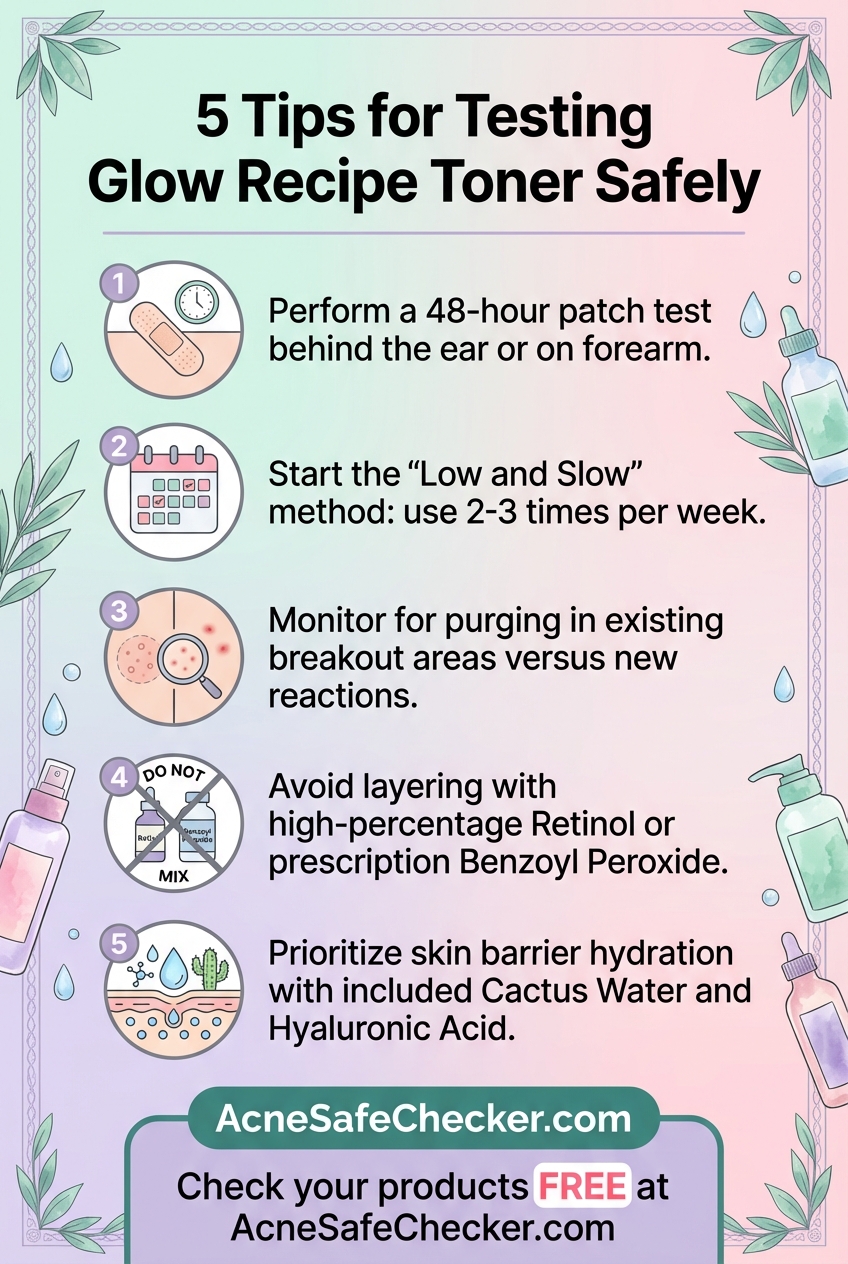
This toner includes Cactus Water and Hyaluronic Acid, both of which are excellent for maintaining hydration. By keeping the skin hydrated while gently exfoliating, the product helps prevent the 'rebound' oiliness that often follows the use of harsh, alcohol-based toners common in the 90s and early 2000s.
Potential Red Flags: Fragrance and Essential Oils
If there is one caveat to the "acne-safe" label for this product, it is the inclusion of fragrance. In clinical practice, we often see that synthetic or even natural fragrances can be inflammatory. If your acne is inflammatory (red, painful cysts rather than just blackheads), any source of irritation can prolong the healing process of a blemish. If you have a known sensitivity to scents or a history of eczema alongside your acne, you should proceed with caution.
Practical Advice: How to Test and Use It
If you are eager to try the Glow Recipe Toner but fear a breakout, follow these dermatologist-recommended steps:
- The 48-Hour Patch Test: Apply a small amount of the toner to the inside of your forearm or just behind your ear. Wait 48 hours to see if any redness, itching, or small bumps appear.
- The "Low and Slow" Method: Do not jump into twice-daily application. Start by using it two to three times a week at night. Observe how your skin reacts before increasing frequency.
- Monitor for Purging vs. Breaking Out: A "purge" usually happens in areas where you already get breakouts and should resolve within 2-4 weeks as cell turnover increases. If you see new bumps in areas where you never usually break out, or if the bumps are itchy and red, it is likely a reaction to an ingredient, not a purge.
- Avoid Ingredient Overlap: If you are already using a high-percentage Retinol or a prescription Benzoyl Peroxide, adding a BHA/PHA toner might be too much for your barrier. Use them on alternate nights to avoid 'acid-burn' which can mimic acne.
The Final Verdict
Is the Glow Recipe Watermelon Glow PHA + BHA Pore-Tight Toner acne-safe? Generally, yes.
For the majority of people with mild to moderate acne, the combination of BHA for pore-clearing and PHA for gentle resurfacing is actually very beneficial. It helps manage the texture and congestion that lead to breakouts without the stripping effect of traditional toners.
However, if you have extremely reactive skin or cystic acne that is currently in an active, inflamed state, the fragrance and botanical extracts might be unnecessary irritants. In those cases, a fragrance-free, medical-grade salicylic acid cleanser or toner might be a safer bet. As always, if your acne is persistent or scarring, consult with a board-certified dermatologist to create a customized treatment plan.