
If you’ve spent any time on skincare social media, you’ve likely seen the minimalist translucent orange bottle of the Tower 28 SOS (Save. Our. Skin.) Daily Rescue Facial Spray. It has reached cult-status for its ability to calm redness, soothe irritation, and clear up breakouts. But for those navigating the tricky waters of Malassezia folliculitis—commonly known as fungal acne—the big question remains: Is the Tower 28 spray safe for fungal acne, or will it make the condition worse?
Is Your Routine Acne-Safe?
Do not guess. Instantly check your products for pore-clogging ingredients with our AI-powered tool.
Check Ingredients NowAs a dermatologist, I often see patients who are frustrated by products that claim to be 'non-comedogenic' but still trigger itchy, stubborn bumps. Today, we will break down the science of the Tower 28 SOS spray and determine if it deserves a spot in your fungal acne-safe routine.
Understanding the Fungal Acne Struggle
To understand if a product is safe, we first have to understand the 'enemy.' Fungal acne isn't actually acne in the traditional sense. While hormonal acne is caused by bacteria (C. acnes) and sebum, fungal acne is an overgrowth of yeast called Malassezia within the hair follicles.
This yeast is opportunistic. It feeds on specific fatty acids and oils found in many skincare products. When the yeast is 'fed,' it multiplies, leading to small, uniform, itchy bumps usually found on the forehead, chest, and back. Therefore, any product used by someone with this condition must be free of oils, esters, and fatty acids that act as fuel for the yeast.
The Tower 28 SOS Spray Ingredient Analysis
The genius of the Tower 28 SOS Daily Rescue Facial Spray lies in its simplicity. The ingredient list is incredibly short:
- Water (Aqua)
- Sodium Chloride (Salt)
- Hypochlorous Acid
From a formulation standpoint, this is a 'clean' profile. There are no heavy oils, no fermented ingredients (which can sometimes trigger fungal issues), and no fatty acid esters (like Isopropyl Myristate or Polysorbates) that are known to exacerbate Malassezia.
The Science of Hypochlorous Acid (HOCl)
The star ingredient here is Hypochlorous Acid. While it might sound intimidating, HOCl is actually a substance naturally produced by your own white blood cells as part of the immune response to fight infection and inflammation.
Why it Works Against Fungi
Hypochlorous acid is a potent antimicrobial agent. In clinical settings, it is used for wound care because it is highly effective at killing bacteria, viruses, and—most importantly for our purposes—fungi.
Research indicates that HOCl disrupts the cell walls of pathogens. Unlike harsh alcohols or acids that can strip the skin barrier, HOCl is electrically neutral, allowing it to penetrate cell walls of the yeast efficiently. This makes it an excellent tool for managing the microbial balance on the skin's surface without causing the irritation often associated with traditional antifungal creams.
Is Tower 28 SOS Spray Safe for Fungal Acne?
The short answer is: Yes. In fact, it is more than just 'safe'—it is highly recommended.
Because the spray is free of any carbon-chain lengths (specifically C11-C24) that feed the Malassezia yeast, it will not cause a flare-up. Furthermore, the antifungal properties of Hypochlorous acid can actively help to reduce the yeast population on your skin, potentially helping to clear up active fungal acne bumps.
Practical Advice: How to Use It in Your Routine
If you are dealing with fungal acne, the way you use the Tower 28 spray can impact its effectiveness. Here are my professional recommendations:
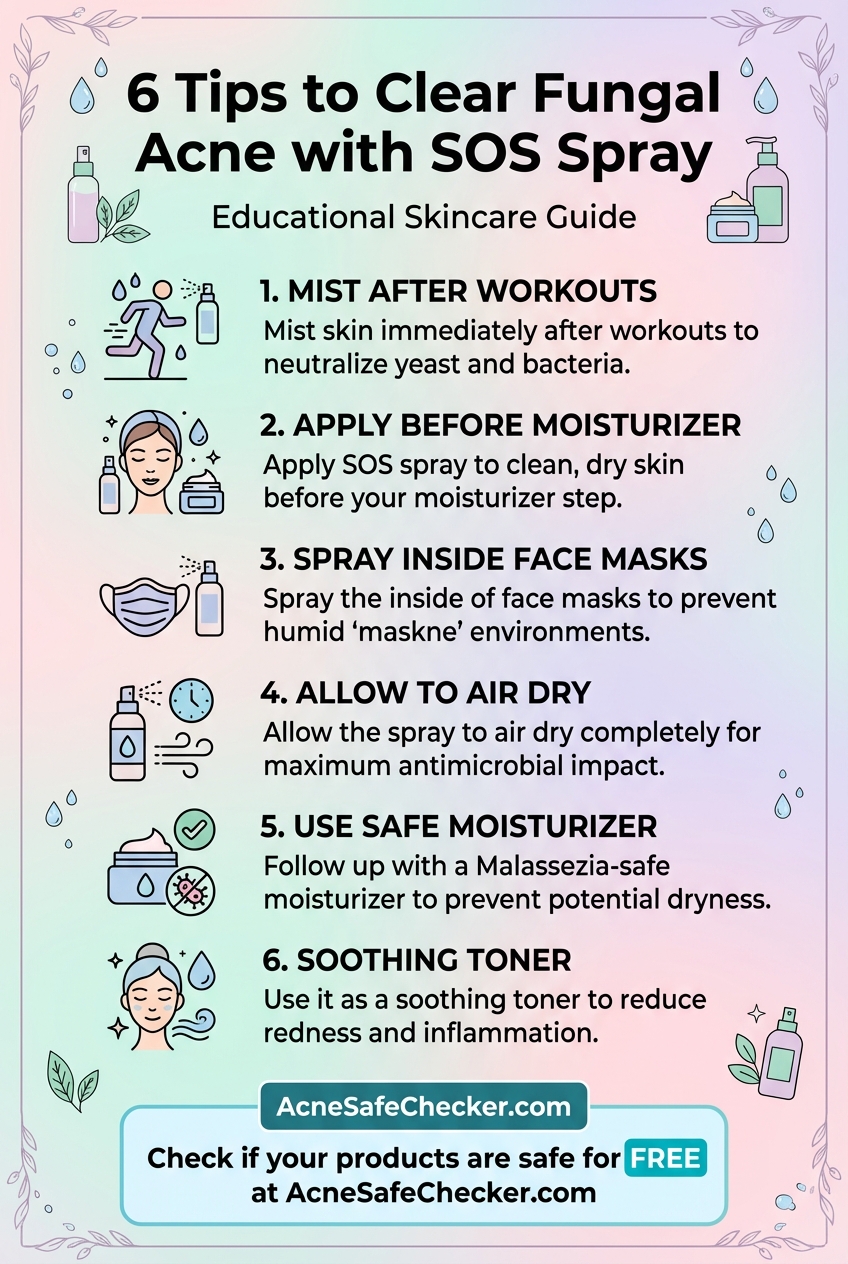
1. The Post-Workout Shield
Sweat and humidity are the primary catalysts for fungal acne. If you cannot wash your face immediately after a workout, misting the SOS spray on your face and chest can help neutralize the yeast and bacteria sitting in your sweat before they have a chance to cause inflammation.
2. The Soothing Toner Step
After cleansing your face with a fungal acne-safe cleanser, mist the SOS spray onto dry skin. Let it air dry or pat it in before applying your moisturizer. This ensures the HOCl has direct contact with the skin surface.
3. Maskne Prevention
If you still wear masks or face coverings for work, the humid environment created inside the mask is a breeding ground for yeast. Spraying your face (and the inside of a clean mask) can provide a protective antimicrobial layer.
Are There Any Side Effects?
While Tower 28 SOS spray is generally safe for all skin types, including sensitive skin, there are two things to keep in mind:
- The Scent: Because of the sodium chloride and HOCl, the spray has a slight 'pool water' or chlorine-like smell. This is normal and indicates the HOCl is active.
- Drying Potential: For those with extremely dry skin, the salt content (Sodium Chloride) can occasionally feel slightly drying if used excessively. Always follow up with a Malassezia-safe, oil-free moisturizer if you feel tightness.
The Bottom Line
The Tower 28 SOS Daily Rescue Facial Spray is one of the few viral beauty products that truly lives up to the hype for the acne-prone community. Its minimalist formula makes it 100% fungal acne safe, and the inclusion of Hypochlorous acid provides a scientific edge in the fight against yeast overgrowth.
If you are tired of the itch and the stubborn bumps of Malassezia folliculitis, this spray is a dermatologist-approved addition to your skincare arsenal. It balances the microbiome, reduces redness, and—most importantly—won't feed the fungus.