
For anyone who has spent years battling persistent breakouts or oily skin, the idea of applying more oil to your face can feel counterintuitive—even terrifying. We have been conditioned to look for the phrase "oil-free" on every label, fearing that any lipid-based ingredient will inevitably lead to a flare-up of congestion and inflammation.
Is Your Routine Acne-Safe?
Do not guess. Instantly check your products for pore-clogging ingredients with our AI-powered tool.
Check Ingredients NowHowever, as a dermatologist, I often have to dispel the myth that all oils are created equal. In the world of botanical extracts, grapeseed oil has emerged as a powerhouse ingredient, frequently touted as a miracle worker for oily and acne-prone complexions. But is it truly non-comedogenic? Let’s dive into the science behind this lightweight oil and determine if it deserves a spot in your skincare routine.
Understanding the Comedogenic Scale
Before we look specifically at grapeseed oil, it is essential to understand how ingredients are rated for their pore-clogging potential. The "comedogenic scale" ranges from 0 to 5:
- 0: Will not clog pores
- 1: Very low probability of clogging pores
- 2: Low probability
- 3: Moderate probability
- 4: Fairly high probability
- 5: High probability
- Grapeseed oil typically sits at a 1 on this scale.
A rating of 1 means that for the vast majority of people, grapeseed oil is considered non-comedogenic. It is thin, lightweight, and penetrates the skin quickly without leaving a heavy, occlusive film that traps sebum and bacteria.
The Science of Sebum: Linoleic vs. Oleic Acid
To understand why grapeseed oil is so effective for acne-prone individuals, we have to look at its molecular makeup. Most plant oils are composed of fatty acids, primarily linoleic acid (Omega-6) and oleic acid (Omega-9).
The Linoleic Acid Deficiency
Research has consistently shown that individuals with acne-prone skin tend to have lower levels of linoleic acid in their skin's natural sebum. When linoleic acid levels are low, the sebum becomes thick, sticky, and more likely to plug pores, leading to the formation of microcomedones (the precursors to blackheads and whiteheads).
Grapeseed Oil’s Secret Weapon
Grapeseed oil is exceptionally high in linoleic acid—often making up 65% to 70% of its composition. By applying grapeseed oil topically, you are essentially "balancing" your skin's lipid profile. This helps to thin out the natural sebum, making it more fluid and less likely to clog your pores. This is why many patients find that their skin actually becomes less oily after introducing high-linoleic oils into their routine.
Beyond Pore-Clogging: The Benefits of Grapeseed Oil
While its non-comedogenic status is the primary draw, grapeseed oil offers several other dermatological benefits that support skin health:
- Potent Antioxidant Protection: Grapeseed oil is rich in Vitamin E and phenolic compounds like proanthocyanidins. These antioxidants neutralize free radicals from UV exposure and pollution, preventing premature aging and reducing skin stress.
- Anti-Inflammatory Properties: Acne is, at its core, an inflammatory disease. Grapeseed oil contains phytosterols that help soothe redness and calm the irritation associated with active breakouts.
- Skin Barrier Support: Despite being lightweight, it provides essential fatty acids that reinforce the skin’s moisture barrier (the stratum corneum). This prevents transepidermal water loss (TEWL), keeping the skin hydrated without the need for heavy waxes or petrolatum.
- Brightening Effects: Some studies suggest that the antioxidants in grapeseed oil can help fade post-inflammatory hyperpigmentation (the dark marks left behind after a pimple heals).
How to Safely Incorporate Grapeseed Oil into Your Routine
If you are ready to try grapeseed oil, follow these professional steps to ensure the best results:
1. Source the Right Quality
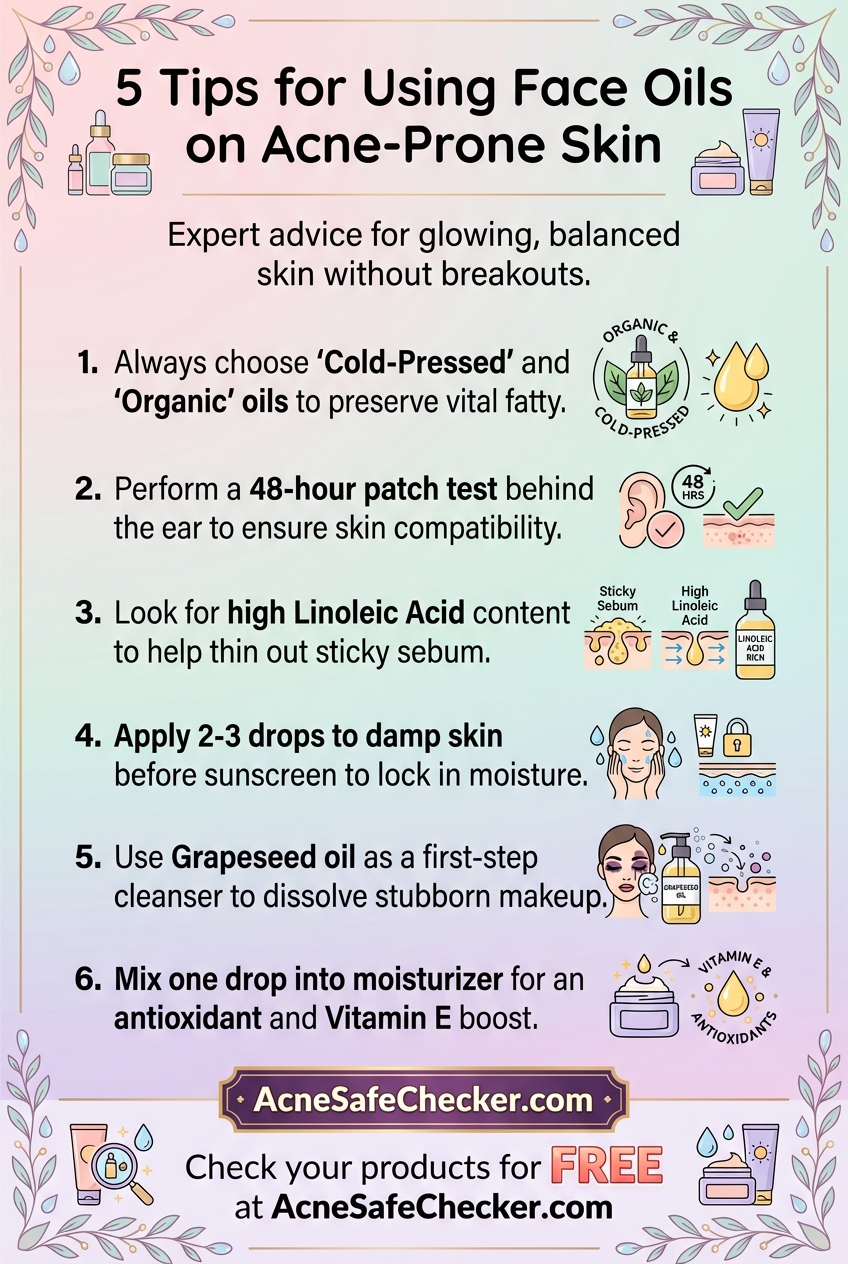
Always look for "Cold-Pressed" and "Organic" grapeseed oil. Heat-processed oils can lose their vital fatty acids and antioxidants, and lower-quality versions may contain impurities that irritate the skin.
2. The Patch Test
Even though the oil is rated a 1 on the comedogenic scale, every skin type is unique. Apply a small amount to the inside of your forearm or behind your ear for 48 hours to check for any adverse reactions or breakouts.
3. Usage Methods
- As a Moisturizer: Apply 2–3 drops to damp skin after your water-based serums but before your sunscreen. This helps lock in moisture.
- As a Cleanser: Grapeseed oil is an excellent first step in a double-cleansing routine. It dissolves makeup and sunscreen effectively and rinses away easily.
- As a Booster: Mix a single drop into your favorite non-comedogenic moisturizer to give it an antioxidant boost.
When to Exercise Caution
While grapeseed oil is a safe bet for most, those with extremely dry skin or compromised barriers (like active eczema) might find it isn't "heavy" enough. In these cases, it may be better used in combination with more occlusive ingredients. Additionally, if you have a known allergy to grapes, you should avoid this oil entirely.
Conclusion
Is grapeseed oil non-comedogenic? The answer is a resounding yes for the vast majority of skin types. Its high linoleic acid content makes it a strategic choice for those struggling with acne and congestion, as it works to balance the skin's natural oils rather than simply sitting on top of them.
By choosing high-quality, cold-pressed oil and introducing it slowly into your regimen, you can enjoy the hydrating and protective benefits of a botanical oil without the fear of unwanted breakouts. Remember, skincare is personal—listen to your skin, and don't be afraid to embrace the right kinds of lipids for a healthier, clearer complexion.