
In the world of celebrity-led skincare, few brands have captured the public's imagination—and social media feeds—quite like Hailey Bieber’s Rhode. The brand’s aesthetic is built entirely around the concept of "glazed donut skin": a complexion that looks perpetually dewy, hydrated, and luminous. At the heart of this routine is the Rhode Glazing Milk, a nutrient-rich, lightweight essence designed to prep the skin and boost the moisture barrier.
Is Your Routine Acne-Safe?
Do not guess. Instantly check your products for pore-clogging ingredients with our AI-powered tool.
Check Ingredients NowHowever, for those of us who struggle with acne, congestion, or enlarged pores, the word "glaze" can be a red flag. We often associate that high-shine finish with heavy oils and occlusives that might lead to a breakout. The burning question remains: Is Rhode Skin Glazing Milk comedogenic?
As a dermatologist, I see many patients who are eager to try viral products but are terrified of undoing months of progress on their acne journey. Let’s break down the science behind the formulation and determine if this milky essence deserves a spot on your vanity.
Understanding the Term "Non-Comedogenic"
Before we look at the specific ingredients in Rhode Glazing Milk, it is important to clarify what "non-comedogenic" actually means. In the skincare industry, this label suggests that a product is formulated in a way that is unlikely to cause comedones (clogged pores).
However, it is vital to understand that "non-comedogenic" is not a regulated term by the FDA. There is no universal standard test that a product must pass to use this label. While many brands conduct "pore-clogging" tests on rabbit ears or human volunteers, everyone’s sebum composition and pore structure are unique. What is "safe" for one person may cause a breakout for another.
Decoding the Rhode Glazing Milk Ingredients
To answer whether this product is comedogenic, we have to look past the marketing and into the chemistry. Rhode Skin Glazing Milk is an emulsion of water, humectants, and emollients.
The Good: Barrier-Supporting Superstars
The Glazing Milk contains several ingredients that are generally considered "acne-safe" and highly beneficial for the skin barrier:
- Ceramides (NP, AP, EOP): These are skin-identical lipids that help restore the moisture barrier. They are non-comedogenic and essential for healthy skin.
- Squalane: A lightweight, stable oil that mimics the skin's natural sebum. Most dermatologists consider squalane to be non-comedogenic and safe for most acne-prone individuals.
- Beta-Glucan and Hyaluronic Acid: These are humectants that draw moisture into the skin without using oils. They do not clog pores.
- Zinc, Magnesium, and Copper Gluconate: These minerals can actually help soothe inflammation, which is beneficial for those with active acne.
The Gray Area: Ethylhexyl Palmitate
This is where we must be cautious. One of the primary emollients in Rhode Glazing Milk is Ethylhexyl Palmitate. On many comedogenicity scales, this ingredient is rated a 4 out of 5 (with 5 being the most likely to clog pores). It is a derivative of palm oil used to provide a smooth, silky feel and to replace silicones.
While the concentration of the ingredient matters—and it is likely balanced with other lightweight components—those with highly reactive, cystic, or oil-prone skin should take note of its presence high up on the ingredient list.
Is It Safe for Acne-Prone Skin?
So, is it comedogenic? The answer is: It depends on your skin type.
For someone with dry or dehydrated skin who occasionally gets a hormonal pimple, Rhode Glazing Milk is likely a fantastic addition. The emollients will help seal in moisture and prevent the transepidermal water loss (TEWL) that can often make acne-treated skin look flaky and irritated.
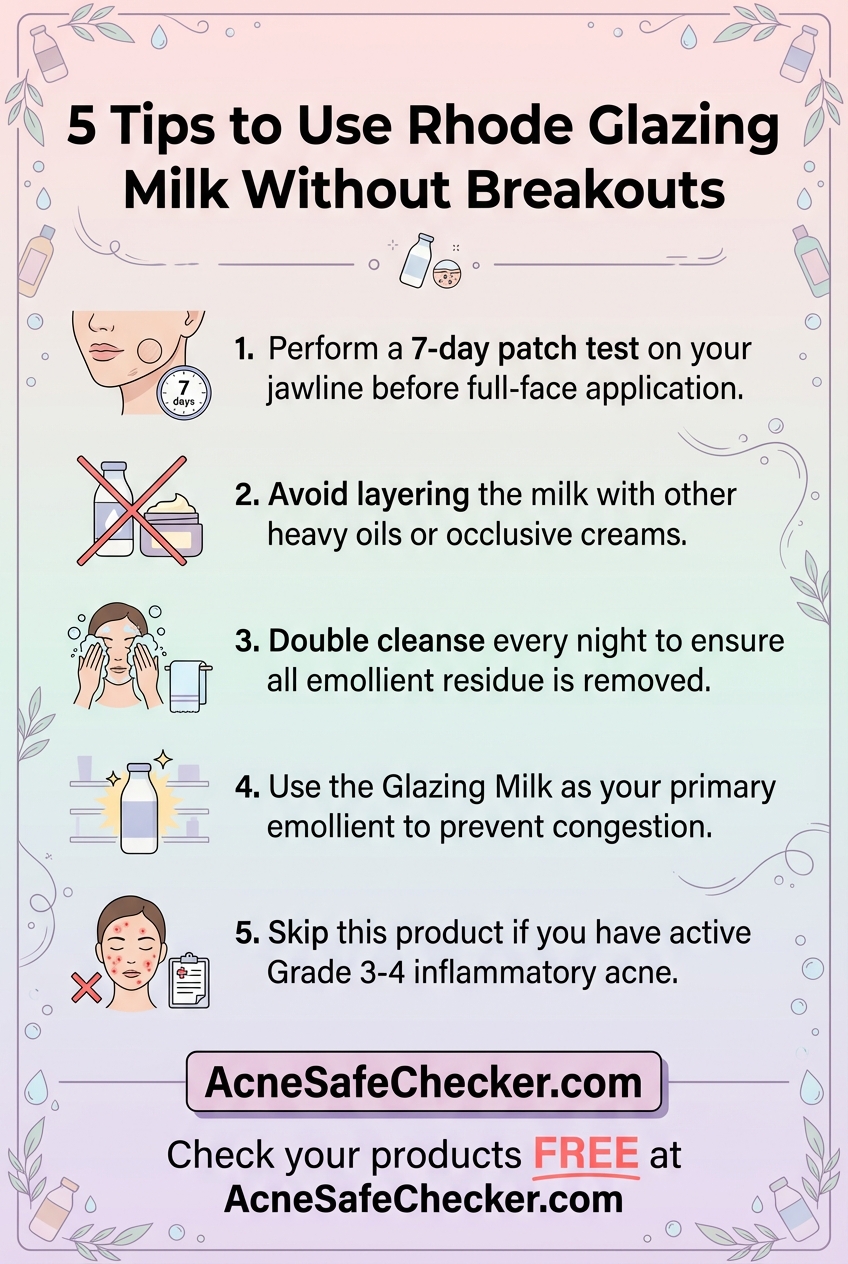
For someone with very oily or Grade 3-4 inflammatory acne, the inclusion of Ethylhexyl Palmitate and the overall "milky" occlusive nature of the product might be too heavy. If your pores clog easily (congested skin), the "glaze" might turn into a "clog."
Practical Steps: How to Test Rhode Glazing Milk
If you are dying to try the Rhode glow but are worried about breakouts, follow these dermatologist-recommended steps:
- The 7-Day Patch Test: Apply a small amount of the Glazing Milk to a specific area where you are prone to breakouts (like the jawline) for seven consecutive nights. If no new closed comedones (small white bumps) appear, you are likely safe to use it full-face.
- Monitor Your Routine: If you use the Glazing Milk, avoid pairing it with other heavy creams or facial oils. Let the milk be your primary emollient.
- Double Cleanse: Because this product contains emollients designed to "stick" to the skin for a lasting glow, you must ensure you are removing it thoroughly at night. Use a micellar water or cleansing balm followed by a water-based cleanser to prevent residue buildup.
The Verdict
Rhode Skin Glazing Milk is a beautifully formulated product for barrier repair and hydration. While the brand markets itself as suitable for all skin types, the presence of Ethylhexyl Palmitate means it is not 100% risk-free for the acne-prone community.
If you have dry, sensitive, or combination skin, this product will likely provide the hydration you crave without issues. However, if you have a history of reacting to palm oil derivatives or fatty acid esters, proceed with caution and always patch test.
Achieving "glazed donut skin" shouldn't come at the cost of a breakout. Listen to your skin—it usually tells you exactly what it needs.