
Introduction: The Facial Oil Dilemma for Acne-Prone Skin
Is Your Routine Acne-Safe?
Do not guess. Instantly check your products for pore-clogging ingredients with our AI-powered tool.
Check Ingredients NowFor those battling cystic acne, the word "oil" often triggers an immediate sense of alarm. We are conditioned to seek out "oil-free" labels, fearing that any lipid-based product will inevitably lead to more painful, deep-seated nodules. However, as skincare science evolves, we are discovering that not all oils are created equal.
Among the most buzzed-about botanical extracts is rosehip oil—heralded as a holy grail for everything from anti-aging to scar reduction. But is rosehip oil actually safe for cystic acne, or is it just another trend that risks clogging your pores? As a dermatologist, I want to break down the chemistry of this oil and its specific role in an acne-focused regimen.
Understanding Cystic Acne vs. Surface Breakouts
Before we look at the oil, we must understand the target. Cystic acne is not your standard blackhead or whitehead. These are deep, inflammatory lesions that occur when pores become clogged, bacteria (C. acnes) flourish, and the infection spreads deep into the dermis. Because these breakouts are so deep, topical treatments often struggle to reach the source of the inflammation.
Treating cystic acne requires a two-pronged approach: reducing the underlying inflammation and repairing the skin barrier to prevent future scarring (post-inflammatory hyperpigmentation).
The Chemistry of Rosehip Oil: Why It’s Unique
Rosehip oil is harvested from the seeds of rose bushes (usually Rosa canina). Unlike many heavier oils, such as coconut or cocoa butter, rosehip oil is considered a "dry oil" because it absorbs quickly and doesn't leave a greasy residue. Its benefits for acne-prone skin lie in its chemical composition:
1. High Linoleic Acid Content
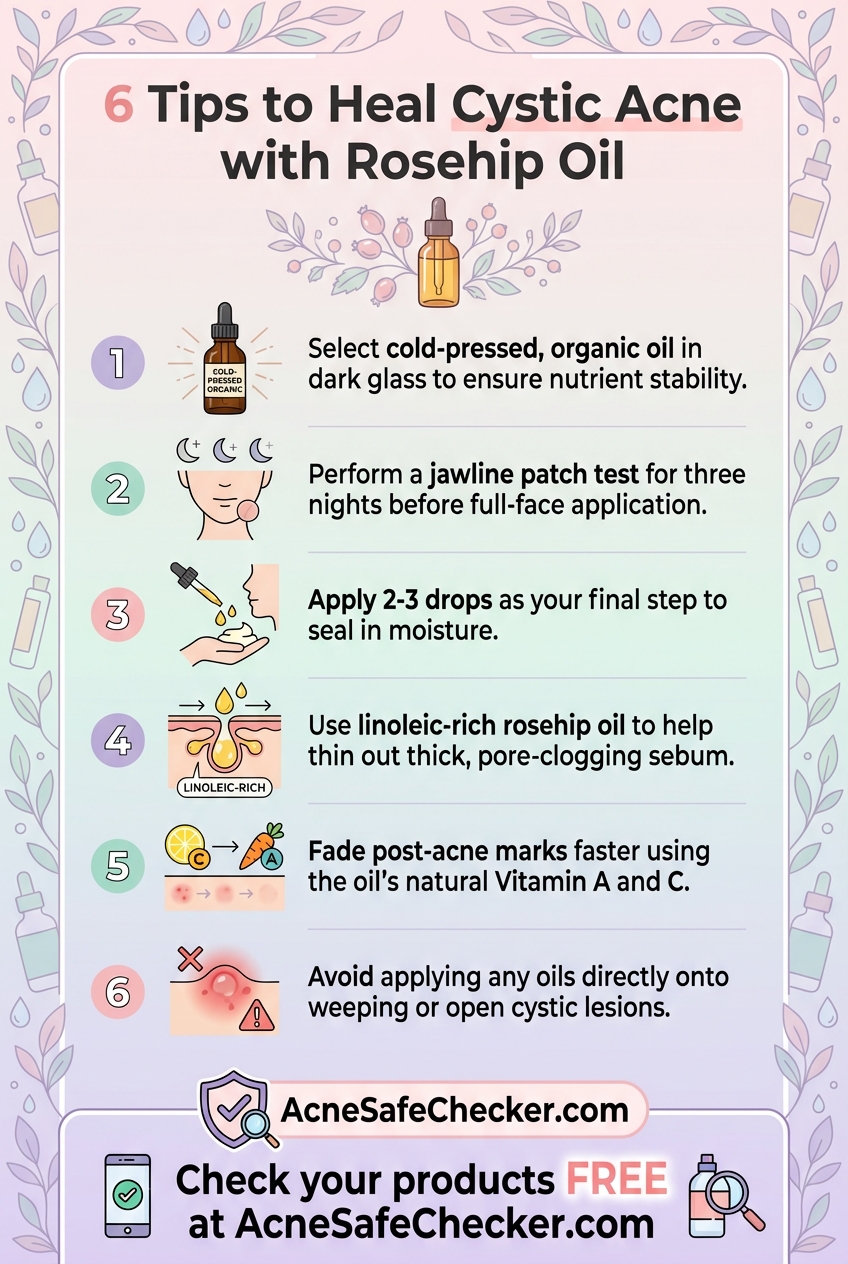
Research has shown that individuals with acne-prone skin often have lower levels of linoleic acid in their surface skin lipids. When linoleic acid is low, the skin’s sebum becomes thick and sticky, making it much more likely to clog pores. Rosehip oil is rich in linoleic acid, which helps thin out the sebum, potentially reducing the formation of microcomedones.
2. Natural Pro-Vitamin A (Retinoids)
Rosehip oil contains trace amounts of all-trans retinoic acid (the precursor to tretinoin). While it is nowhere near as potent as prescription-strength Retin-A, it offers a gentle, natural way to promote cell turnover. This helps to keep the lining of the pore clear and encourages the skin to shed damaged cells faster.
3. Essential Fatty Acids and Antioxidants
Packed with Vitamin C, Vitamin E, and quercetin, rosehip oil provides significant anti-inflammatory benefits. For cystic acne, reducing the redness and swelling of a cyst is half the battle.
Is Rosehip Oil Good for Active Cystic Acne?
To answer the primary question: Yes, rosehip oil can be beneficial, but it is not a "cure" for the infection itself.
If you have a large, painful cyst, rosehip oil will not kill the bacteria causing it (unlike benzoyl peroxide or tea tree oil). However, it is an exceptional supportive treatment. It works to:
- Soothe Inflammation: The fatty acids help calm the angry, red appearance of cysts.
- Prevent Scarring: This is where rosehip oil shines. Cystic acne often leaves behind deep red or brown marks. The Vitamin A and C in rosehip oil accelerate the healing of the skin barrier, significantly reducing the duration of post-inflammatory hyperpigmentation.
- Balance Dehydrated Skin: Many acne treatments (like Accutane or Salicylic Acid) dry out the skin. Rosehip oil provides necessary hydration without the comedogenic risk of heavier creams.
How to Use Rosehip Oil Safely with Cystic Acne
If you are ready to incorporate rosehip oil into your routine, follow these dermatological best practices to ensure you don't trigger a new breakout:
The Patch Test is Non-Negotiable
Even though rosehip oil is generally low-comedogenic, every skin type is different. Apply two drops to the underside of your jaw for three consecutive nights. If no new bumps appear, it is safe for full-face application.
Look for "Cold-Pressed" and "Organic"
Heat can degrade the delicate fatty acids and vitamins in rosehip oil. Always choose a cold-pressed, organic version in a dark glass bottle to ensure the active nutrients remain stable and effective.
Proper Application Order
Oil should generally be the last or second-to-last step in your routine. Apply your water-based serums (like Hyaluronic acid) first, then your moisturizer, and finally, pat 2-3 drops of rosehip oil over the top to seal in moisture. Alternatively, mix a single drop into your nightly moisturizer.
When to Avoid Rosehip Oil
While generally safe, there are instances where you should exercise caution:
- During a Severe Flare-up: If your skin is currently weeping or the cysts are open, stick to the basics prescribed by your doctor. Introducing new oils to broken skin can occasionally cause irritation.
- If You Have Very Oily Skin: While the linoleic acid helps balance sebum, some people with extremely high oil production find that adding any additional lipid makes their skin feel congested.
The Final Verdict
Rosehip oil is one of the safest and most effective botanical oils for those struggling with cystic acne, primarily due to its high linoleic acid content and skin-regenerating properties. While it won't replace medical-grade treatments for the root cause of deep cysts, it is an invaluable tool for reducing inflammation and ensuring that once the cyst heals, it doesn't leave a permanent mark behind.
For the best results, view rosehip oil as a "healer" and "balancer" rather than an antiseptic. Use it consistently to strengthen your skin barrier, and you may find that your cystic breakouts become less frequent and heal far more gracefully.