
Dealing with hormonal acne often feels like an uphill battle against your own biology. Unlike the occasional surface-level whitehead, hormonal breakouts—typically characterized by deep, painful cysts along the jawline and chin—are driven by internal fluctuations. For many, the frustration is compounded by a marketplace filled with products that promise miracles but often contain ingredients that exacerbate the problem.
Is Your Routine Acne-Safe?
Do not guess. Instantly check your products for pore-clogging ingredients with our AI-powered tool.
Check Ingredients NowAs a dermatologist, I see patients daily who are caught in a cycle of over-stripping their skin or using heavy "miracle" creams that clog pores. To achieve clear skin, you must understand which ingredients work with your hormones rather than against them. Here is a comprehensive guide to the safest and most effective ingredients for managing hormonal acne.
Understanding the Hormonal Acne Mechanism
To treat hormonal acne effectively, we must understand its root cause. Hormonal fluctuations—specifically an increase in androgens (like testosterone)—stimulate the sebaceous glands. This leads to an overproduction of sebum (oil). When this excess oil combines with dead skin cells (a process called follicular hyperkeratosis), it creates a plug that traps bacteria, leading to inflammation and cystic lesions.
Because these breakouts are deep-seated, topical treatments must be able to penetrate the pore or influence the skin's behavior at a cellular level without causing excessive irritation that triggers further inflammation.
The Gold Standard: Active Ingredients
When looking for products, these "hero" ingredients should be the cornerstone of your routine:
1. Retinoids (Adapalene, Tretinoin, Retinol)
Retinoids remain the gold standard for a reason. They work by increasing cellular turnover and preventing dead skin cells from clogging pores. For hormonal acne, Adapalene (available over-the-counter as Differin) is particularly effective because it is more stable and often less irritating than traditional Retinoic Acid.
- Scientific Note: Retinoids modulate the expression of genes involved in cell differentiation, effectively "teaching" your skin to shed properly.
2. Azelaic Acid
Azelaic acid is a powerhouse for hormonal acne, especially for those with sensitive skin or hyperpigmentation. It is dicarboxylic acid that kills acne-causing bacteria and significantly reduces inflammation. It also inhibits tyrosinase, the enzyme responsible for the dark spots (PIH) left behind after a cyst heals.
3. Salicylic Acid (BHA)
Unlike Alpha Hydroxy Acids (AHAs) which are water-soluble, Salicylic Acid is oil-soluble. This allows it to dive deep into the pore to dissolve the "glue" holding the clog together. It is an essential tool for keeping the follicular path clear during high-oil phases of your hormonal cycle.
Safe Hydrators and Barrier Support
One of the biggest mistakes patients make is skipping moisturizer because they feel "oily." However, dehydrated skin can actually trigger more oil production. The key is choosing non-comedogenic (non-pore-clogging) hydrators.
Niacinamide (Vitamin B3)
Niacinamide is a versatile ingredient that regulates sebum production and strengthens the skin’s lipid barrier. It helps soothe the redness associated with inflammatory hormonal cysts and is generally safe for all skin types.
Squalane (Sugar-Derived)
While many oils are comedogenic (like coconut or wheat germ oil), Squalane is a bio-identical lipid that mimics the skin’s natural oils without clogging pores. It provides necessary hydration without the weight of heavy waxes.
Hyaluronic Acid and Glycerin
These are humectants, meaning they pull water into the skin. They are universally safe for acne-prone skin because they provide hydration without adding any oil or fatty acids that could potentially feed acne-causing bacteria.
Ingredients to Avoid: The "Pore-Cloggers"
When scanning an ingredient label, those with hormonal acne should be wary of heavy emollients that can form an occlusive film, trapping oil and bacteria. Common culprits include:
- Coconut Oil (Cocos Nucifera): Highly comedogenic.
- Isopropyl Myristate: Often used to give products a "slip" but is a known pore-clogger.
- Algae Extract: Some variations can be highly irritating and comedogenic for acne-prone individuals.
- Synthetic Fragrances: While not always pore-clogging, they can cause contact dermatitis, which increases inflammation and makes acne worse.
Practical Steps for Your Daily Routine
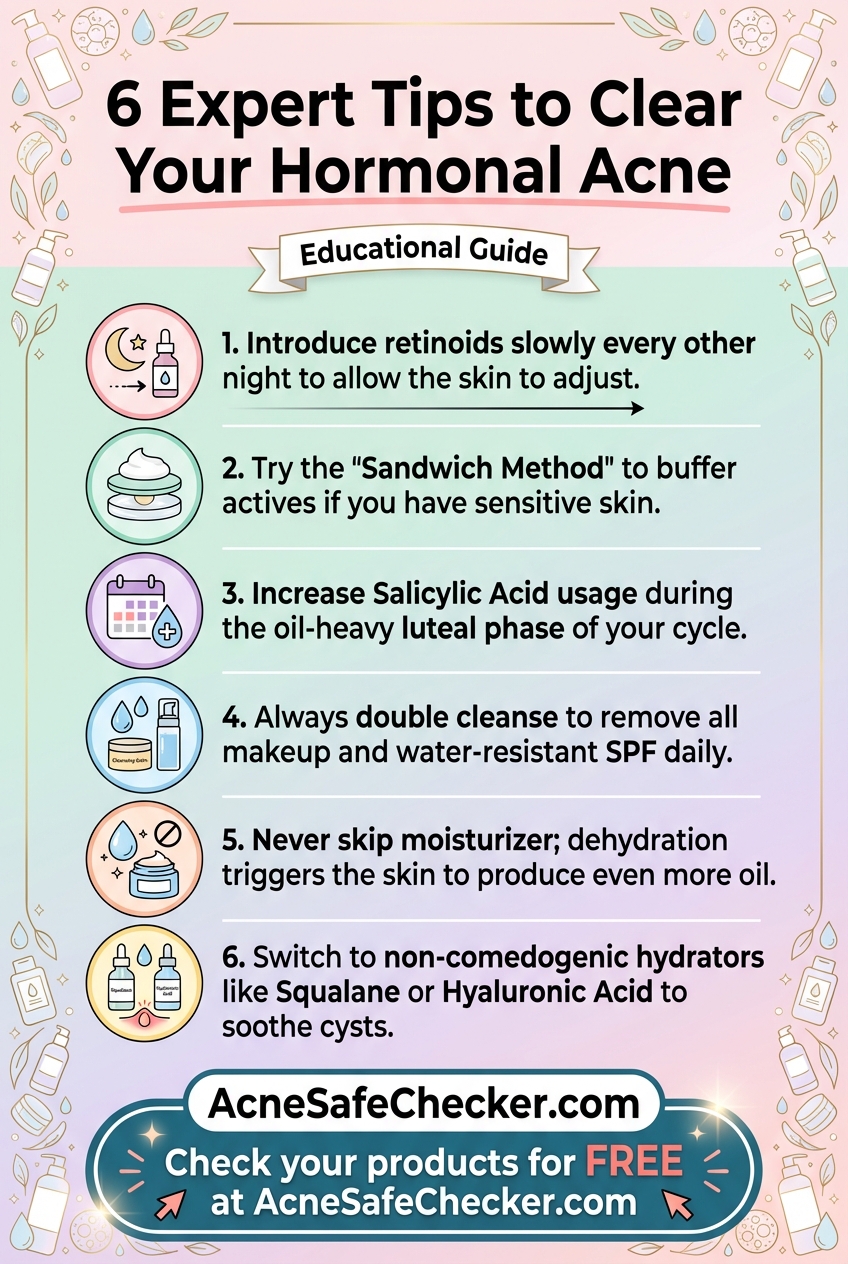
- Start Slow with Actives: If you are introducing a retinoid or azelaic acid, use it every other night to allow your skin barrier to adjust.
- The "Sandwich" Method: If your skin is sensitive, apply a thin layer of a safe moisturizer (like one containing glycerin), apply your active ingredient, and then apply another layer of moisturizer.
- Track Your Cycle: If you have a menstrual cycle, you may notice increased oiliness in the week before your period. You might increase your use of Salicylic Acid during this "luteal phase" to preemptively clear pores.
- Double Cleanse: Use a gentle, non-comedogenic oil cleanser or micellar water followed by a water-based cleanser to ensure all makeup and water-resistant SPF are removed.
Conclusion
Managing hormonal acne requires a blend of patience and scientific precision. By focusing on ingredients that encourage cell turnover, reduce inflammation, and provide oil-free hydration, you can significantly reduce the frequency and severity of breakouts. Remember, skincare is only one piece of the puzzle; if topical treatments aren't providing relief after 8–12 weeks, consult with a board-certified dermatologist to discuss internal options that can address the hormonal root cause directly.