
For many, the quest for a healthy, sun-kissed glow is often interrupted by a frustrating reality: the subsequent breakout. If you have sensitive or acne-prone skin, you know the drill. You apply a beautiful new bronzer in the morning, only to find new comedones (clogged pores) or inflammatory papules appearing by the evening.
Is Your Routine Acne-Safe?
Do not guess. Instantly check your products for pore-clogging ingredients with our AI-powered tool.
Check Ingredients NowThis cycle happens because many traditional makeup products are formulated with heavy oils, waxes, and synthetic dyes that create a barrier over the skin, trapping sebum and bacteria. However, having sensitive skin doesn't mean you have to forgo the warmth of a bronzer. By understanding the science of non-comedogenic formulations, you can achieve a radiant complexion without compromising your skin health.
Understanding "Non-Comedogenic" and Its Importance
In the dermatological world, the term non-comedogenic refers to a product that is specially formulated not to block or clog pores. To understand why this matters, we must look at the mechanics of acne. A breakout begins when the follicle (the pore) becomes blocked by a combination of dead skin cells and excess sebum.
When we apply makeup, we add a third variable to this equation. If the ingredients in your bronzer have a high "comedogenic rating," they physically plug the pore or irritate the lining of the follicle, accelerating the formation of a microcomedone. For those with sensitive skin, this process is often accompanied by contact dermatitis or redness, as the skin’s barrier is already compromised.
The Labeling Limitation
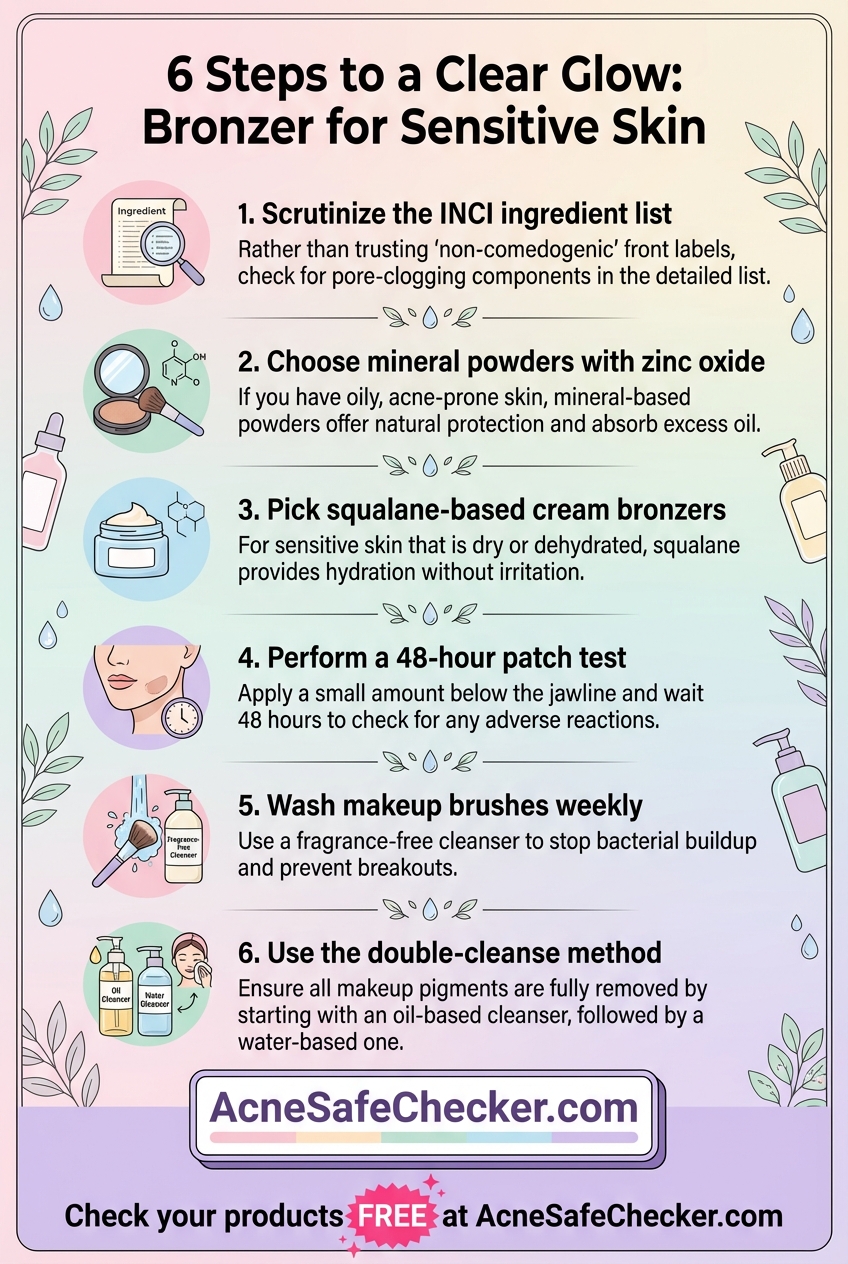
It is important to note that "non-comedogenic" is not a federally regulated term by the FDA. It is a claim made by manufacturers based on ingredient profiles or limited testing. As an expert, I advise looking beyond the front label and scrutinizing the ingredient list (the INCI list) to ensure the product is truly safe for your specific skin type.
Identifying "Red Flag" Ingredients in Bronzers
When shopping for a bronzer, those with sensitive and reactive skin should be wary of several common culprits. Even products marketed as "luxury" or "natural" can contain these irritants:
1. D&C Red Dyes
Many bronzers achieve their warm, terracotta hues using synthetic dyes, particularly D&C Red #17, #21, or #30. These coal tar-derived pigments are notoriously comedogenic. For sensitive skin, these can also trigger itching and localized swelling.
2. Bismuth Oxychloride
A common ingredient in mineral makeup, bismuth oxychloride provides a lovely shimmery finish. However, its crystalline structure is heavy and can feel "scratchy" on the skin. It is a frequent trigger for cystic acne and rosacea flare-ups.
3. Ethylhexyl Palmitate
Used to provide a smooth, emollient texture in cream bronzers, this fatty acid derivative is highly comedogenic. If you see this in the first five ingredients, proceed with extreme caution if you are prone to congestion.
4. Fragrance and Essential Oils
Sensitive skin usually has a weakened moisture barrier. Synthetic fragrances or concentrated essential oils (like citrus or cinnamon oils often used for scent) can cause oxidative stress and micro-inflammation, leading to “acne cosmetica.”
The Gold Standard: Ingredients to Look For
Conversely, a high-quality non-comedogenic bronzer for sensitive skin should focus on mineral-based and skin-soothing components:
- Iron Oxides: These are natural pigments that provide color without the risk of clogging pores. They are generally considered the safest choice for reactive skin.
- Zinc Oxide and Titanium Dioxide: Often found in mineral powders, these provide a physical barrier and offer mild anti-inflammatory benefits, which is a bonus for sensitive skin.
- Squalane: If you prefer a cream bronzer, look for one that uses squalane as a base. It mimics the skin's natural oils but is lightweight and non-comedogenic.
- Silica: This provides a smooth, soft-focus finish and helps absorb excess oil throughout the day, preventing the "melt-off" that can lead to irritation.
Powder vs. Cream: Which is Best for Sensitive Skin?
This is the most common question I receive in my clinic. The answer depends on your specific skin sub-type:
The Case for Powder
If you have oily, acne-prone skin, pressed or loose mineral powders are generally the safer bet. They sit on top of the skin rather than sinking into the pores. Look for finely milled formulas that don't use talc as a filler, as talc can sometimes be irritating or drying.
The Case for Cream
If you have sensitive skin that is also dry or dehydrated, a cream bronzer might be preferable. Powder can sometimes cling to dry patches, causing further irritation. Ensure your cream bronzer is silicone-free and uses non-comedogenic oils like jojoba or squalane.
Practical Steps for a Safe Glow
To ensure your new bronzer doesn't cause a reaction, follow these professional tips:
- The 48-Hour Patch Test: Apply a small amount of the product just below your jawline or behind your ear. Wait 48 hours to check for delayed inflammatory responses.
- Clean Your Tools: For sensitive skin, the bronzer itself is often blamed for breakouts when the real culprit is a dirty brush. Bacteria buildup on makeup brushes is a leading cause of acne. Wash your brushes weekly with a fragrance-free cleanser.
- The "Double Cleanse" Method: Even the best non-comedogenic bronzer needs to be removed thoroughly. Use a micellar water or a gentle oil cleanser first to break down the pigments, followed by a hydrating water-based cleanser.
- Less is More: Use a light hand. Layering heavy amounts of product increases the mechanical pressure on your pores, which can trigger a breakout regardless of the ingredients.
Conclusion
Achieving a radiant, sun-kissed look doesn't have to be a gamble with your skin's health. By prioritizing non-comedogenic, mineral-based formulas and avoiding known irritants like D&C dyes and bismuth oxychloride, you can enjoy the aesthetic benefits of makeup while keeping your pores clear and your barrier intact. Remember, the best bronzer is one that makes you feel confident without leaving a lasting reminder on your skin the next morning.