
You’ve perfected your facial skincare routine, switched to a pH-balanced body wash, and even started wearing breathable cotton fabrics, yet the stubborn breakouts on your back—affectionately known as “bacne”—refuse to clear up. As a dermatologist, one of the most common hidden culprits I identify in my clinic isn’t a lack of hygiene, but rather the very products designed to keep your hair clean.
Is Your Routine Acne-Safe?
Do not guess. Instantly check your products for pore-clogging ingredients with our AI-powered tool.
Check Ingredients NowThis phenomenon is known as acne cosmetica, a form of acne caused by the topical application of cosmetic products. When you rinse shampoo or conditioner out of your hair, the suds travel down your back, often leaving behind a film of pore-clogging ingredients. If you are prone to breakouts, understanding which ingredients to avoid is the first step toward a clear back.
The “Rinse-Off” Problem: Why Shampoo Affects Your Back
The skin on your back is thick and has a high concentration of sebaceous (oil) glands. While it is tougher than facial skin, it is equally susceptible to follicular clogging. When you stand under the shower head and rinse your hair, the gravity-fed stream carries concentrated surfactants, oils, and silicones over your shoulders and down your spine.
If these ingredients are “comedogenic” (pore-clogging) or highly irritating, they can become trapped in the follicles. Even if you rinse with water afterward, many modern hair products are designed to adhere to the hair shaft for smoothness—meaning they also adhere quite effectively to your skin.
Key Ingredients to Avoid for Back Acne
1. Sodium Lauryl Sulfate (SLS) and Sodium Laureth Sulfate (SLES)
Sulfates are powerful surfactants that create the foamy lather we associate with cleanliness. However, they are also notorious skin irritants. For many, sulfates disrupt the skin’s natural moisture barrier, leading to micro-inflammation. When the barrier is compromised, the skin may overcompensate by producing more oil, which leads to the perfect storm for acne-causing bacteria (Cutibacterium acnes) to thrive.
2. Silicones (Dimethicone, Cyclomethicone, Trimethicone)
Silicones are added to shampoos to provide shine and manageability by coating the hair. Unfortunately, they do the same to your skin. Silicones act as occlusives, creating a film that traps sweat, sebum, and dead skin cells underneath. This “plastic wrap effect” is a leading cause of clogged pores on the back and shoulders.
3. Highly Comedogenic Oils and Butters
While “natural” is a popular marketing term, many natural ingredients are disastrous for acne-prone skin.
- Coconut Oil (Cocos Nucifera): This is one of the most comedogenic oils in existence. It is frequently found in moisturizing shampoos but is a major trigger for bacne.
- Cocoa Butter and Shea Butter: While excellent for dry hair, these heavy fats can easily plug the hair follicles on your torso.
4. Isopropyl Myristate and Isopropyl Palmitate
These are synthetic esters used to give products a smooth feel and to help other ingredients penetrate the hair. In the world of dermatology, Isopropyl Myristate is a known “grade 5” comedogen (on a scale of 0 to 5), meaning it is almost guaranteed to cause breakouts in susceptible individuals.
5. Algae and Seaweed Extracts
Often found in high-end or “marine-based” hair care, extracts like carrageenan, laminaria digitata, and kelp are surprisingly high in iodides. When absorbed into the pore, these can irritate the follicle lining and trigger an inflammatory response.
The Science of Occlusion and Inflammation
Acne is fundamentally a disease of the pilosebaceous unit (the pore). When you use a shampoo containing the ingredients listed above, two biological processes occur. First, occlusion happens when heavy oils or silicones physically block the pore opening. Second, chemical irritation from sulfates or fragrances causes the skin cells lining the pore to shed more rapidly (follicular hyperkeratosis).
When these dead cells cannot escape because of the occlusive film, they form a “plug” or comedone. If the shampoo also contains fragrance—a common allergen—the resulting inflammation can turn a simple clogged pore into a painful, red cystic breakout.
Practical Steps for a Bacne-Free Routine
Changing your shampoo is only half the battle; how you wash also matters. Here are my top clinical recommendations:
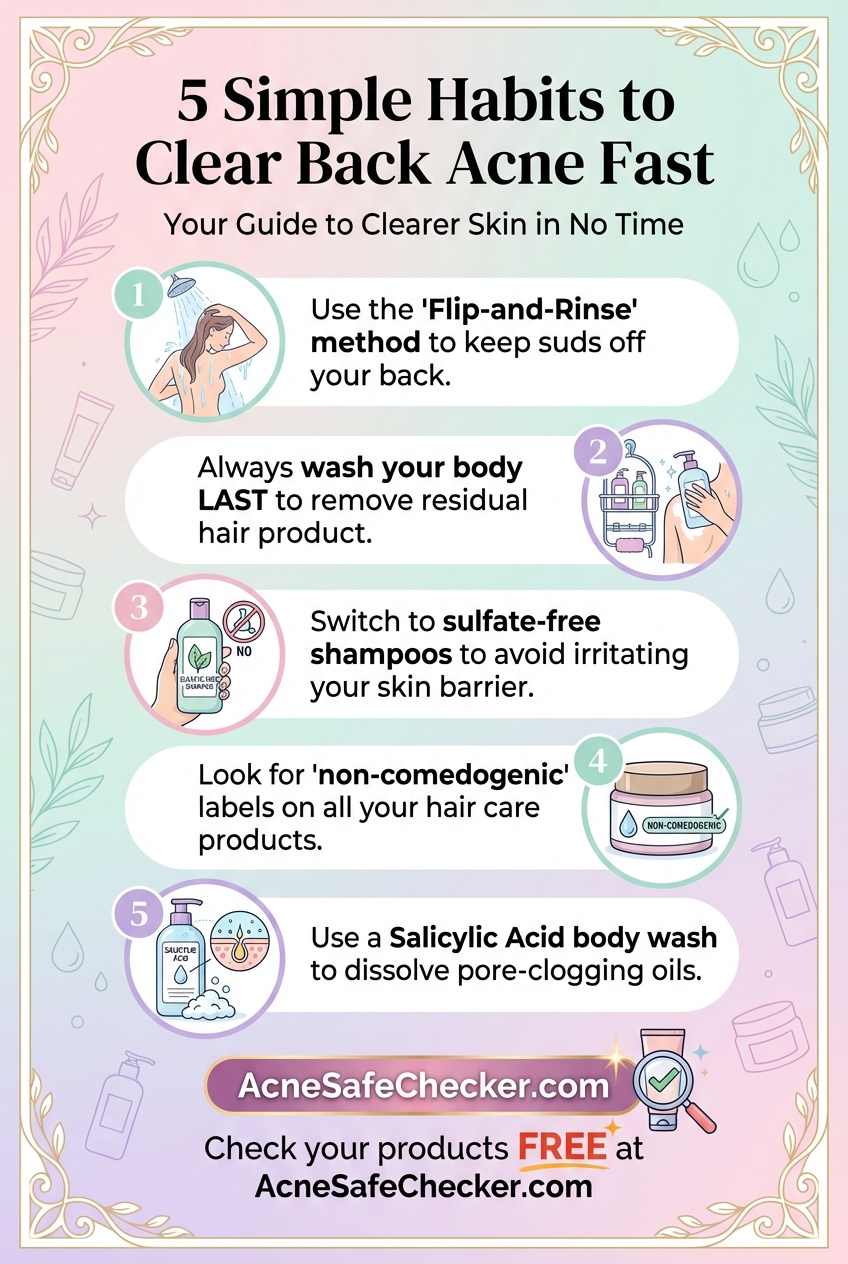
- The Flip-and-Rinse Method: When rinsing shampoo or conditioner, tilt your head forward so the product runs over your face and off your head, rather than down your back.
- Wash Your Body LAST: This is the golden rule of bacne prevention. Use your body wash after you have completely rinsed all hair products out. This ensures that any residual film left on your skin is cleansed away.
- Look for “Non-Comedogenic” Labels: While not a guarantee, products labeled as non-comedogenic are formulated without the most common pore-clogging culprits.
- Exfoliate Wisely: Use a body wash containing Salicylic Acid (BHA) or Benzoyl Peroxide on your back. BHA is oil-soluble and can penetrate the oily residue left behind by hair products to clear the pores.
Conclusion
Back acne can be a source of significant discomfort and self-consciousness, but it is often manageable with a few strategic changes. By eliminating shampoos that contain heavy silicones, coconut oil, and harsh sulfates, you remove the environmental triggers that allow acne to flourish. Remember, the skin on your back deserves the same ingredient-conscious care as the skin on your face. Start reading your labels today—your skin will thank you.