
Finding the perfect skincare or makeup routine often feels like a high-stakes game of trial and error. You finally find a foundation with the perfect finish or a moisturizer that feels like silk, only to wake up forty-eight hours later with a cluster of breakouts. If you’ve started scanning your ingredient labels for the culprit, you may have stumbled upon Polyglyceryl-3 Diisostearate.
Is Your Routine Acne-Safe?
Do not guess. Instantly check your products for pore-clogging ingredients with our AI-powered tool.
Check Ingredients NowAs a dermatologist, I see patients daily who are frustrated by “acne cosmetica”—acne triggered by topical products. In this guide, we will break down the science of Polyglyceryl-3 Diisostearate, evaluate its potential for pore-clogging, and help you decide if it belongs in your vanity or the trash.
What Exactly is Polyglyceryl-3 Diisostearate?
Before we label it a villain, it’s important to understand what this ingredient does. Polyglyceryl-3 Diisostearate is an ester of diisostearic acid and polyglycerin-3. In the world of cosmetic chemistry, it wears two main hats:
- Emollient: It softens and soothes the skin, providing that smooth, buttery feel we love in creams.
- Emulsifier: It helps oil and water stay mixed together, ensuring your product doesn't separate in the bottle.
Because it is incredibly mild and offers excellent water-resistance, it is a staple in sunscreens, organic makeup, and rich night creams. However, its chemical structure is exactly what puts it on the radar for those with acne-prone skin.
Does Polyglyceryl-3 Diisostearate Clog Pores?
The short answer is: Yes, it has a high potential to be comedogenic.
In traditional comedogenicity testing—which measures how likely an ingredient is to cause a blockage (comedone) in the pore—Polyglyceryl-3 Diisostearate often scores a 3 or 4 out of 5. For context, a 0 is completely non-comedogenic, while a 5 is almost certain to cause a clog in susceptible individuals.
The Science of the Clog
Polyglyceryl-3 Diisostearate is rich in fatty acids. While these fatty acids are great for repairing a damaged skin barrier in dry skin types, they can be “food” for Cutibacterium acnes (the bacteria responsible for acne) or can simply be too heavy for the skin’s natural sebum to flow freely. When the ingredient sits on the surface of the skin, it can create an occlusive film that traps dead skin cells and oil inside the follicle, leading to whiteheads and blackheads.
The Comedogenicity Scale: A Word of Caution
As a specialist, I must provide a caveat: the comedogenicity scale isn’t perfect. Most of these ratings were originally derived from tests on rabbit ears, which are far more sensitive than human facial skin.
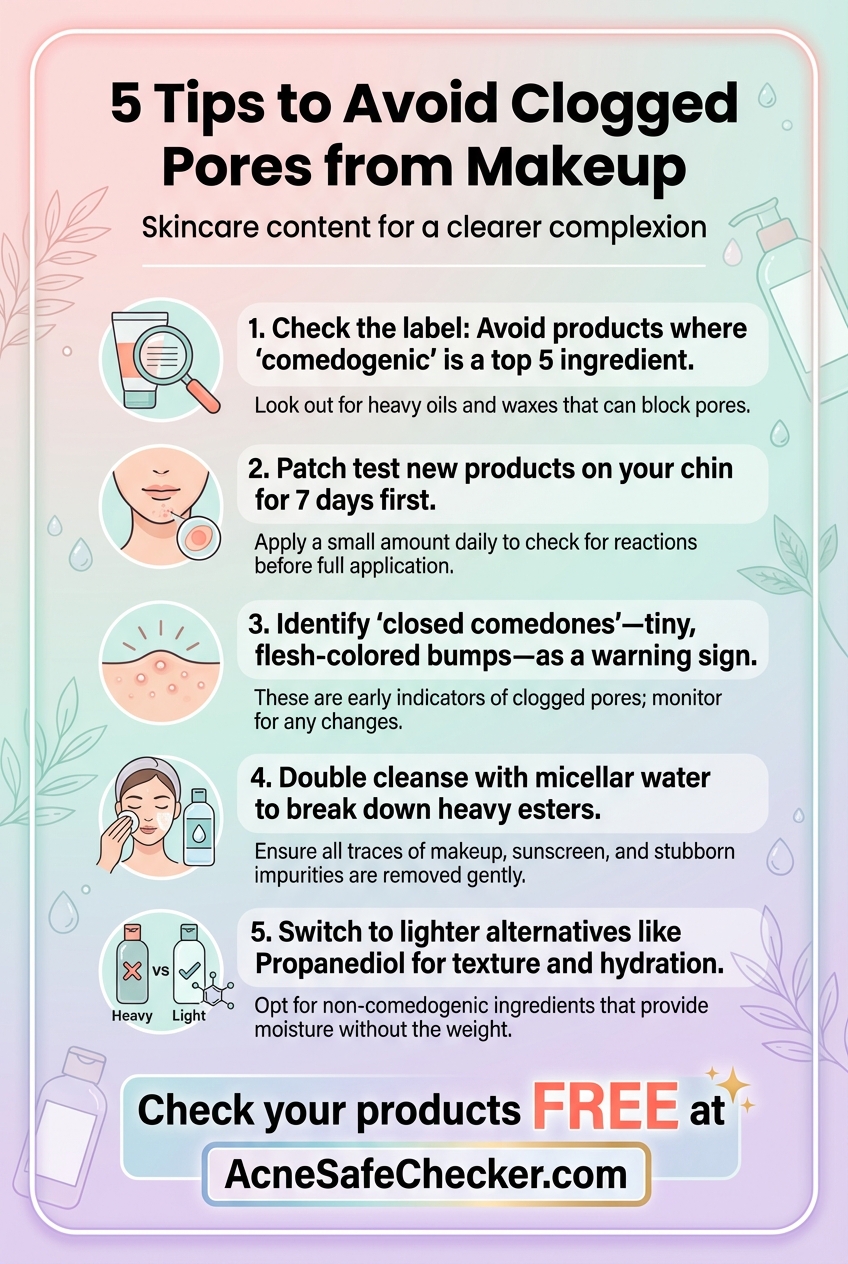
Furthermore, formulation matters. An ingredient that is comedogenic in its pure form may not cause breakouts if it is used at a very low concentration (e.g., less than 1%) in a well-balanced formula. However, if Polyglyceryl-3 Diisostearate is one of the first five ingredients on your label, the risk of it clogging your pores is significantly higher.
How to Tell if This Ingredient is the Culprit
If you suspect a product containing Polyglyceryl-3 Diisostearate is causing issues, look for these specific signs of acne cosmetica:
- Small, Uniform Bumps: You notice many tiny, flesh-colored bumps (closed comedones) rather than deep, painful cysts.
- Rough Texture: Your skin feels “congested” or bumpy when you run your fingers over it, even if there is no redness.
- Location: The breakouts appear exactly where you apply the product (e.g., along the cheekbones where you apply highlighter or across the forehead from a specific sunscreen).
Practical Steps for Acne-Prone Skin
If you have oily or acne-prone skin, here is how you should navigate products containing this ingredient:
1. Check the Ingredient Rank
If Polyglyceryl-3 Diisostearate is listed at the very end of the ingredient list, it may be fine for your skin. If it is in the top five, proceed with extreme caution.
2. The Patch Test
Don’t apply a new product to your entire face at once. Apply it to a small, acne-prone area (like the side of your chin) for 5–7 days. If you don’t see new clogs forming, the formulation is likely safe for you.
3. Look for Alternatives
If you find that your skin reacts poorly to this ingredient, look for products that use lighter alternatives for texture and emulsification, such as:
- Propanediol
- Caprylic/Capric Triglyceride (though still an oil, it is generally lighter)
- Glycerin-based emulsifiers that lack the "diisostearate" fatty acid component.
4. Double Cleanse
If you love a product that contains this ingredient (like a waterproof sunscreen), ensure you are using a double-cleansing method. Use an oil-based cleanser or micellar water first to break down the heavy esters, followed by a gentle water-based cleanser to wash them away.
Conclusion: Should You Avoid It?
Polyglyceryl-3 Diisostearate is not a “toxic” or “bad” ingredient. In fact, for patients with extremely dry skin or eczema, its rich, occlusive properties can be a lifesaver.
However, if you are battling persistent acne or congested pores, this ingredient is a likely suspect. By understanding how to read your labels and monitoring how your skin feels—not just how it looks—you can make informed decisions that keep your complexion clear and healthy. When in doubt, opt for products labeled "non-comedogenic," but always keep an eye out for those sneaky fatty acid esters like Polyglyceryl-3 Diisostearate.